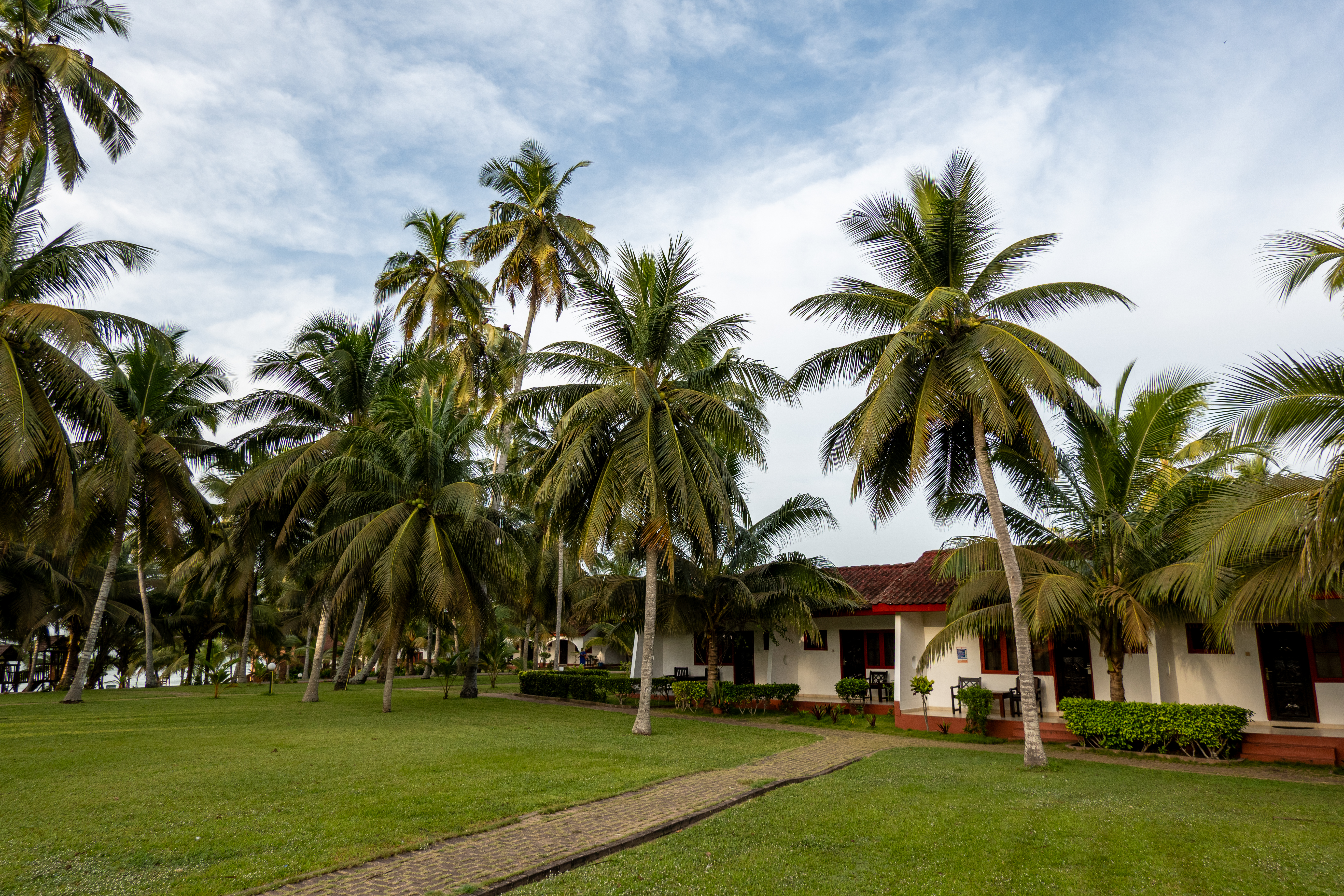
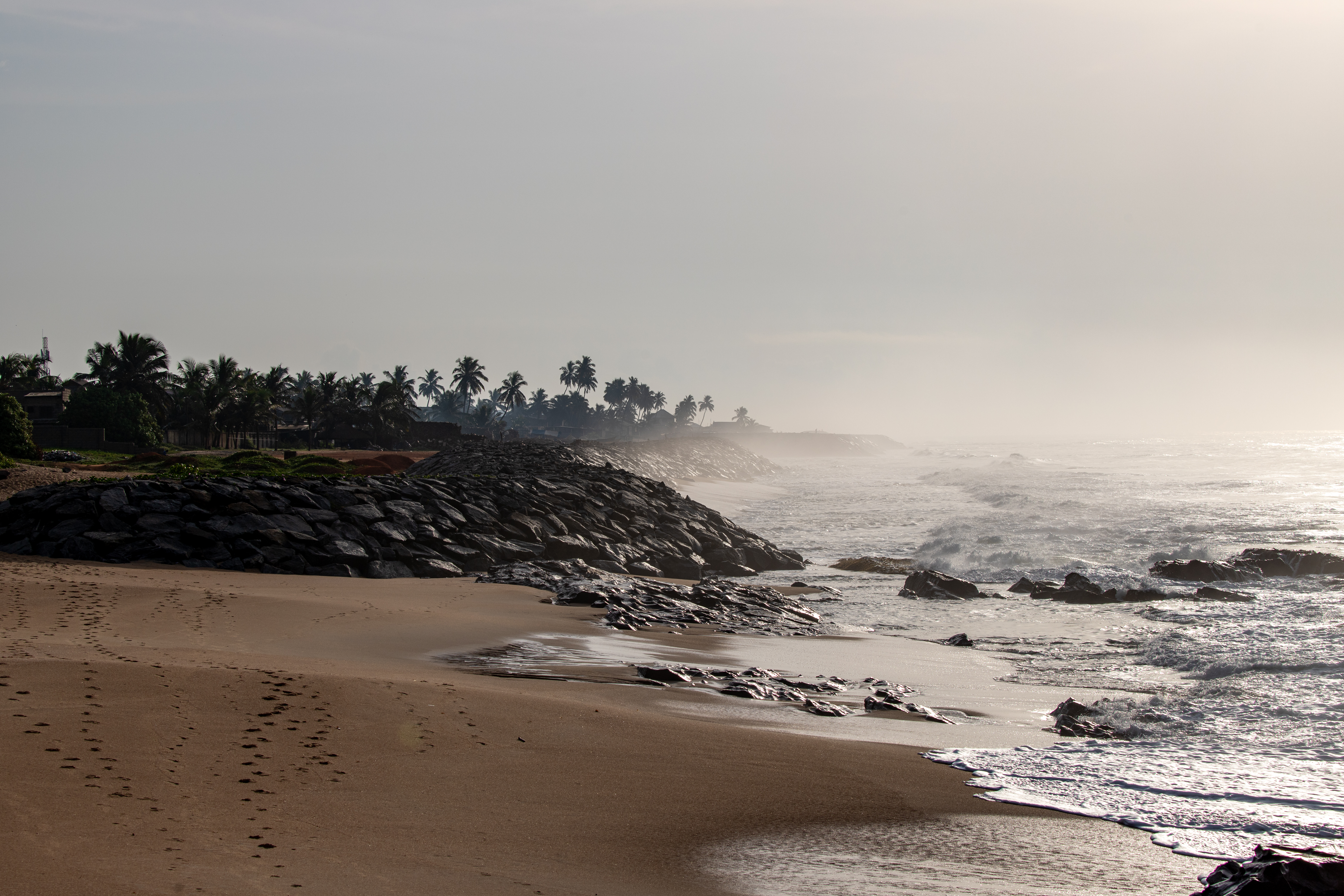
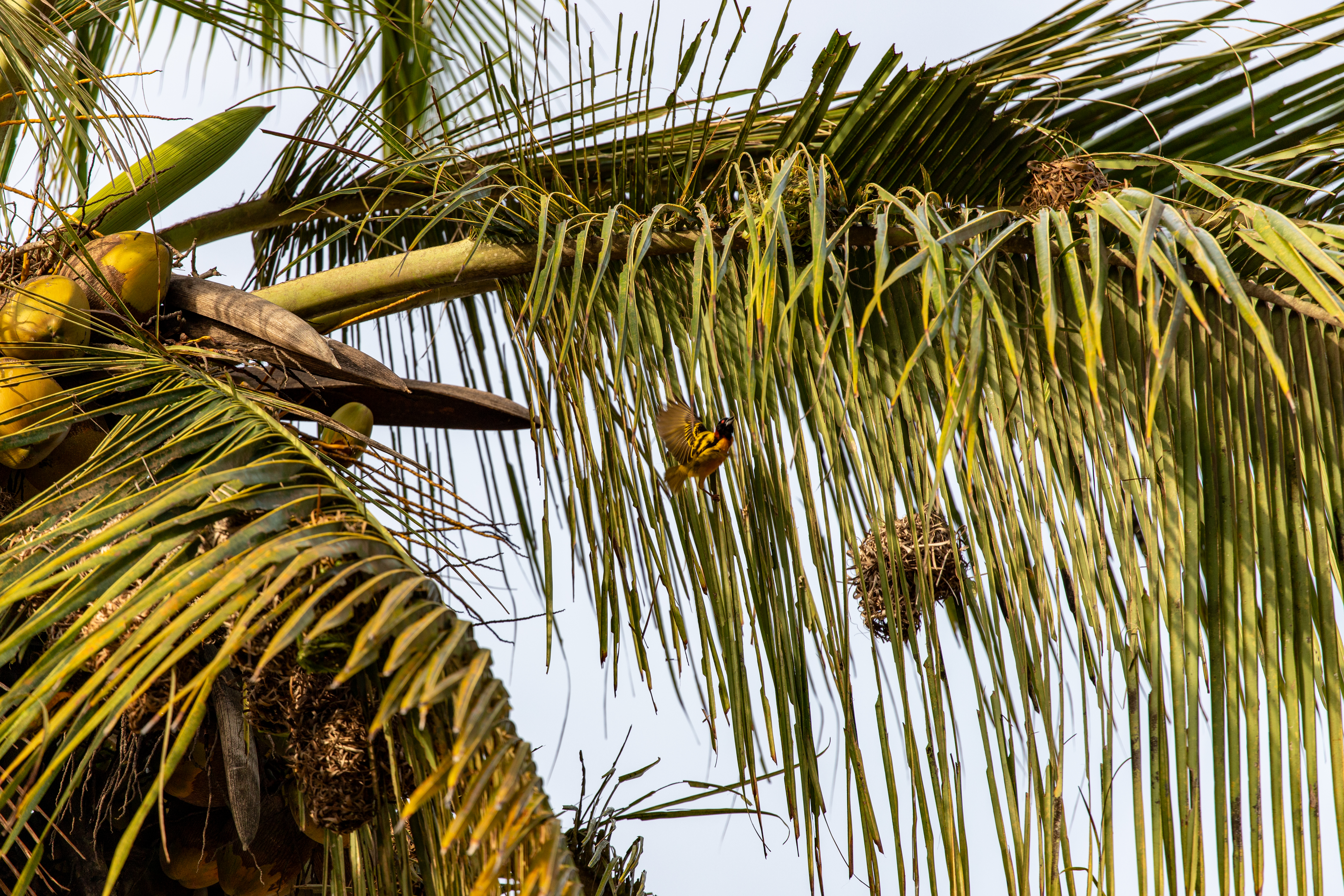
We were up before 06:30, and quickly got packed and put our bags outside. We walked over with Stephenie and Taryn to breakfast, putting the odds at 1 in 3 that it would be ready at 07:00. But sure enough it was, and what’s more, there were nice morning views up and down the coastline. There were also a bunch of yellow birds nesting in one of the Coconut Palms. We left just after 07:30 - as planned - and Sena was very happy.
|
|
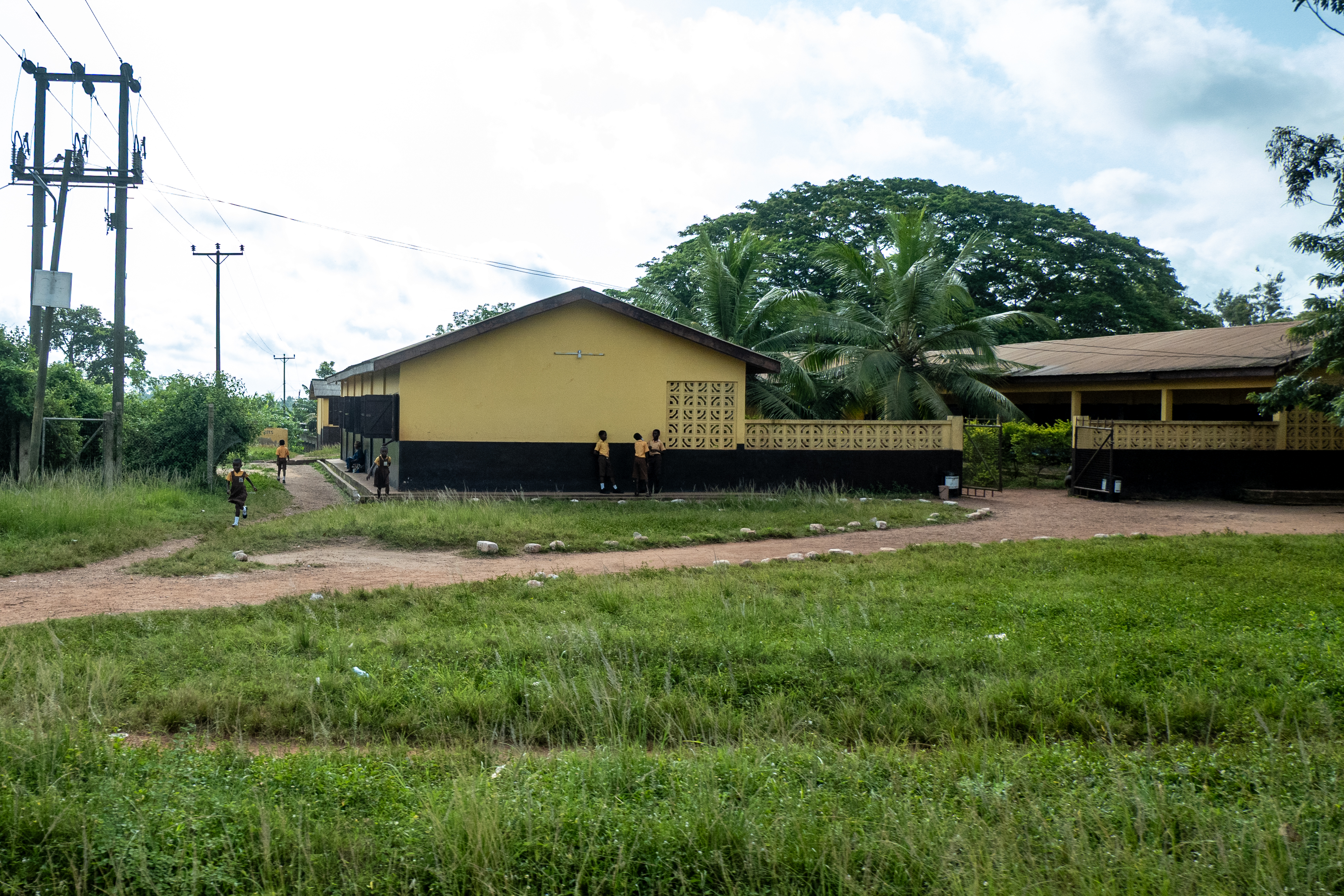
It was St Patrick’s Day, and Stephenie was the only one in the group wearing green, but then she admitted that it was her last pair of clean clothes, not a choice for the holiday. We were driving north to Kakum National Park, and on the way, Sena told us how it ended up a National Park. It originally started with a decree from local elders, who were worried about loss of habitat. The elders wanted to protect habitat because many families were named after certain animals or birds, and people didn’t want those animals to die out. It has since been declared a National Park by the Ghanaian government.
 |
 |
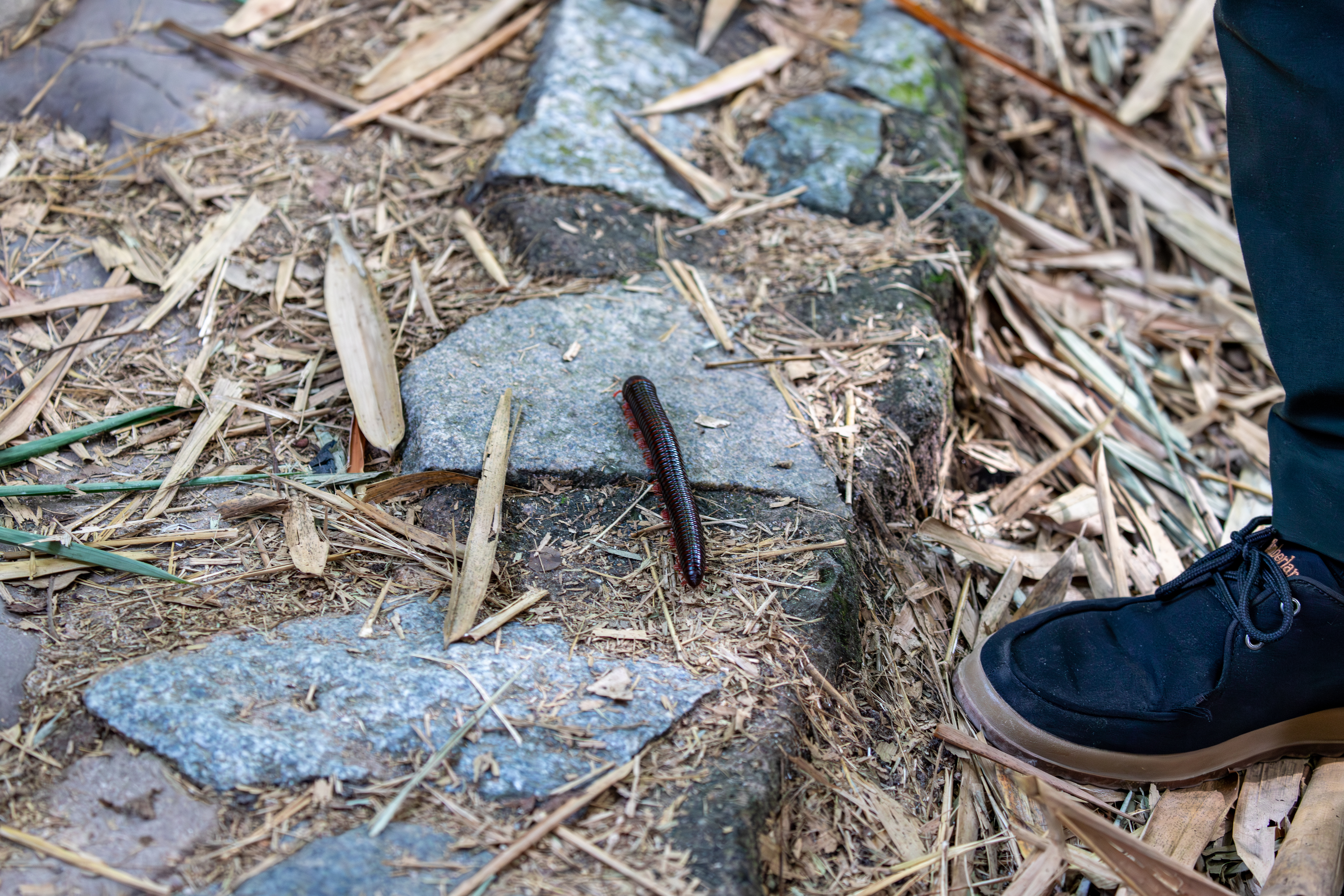
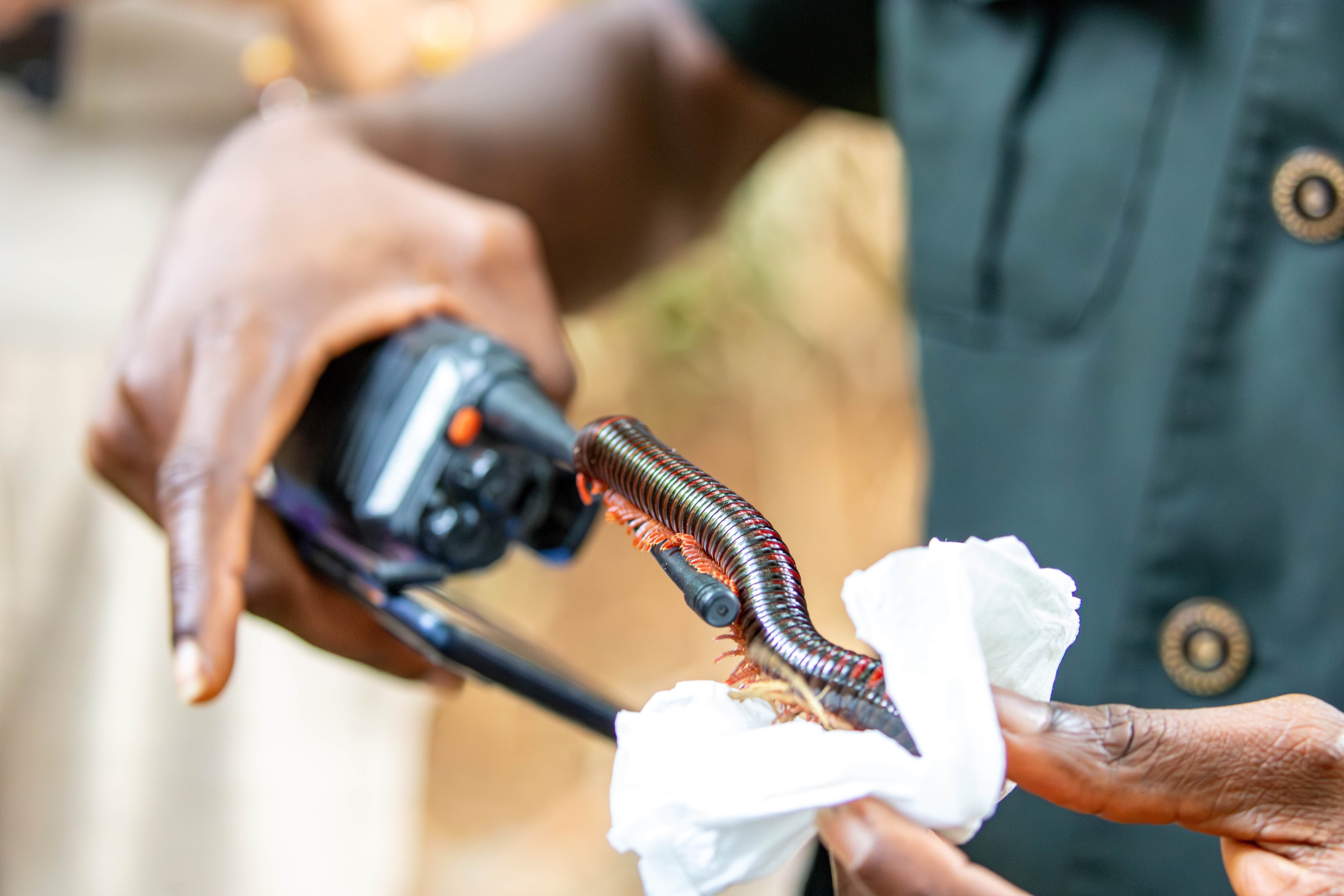
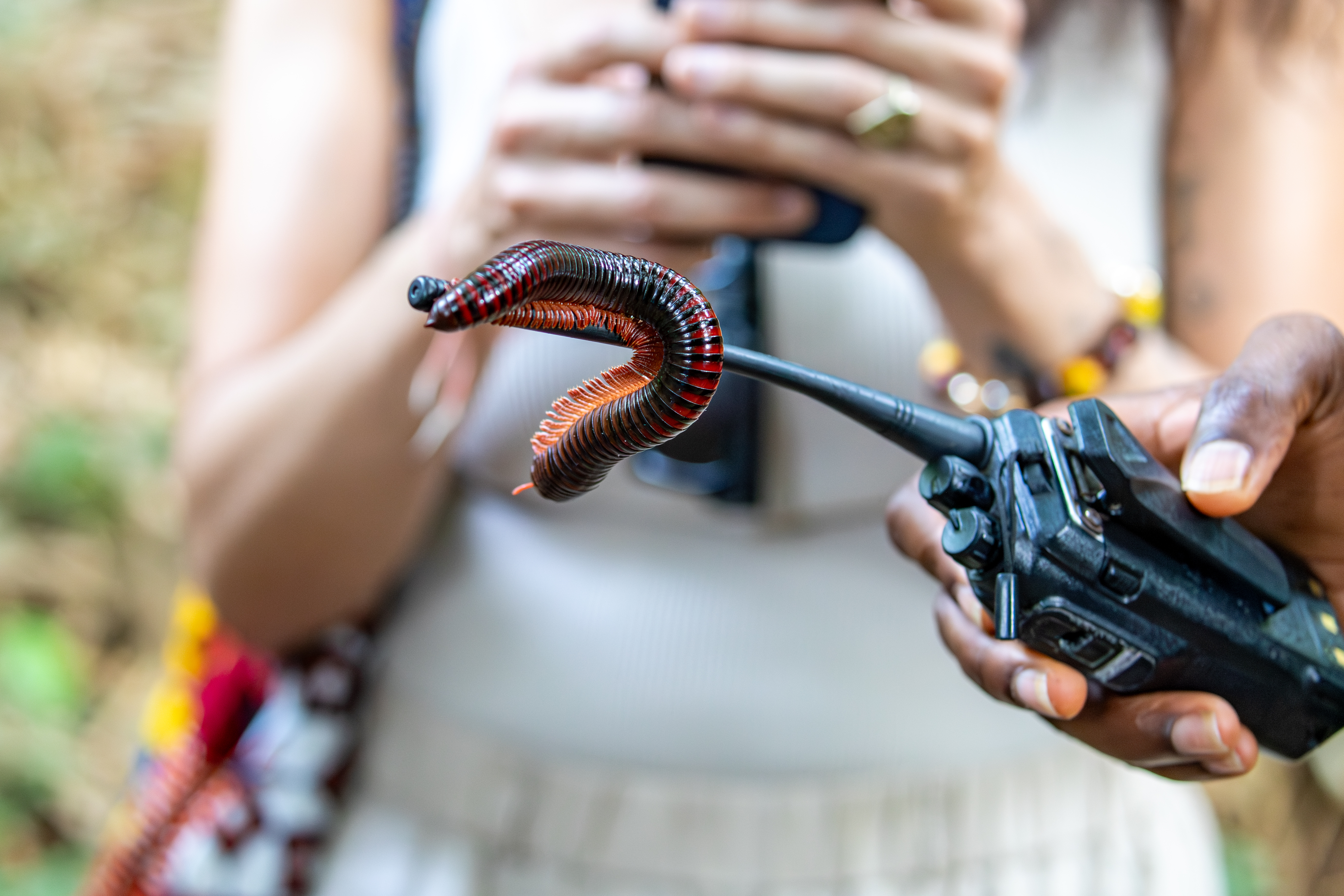
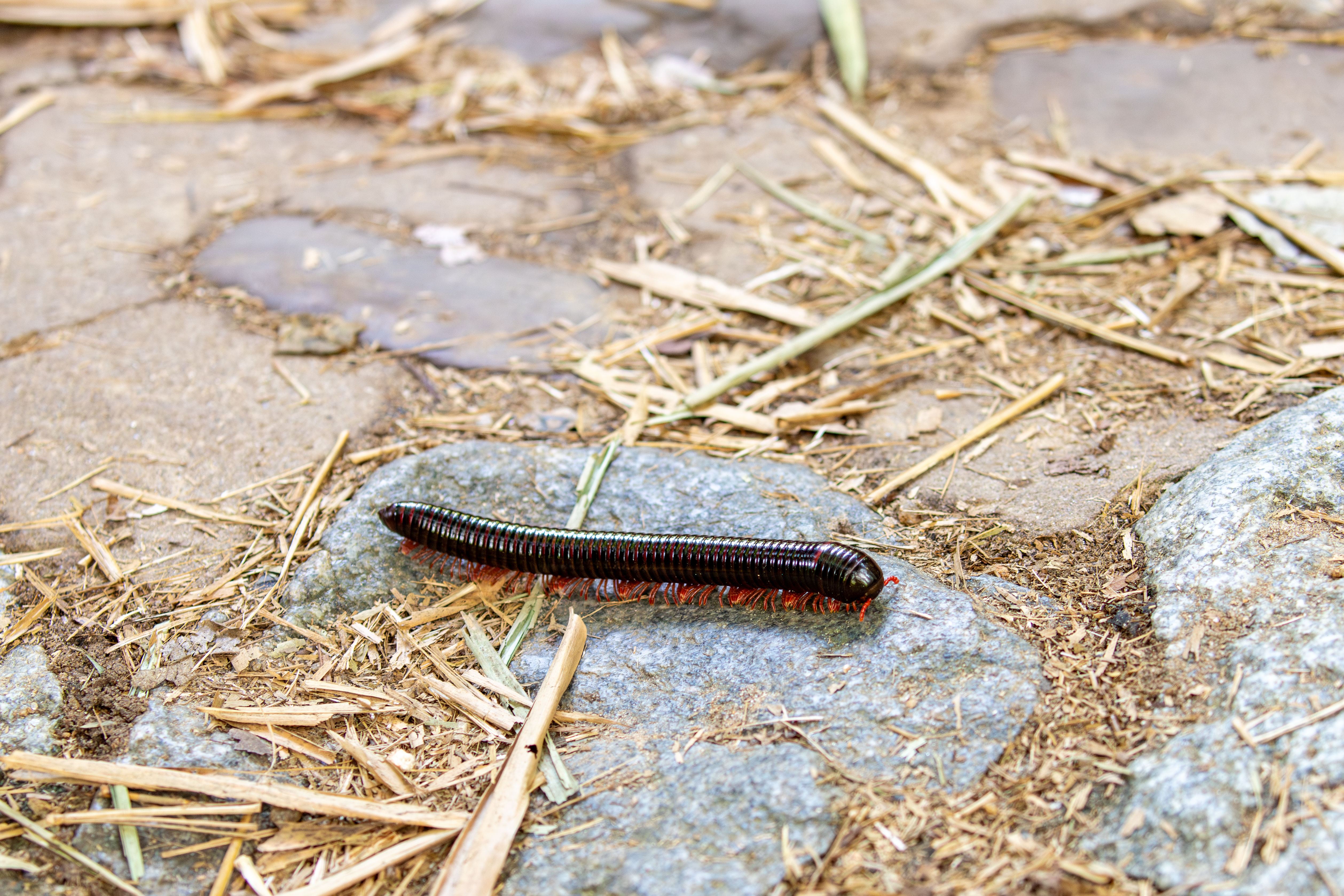
We arrived a little before 09:00, and met our local guide Kwame. It turns out that his dad used to work with Sena, many years ago. Kwame more or less is in charge of the rangers, and doesn’t usually give tours, but for Sena he makes an exception, and we were lucky to have him. Shortly into our walk we saw a giant millipede, which was unexpected since Sena had told us we probably wouldn’t see any wildlife during our time in the park. In addition to the millipede, we also saw tons of butterflies.
 |
 |
 |
 |
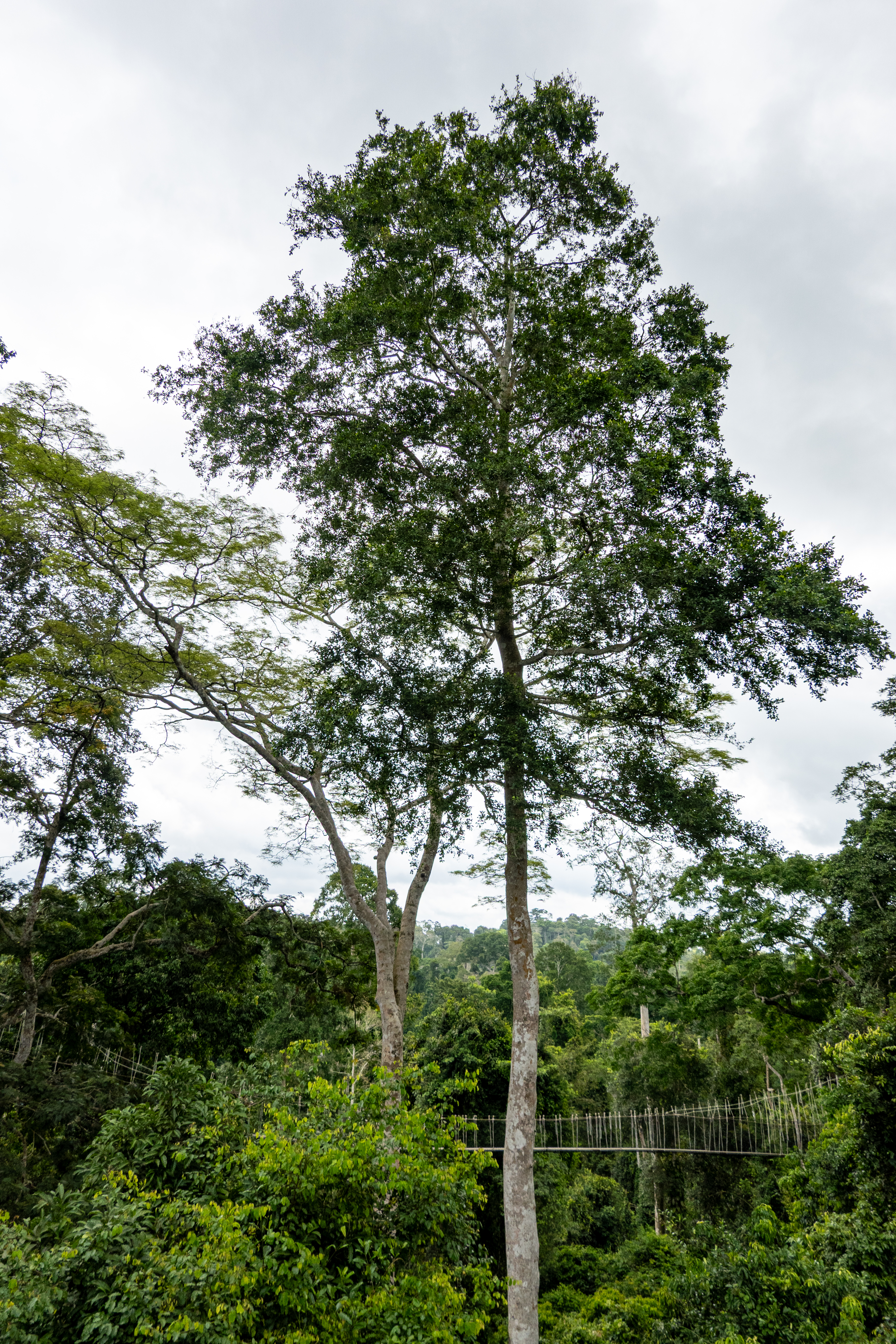
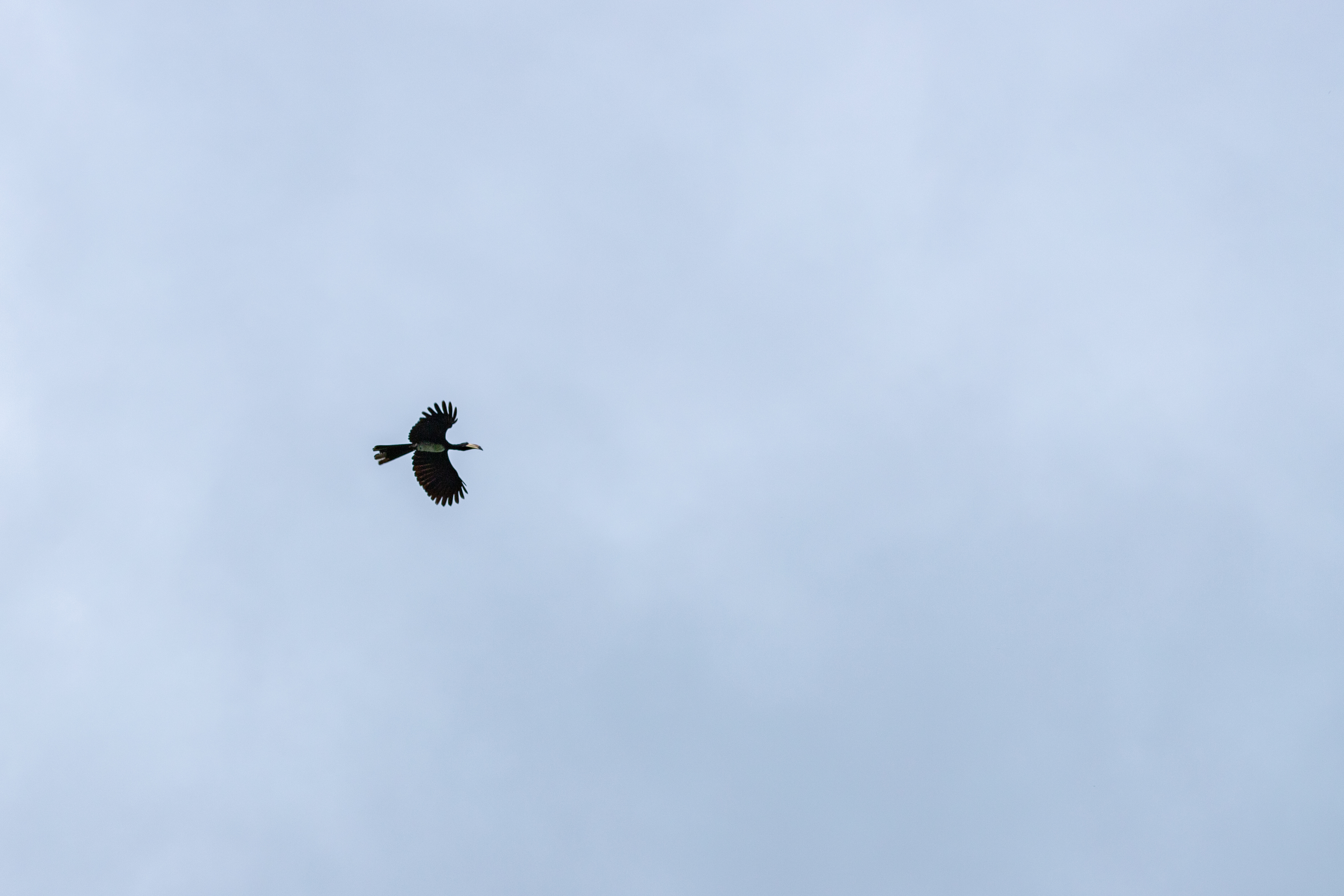
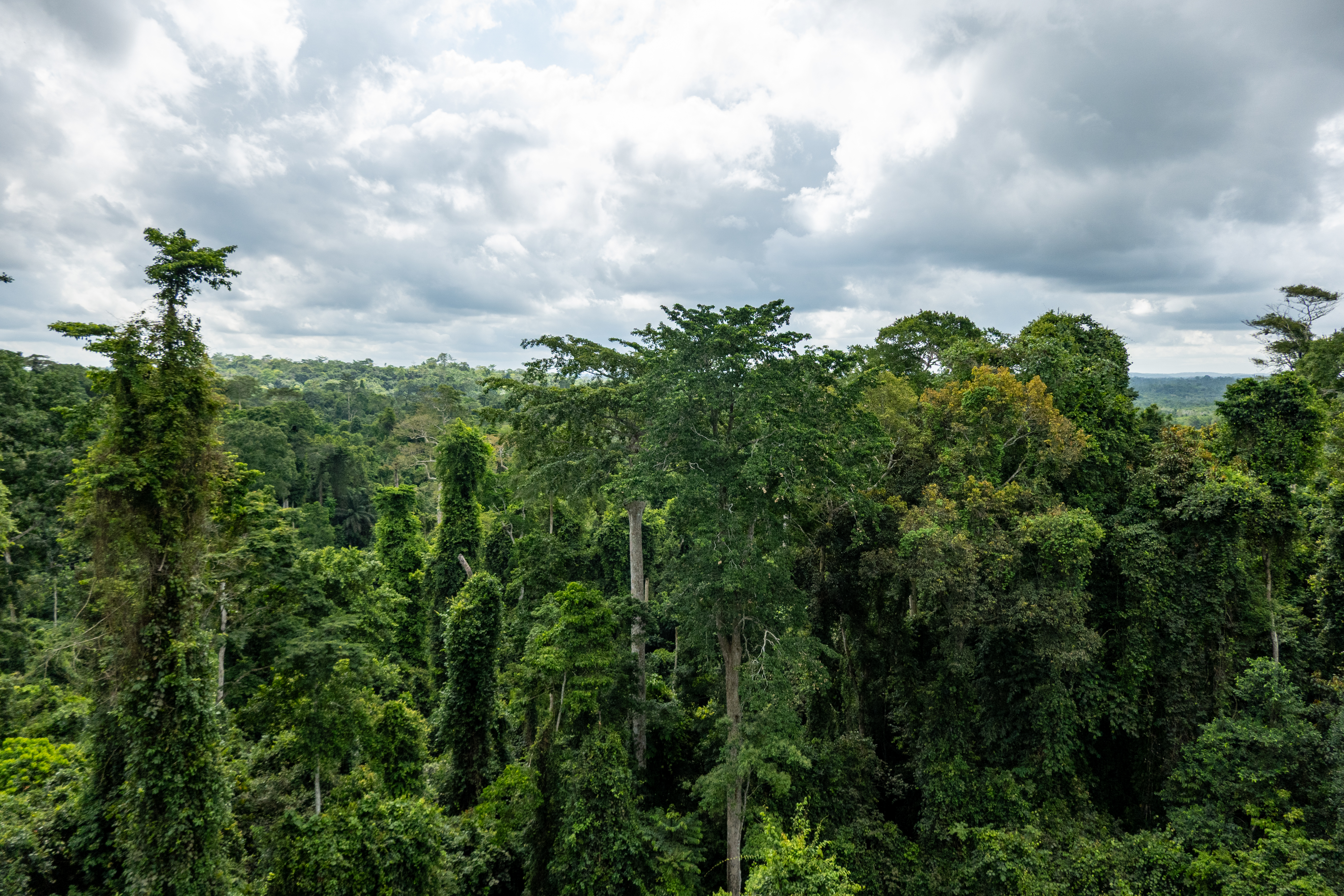
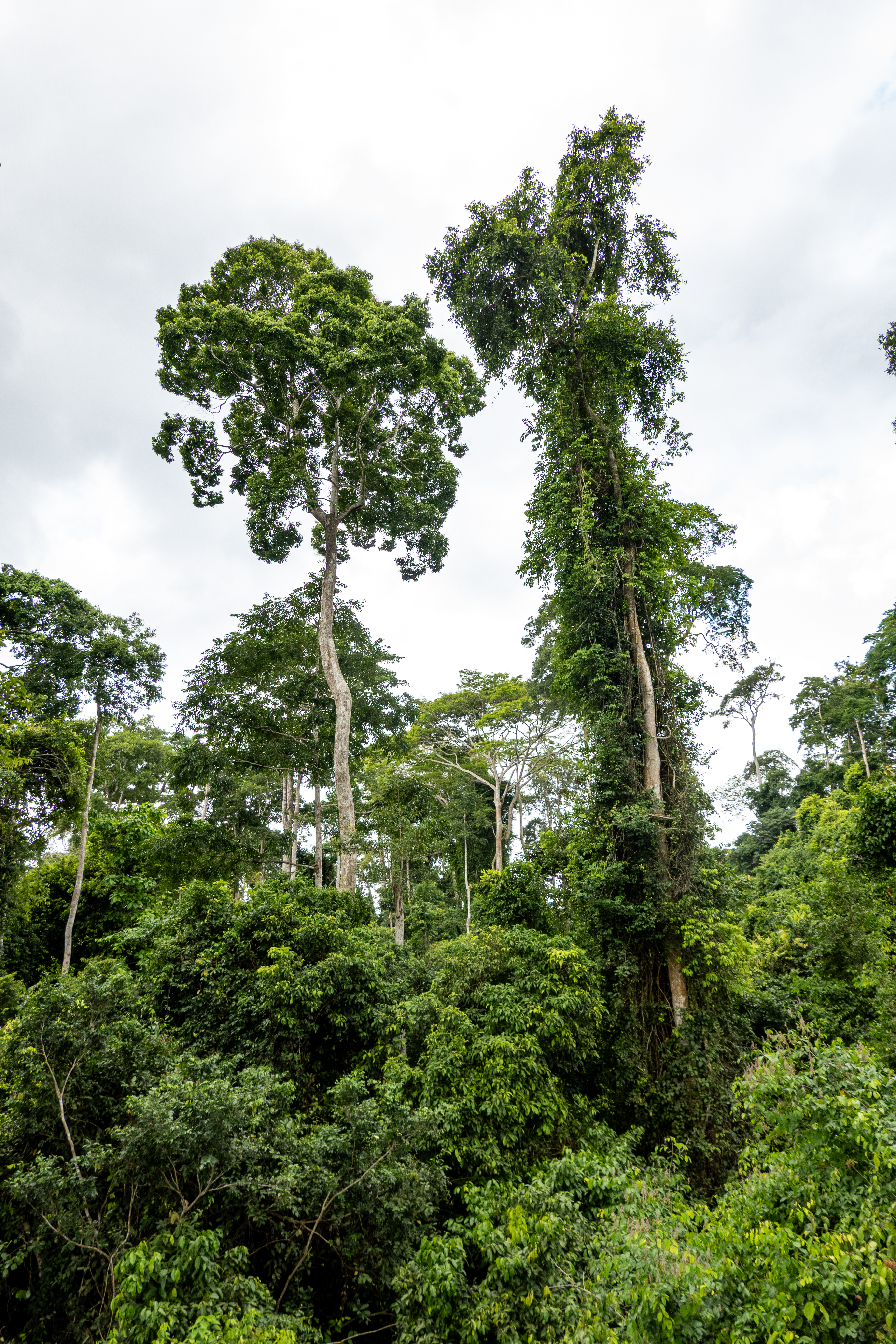
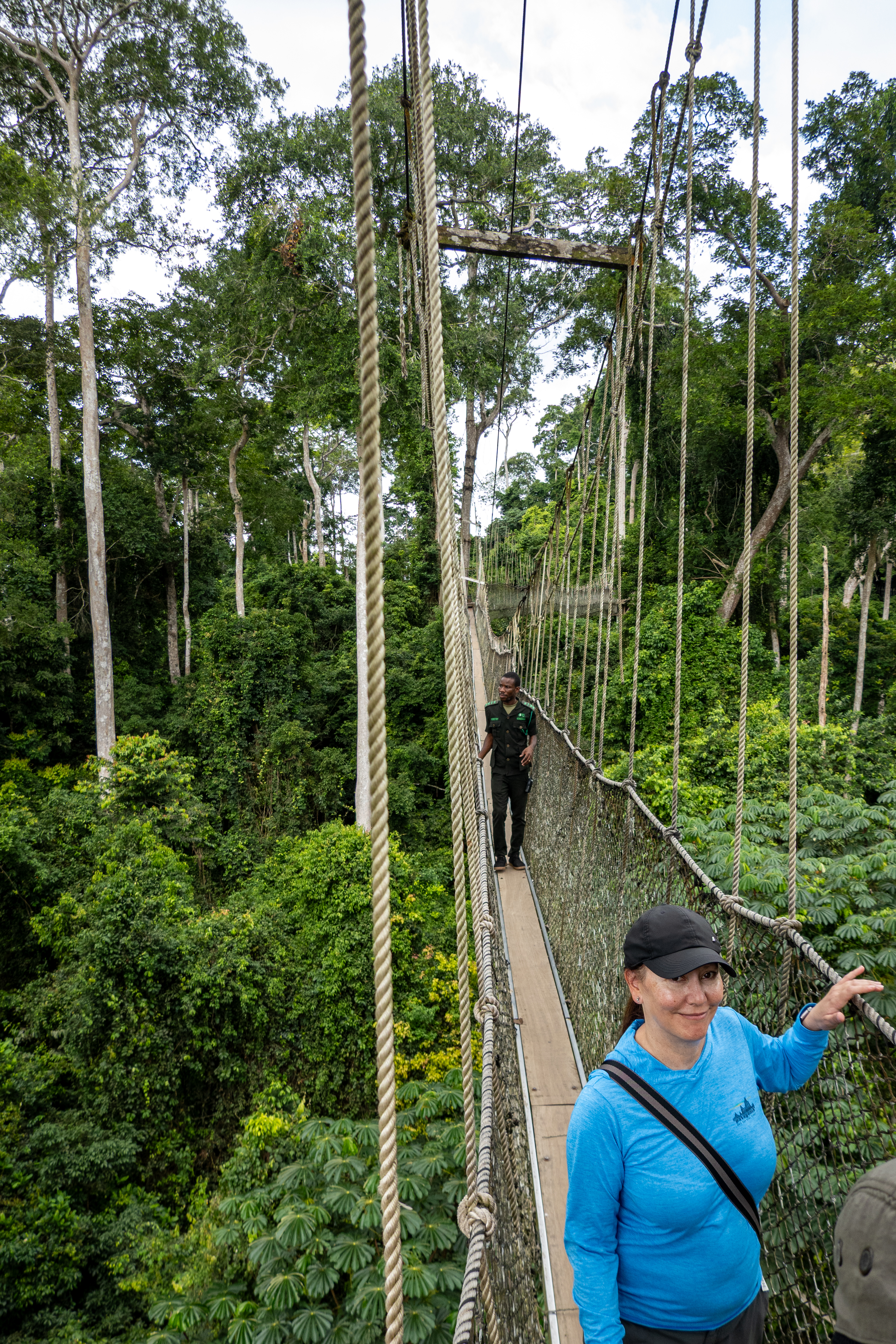
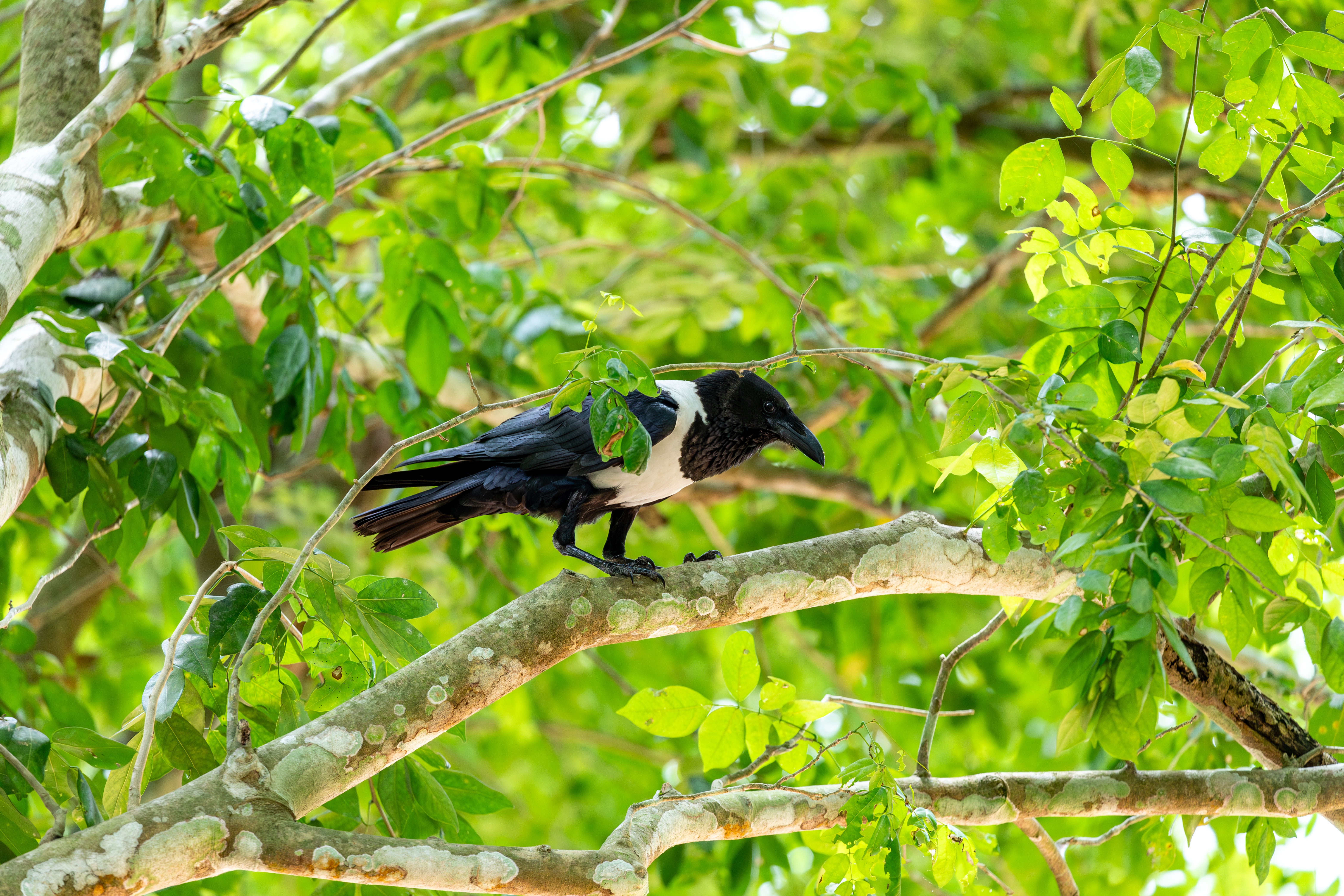
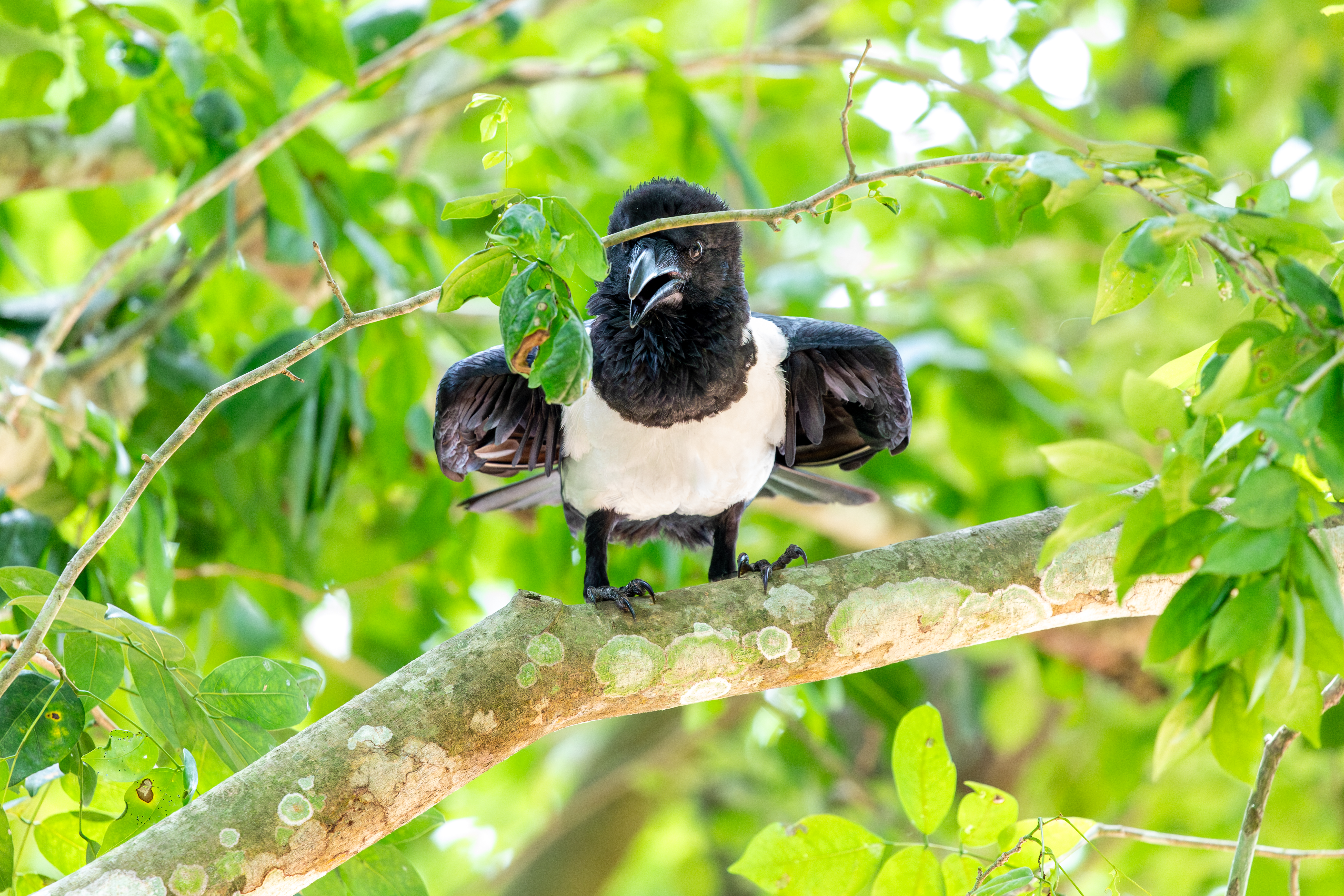
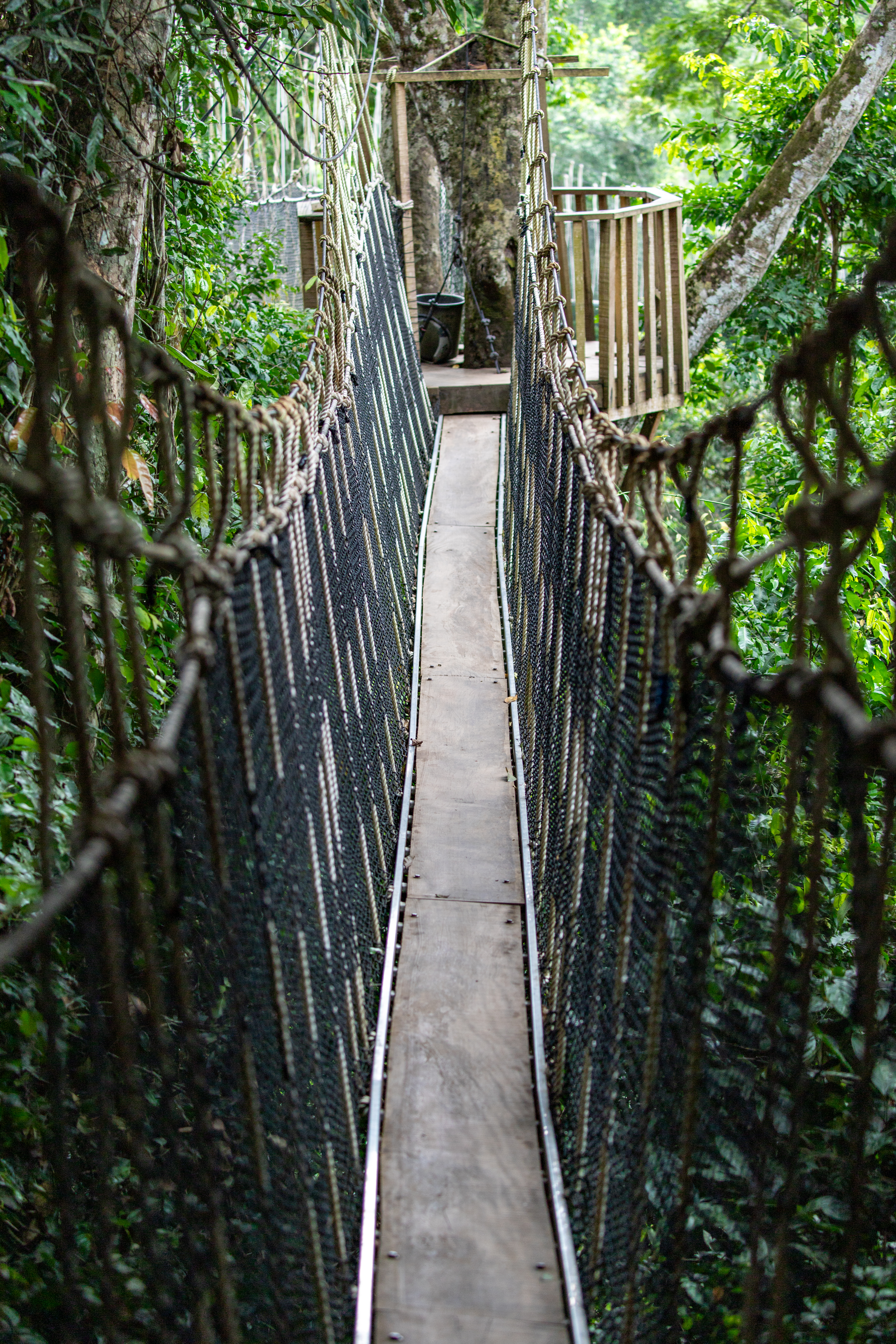
The main draw of the park - for tourists at least - is the canopy walkway. Apparently it was financed by Americans many years ago, via some US agency that doesn’t exist any more. Stephenie gave us the backstory on that, but it was one of the agencies that was gutted just after inauguration day in 2025. On the canopy walkway we were above 90% of the canopy, and saw some Cecropia trees from above, a big hornbill, and plenty of trees that were of interest to Justin since the climate seemed about the same as in Pahoa.
 |
 |
 |
 |
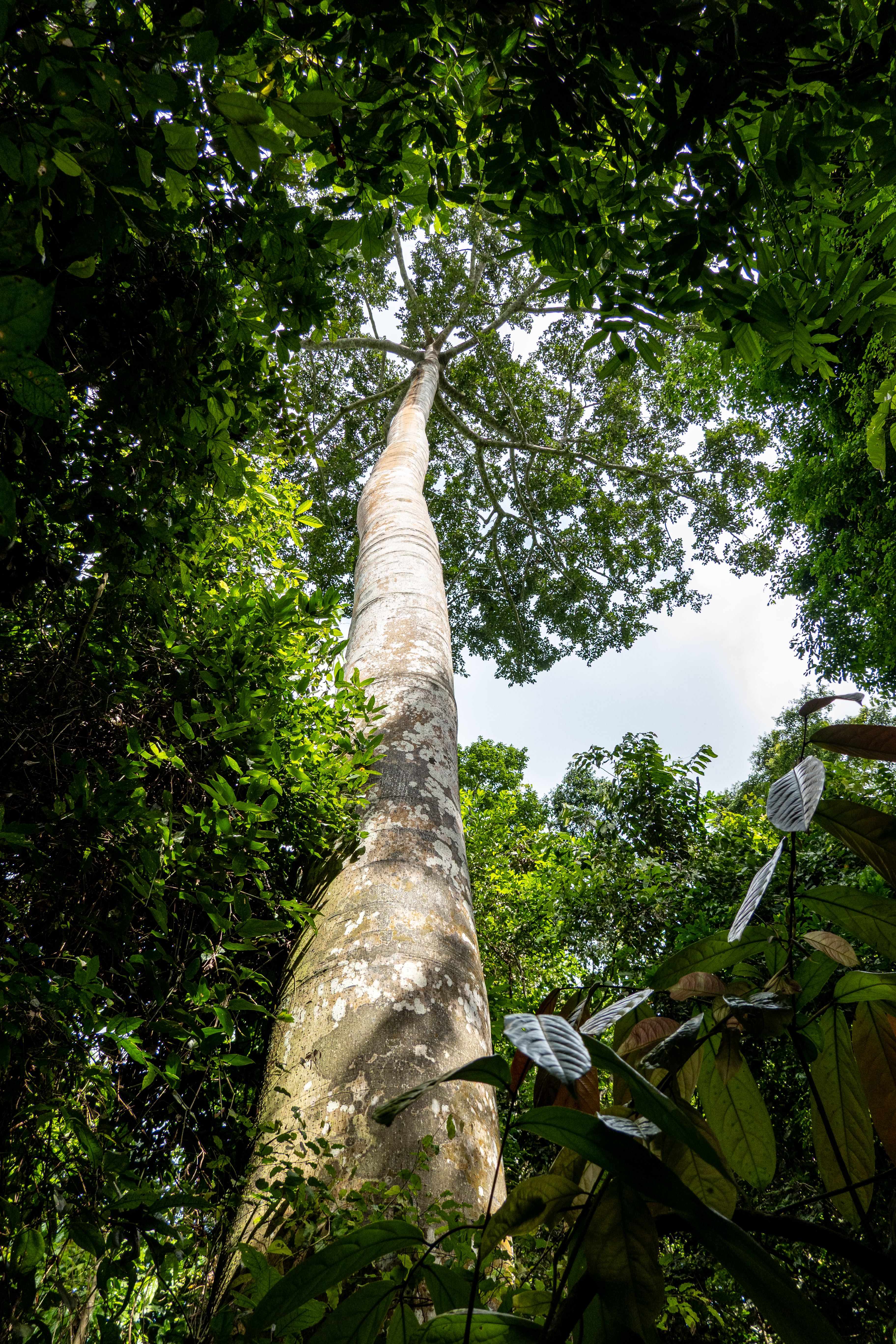
Kwame showed us some ebony trees, and mentioned they are one of the only trees on which elephants rub themselves. From the marks on the trees, one can gauge the heights of the elephants. Kwame also showed us some Frankincense trees, and explained how they are good for antibacterial properties. Wounds form on their own, and crystals form from the sap - this is what people use. Kwame also mentioned a plant we have to get our hands on for Hawaii - Canarium scheiforthii, which apparently the local mosquitoes hate. There were literally no mosquitoes on our forest walk, which was unfathomable.
 |
 |
 |
 |
Kwame was incredibly knowledgeable, one of the most knowledgeable plant guides that we’ve met. The backstory is that his dad was a park ranger, and Sena met him once. Sena thought he was the best ranger, and started requesting him (and paying for that request). The two of them planned to build some forest trails for one of his tour operators in the National Park. Ever since, whenever Kwame is around, Sena now requests that his groups go with Kwame. But it sounds like Kwame is about to move onto bigger and better things, which is great for Kwame, but not so great for Sena and his tours.
 |
 |
 |
 |
We headed right back down south to Cape Coast after finishing at the National Park. We’d gone in this order so that we could be at the National Park before everyone else, such that it wasn’t crowded on the canopy walkway, and so that it wasn’t quite so hot. When we got back to Cape Coast, we stopped briefly at Oasis Beach Resort to order our lunch. Then we went basically next door to Cape Coast Castle.
 |
 |
 |
 |
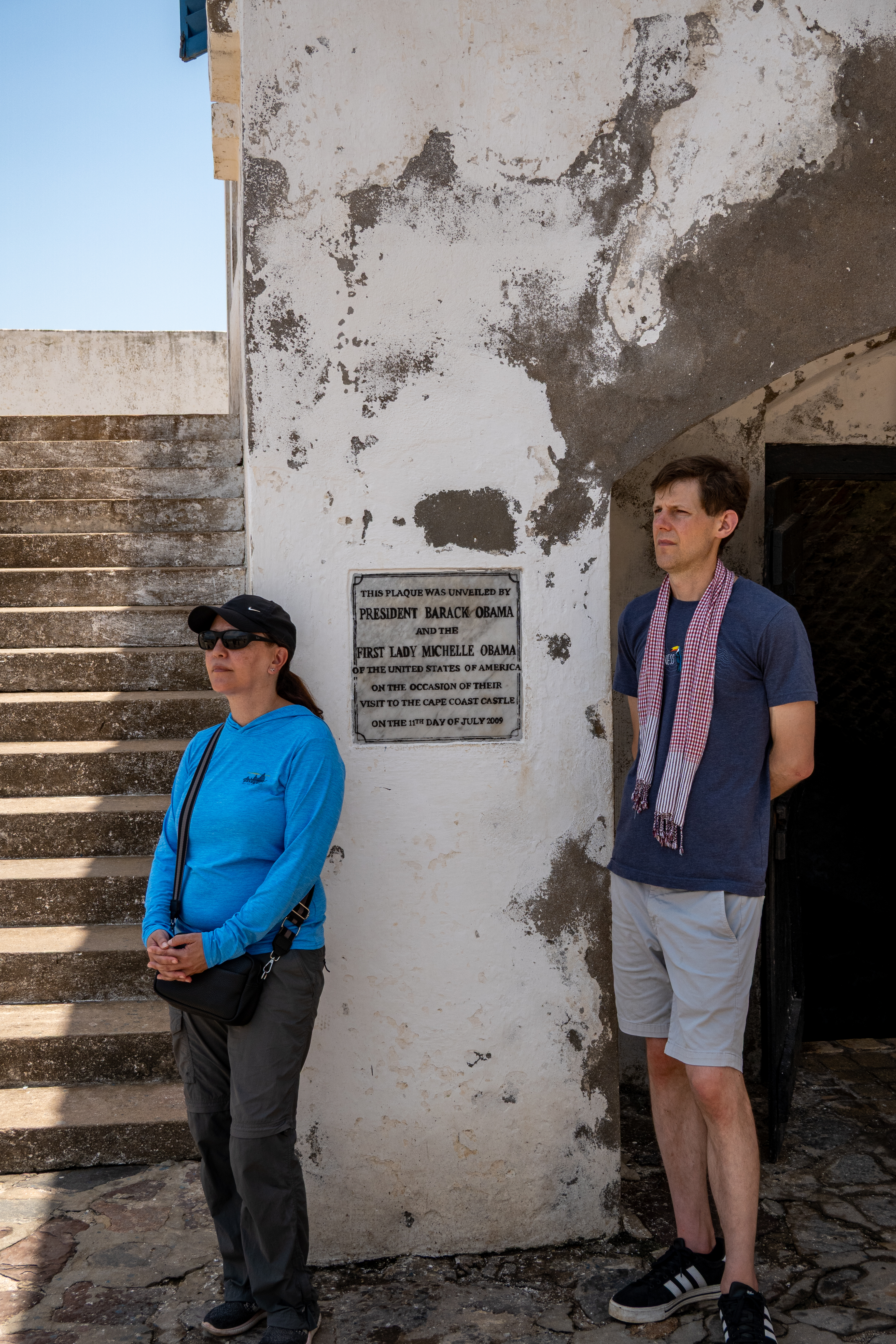
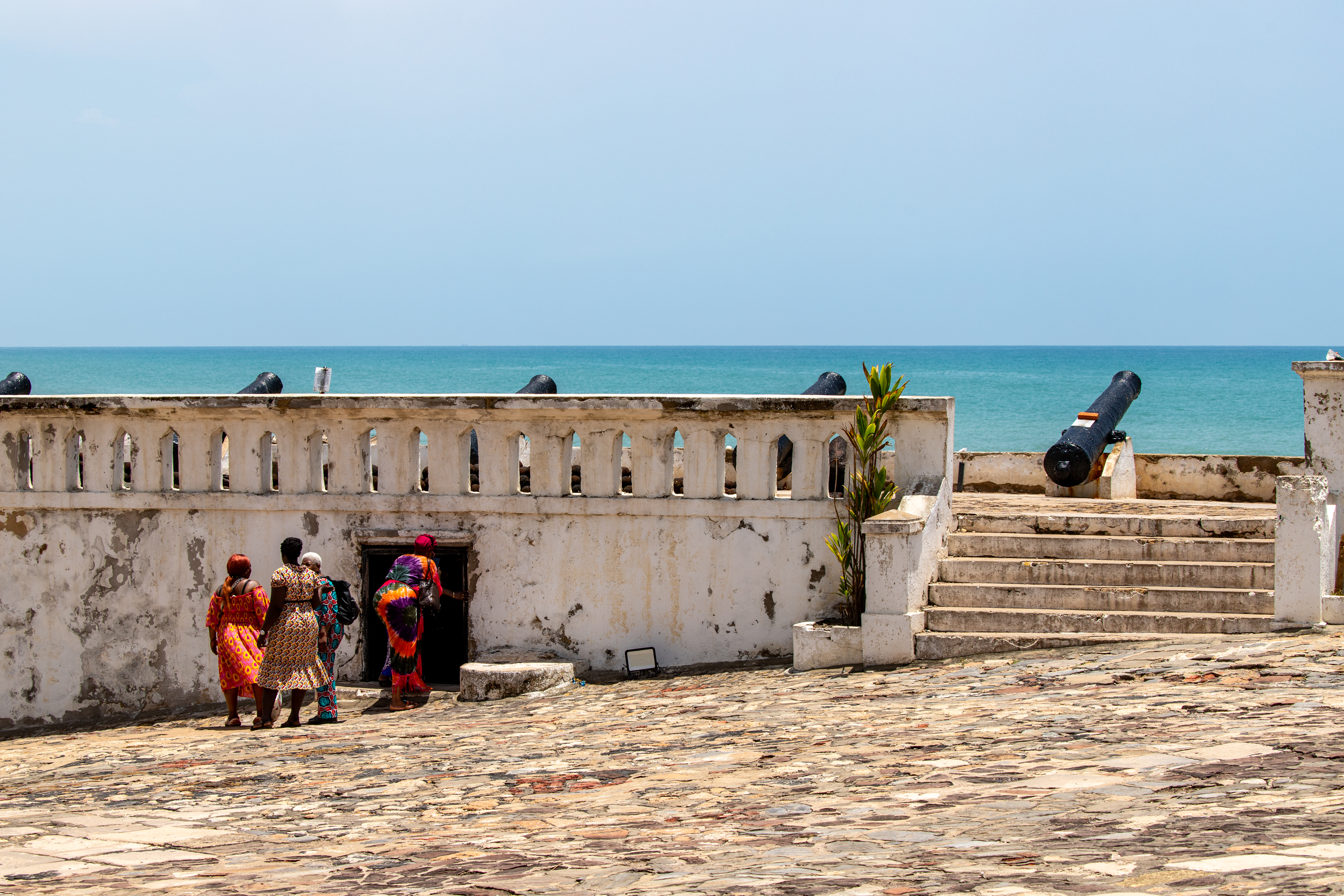
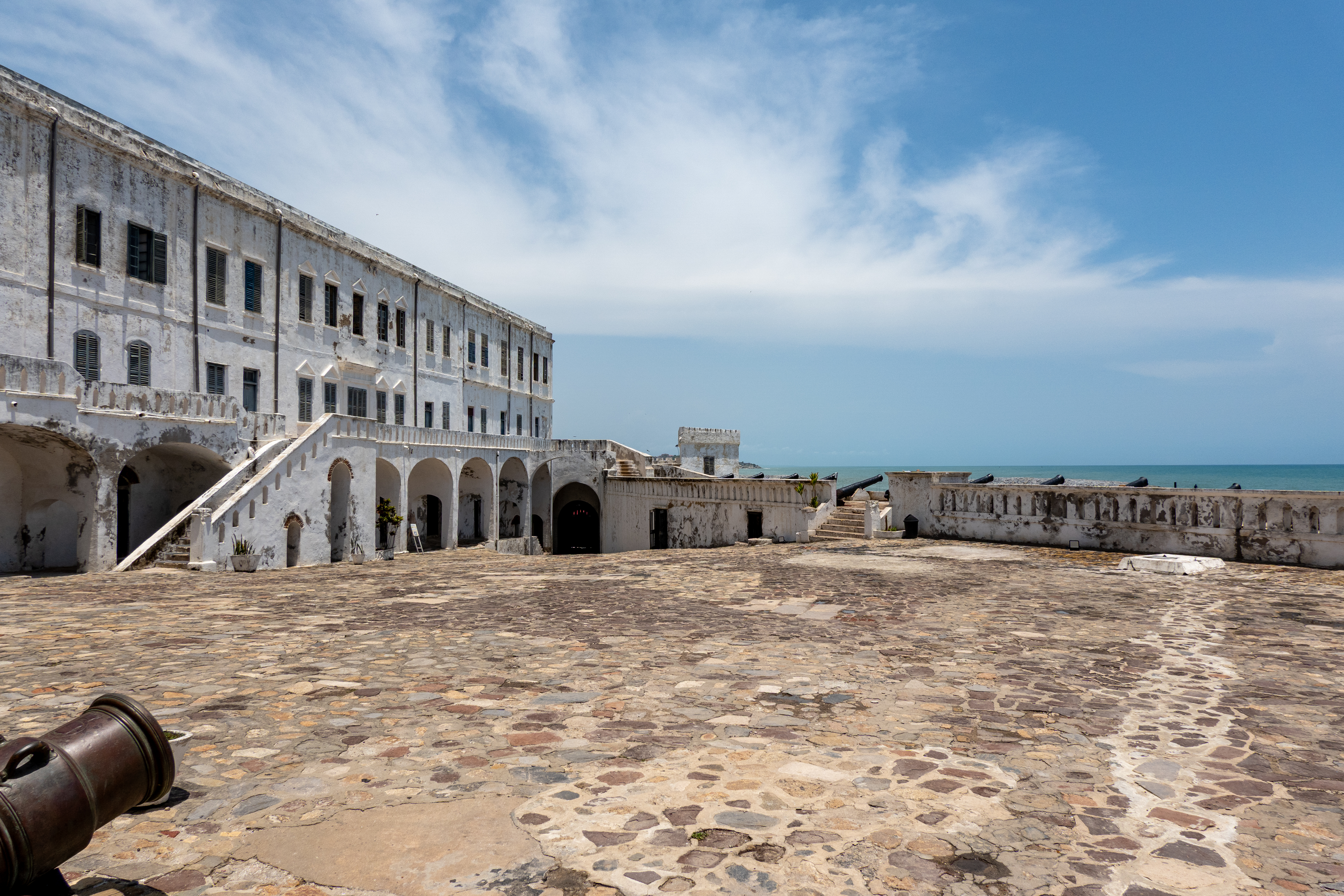
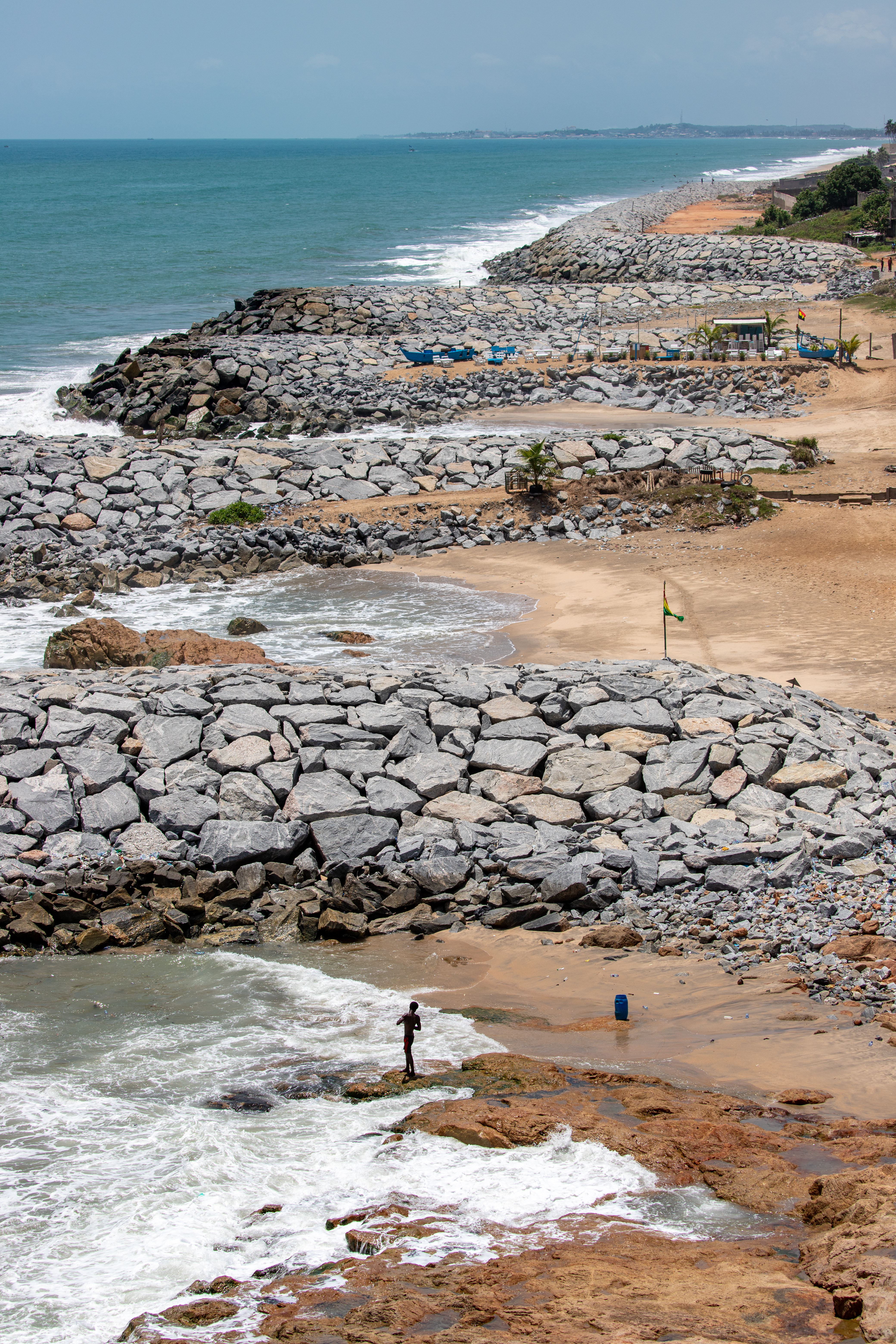
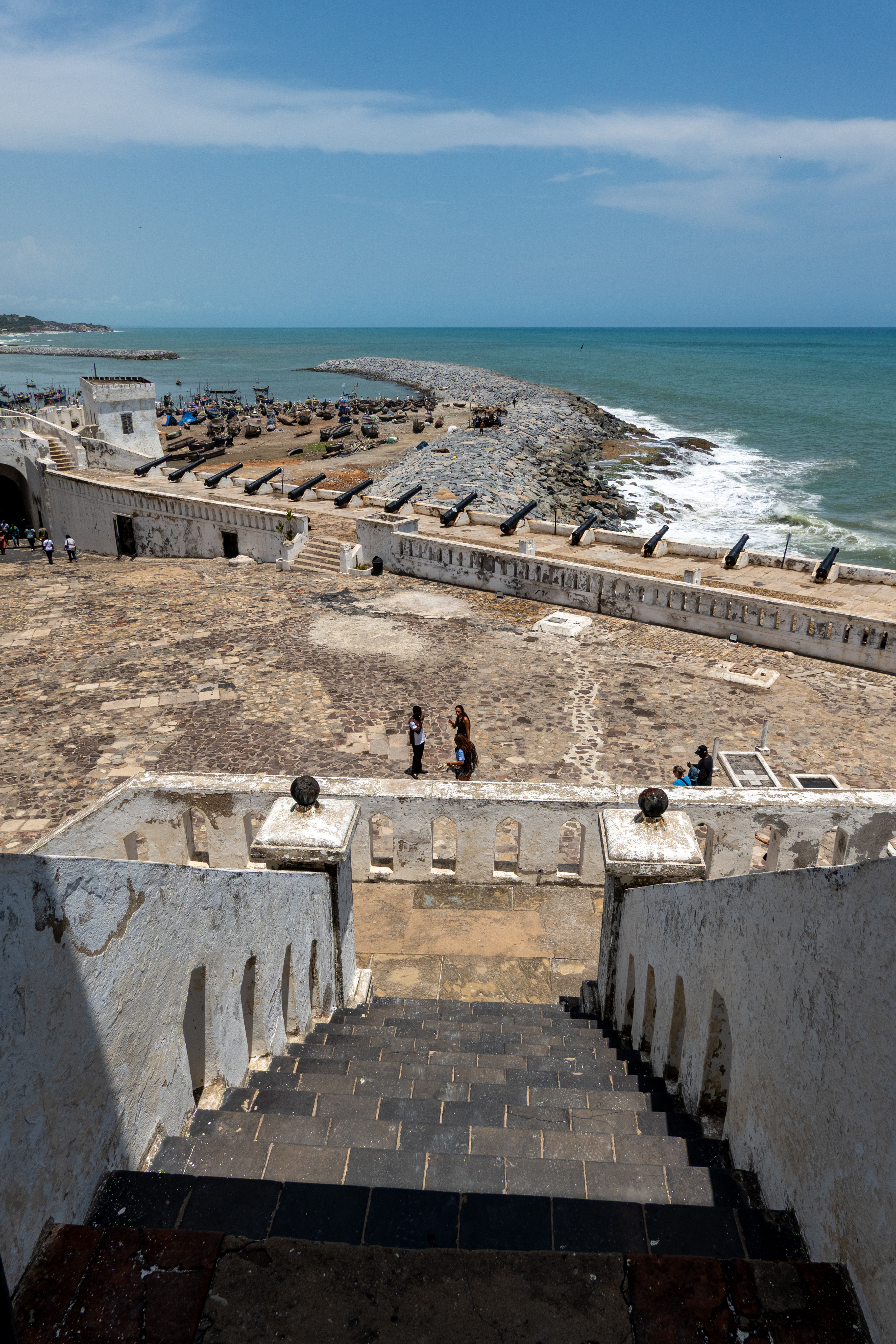
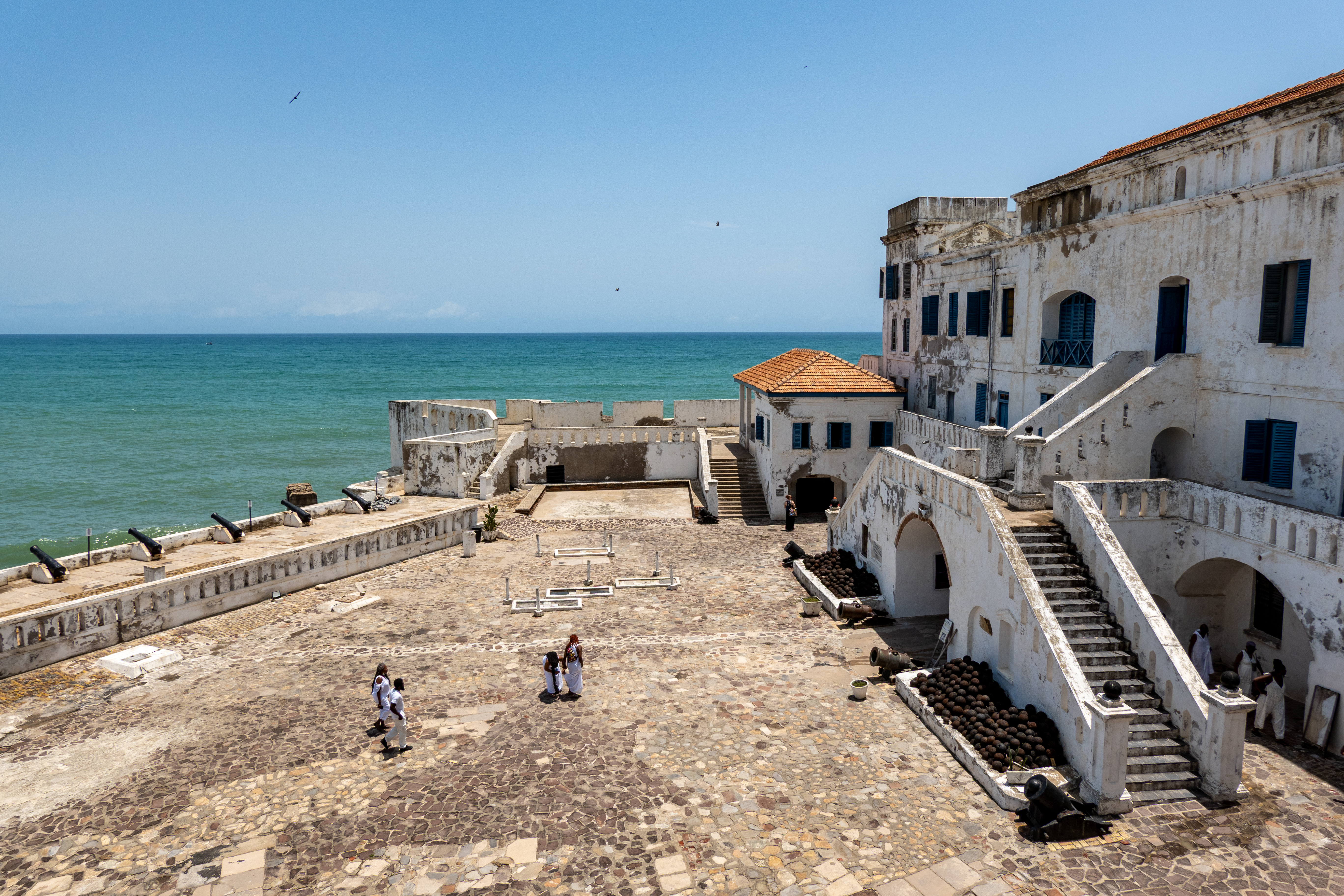
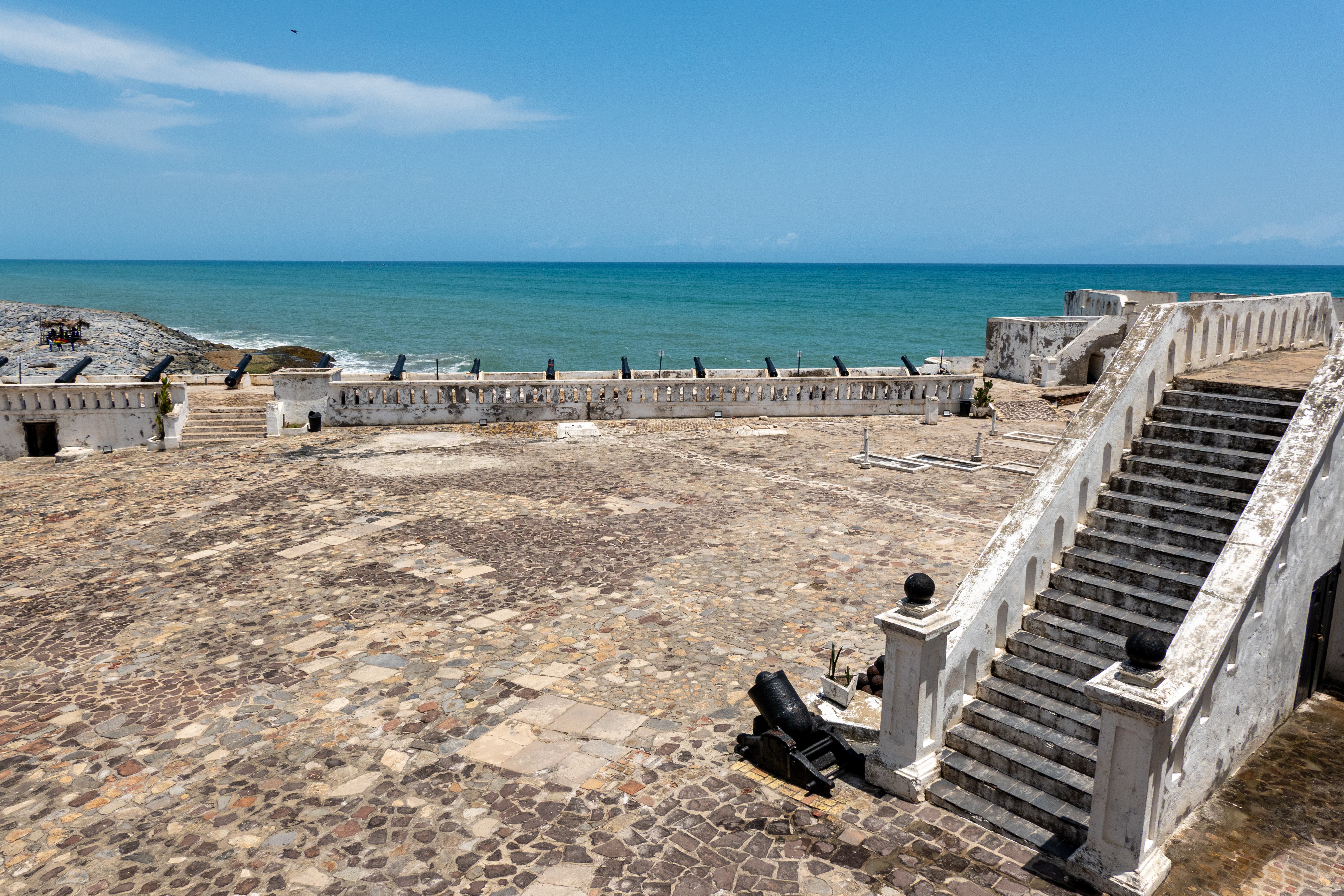
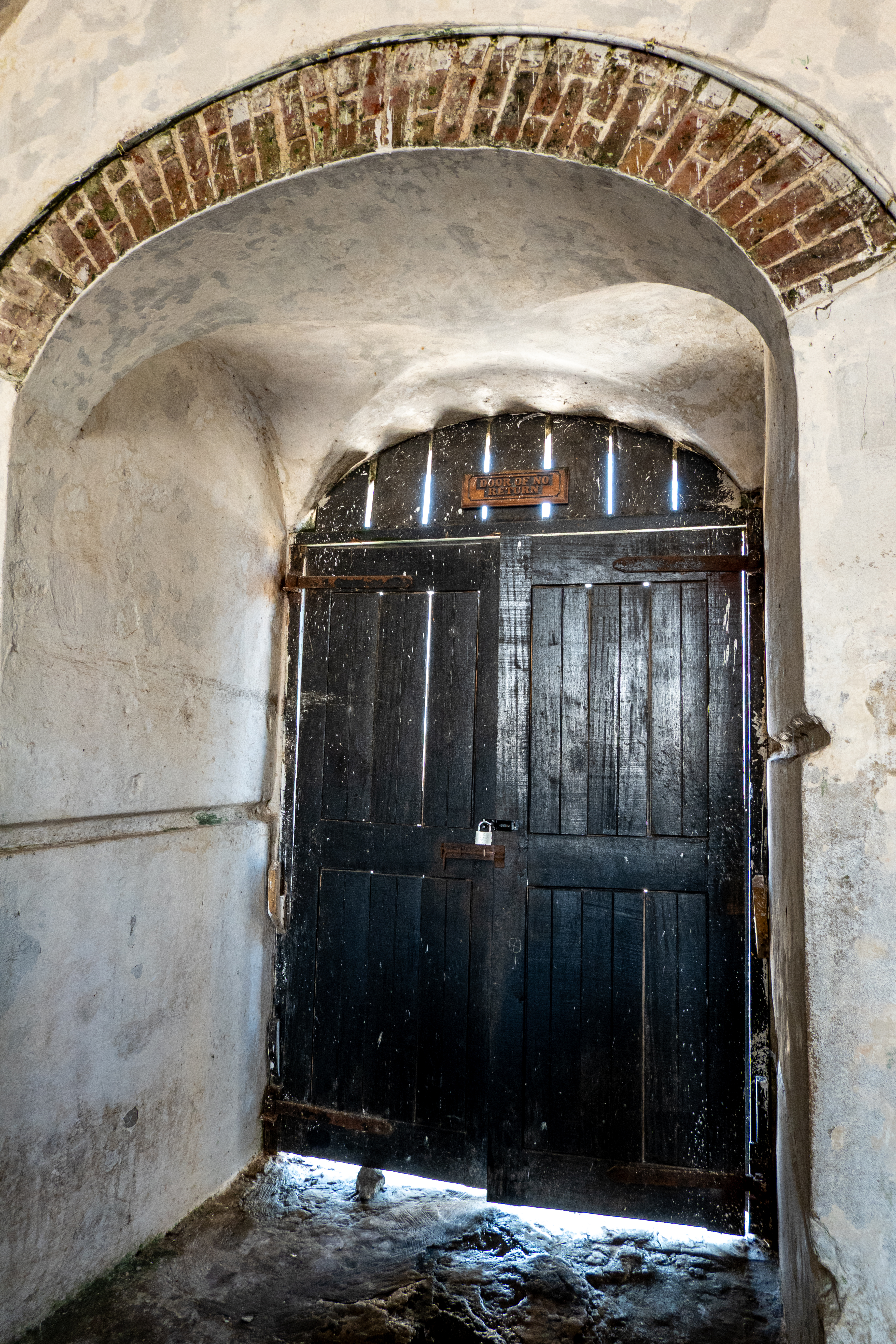
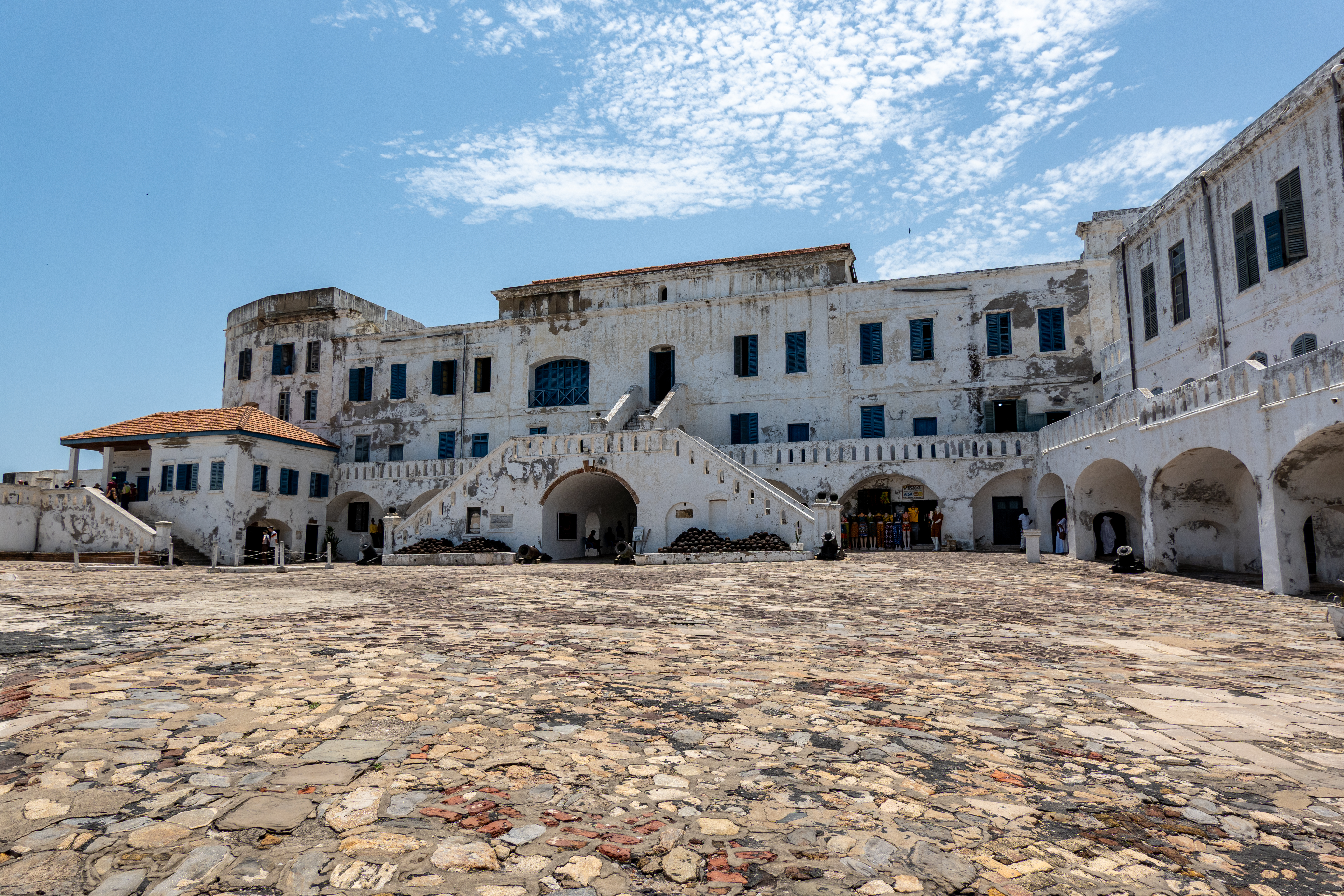
Compared to Elmina, Cape Coast Castle was “new” - built in 1665. But it was built specifically to house slaves, and was thus arranged a little differently. Our guide was a bit more personable than the day before, and while many of the details were similar to yesterday, some were different and/or new. For one, he mentioned that there was a layer of accumulated waste on the floor, which covered the bricks underneath for centuries. The demographics of the slaves were generally people aged 12-40, because the slave traders wanted the local population to remain “sustainable.” We found it sad/ironic that for people they realized the need for sustainability, but never for animals or trees or other resources.
 |
 |
Women who were raped and impregnated were sent to the town of Cape Coast to give birth to and raise their children. Hertz had a question about whether they tried to find their husbands or families once they were outside the castle, and got jumped on by a bunch of the group. It seemed like a reasonable question, given that the women and men in the castle were separated, and may not have been taken at the same time. Moreover, if there was even a 0.01% chance of good news, it would seem worth inquiring. But maybe people were (understandably) on edge.
 |
 |
We’d never given it much thought, but the demographics of various locations in the New World were dependent on where they came from in Africa. For example, slaves from Cape Coast Castle went to the Caribbean and the US (i.e., British colonies). Slaves from Elmina went to Brazil (a Portuguese colony). Of the entire slave trade, about 47% of the slaves went to Brazil. In fact, Brazil has the second highest black population in the world - only Nigeria has more.
 |
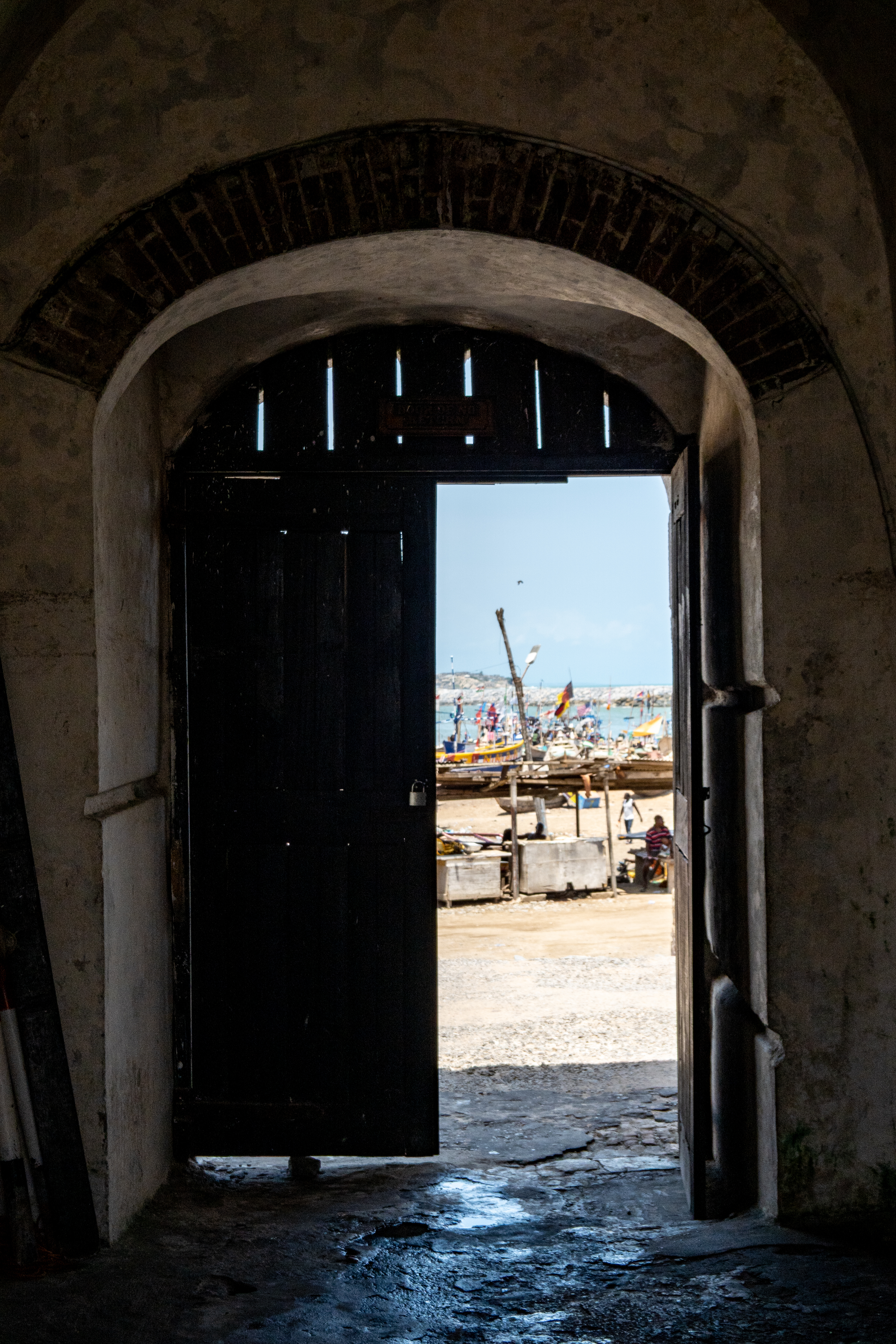 |
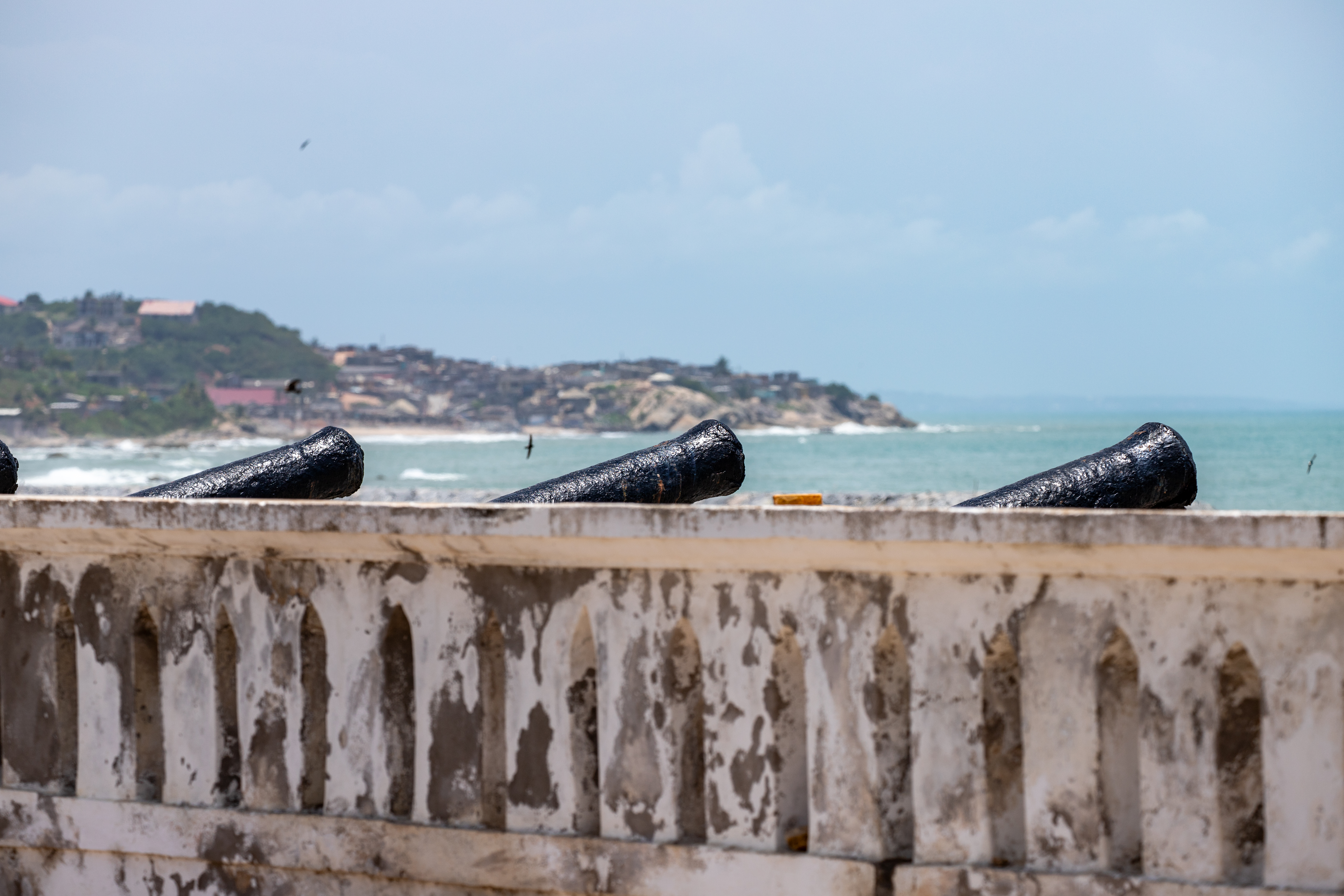
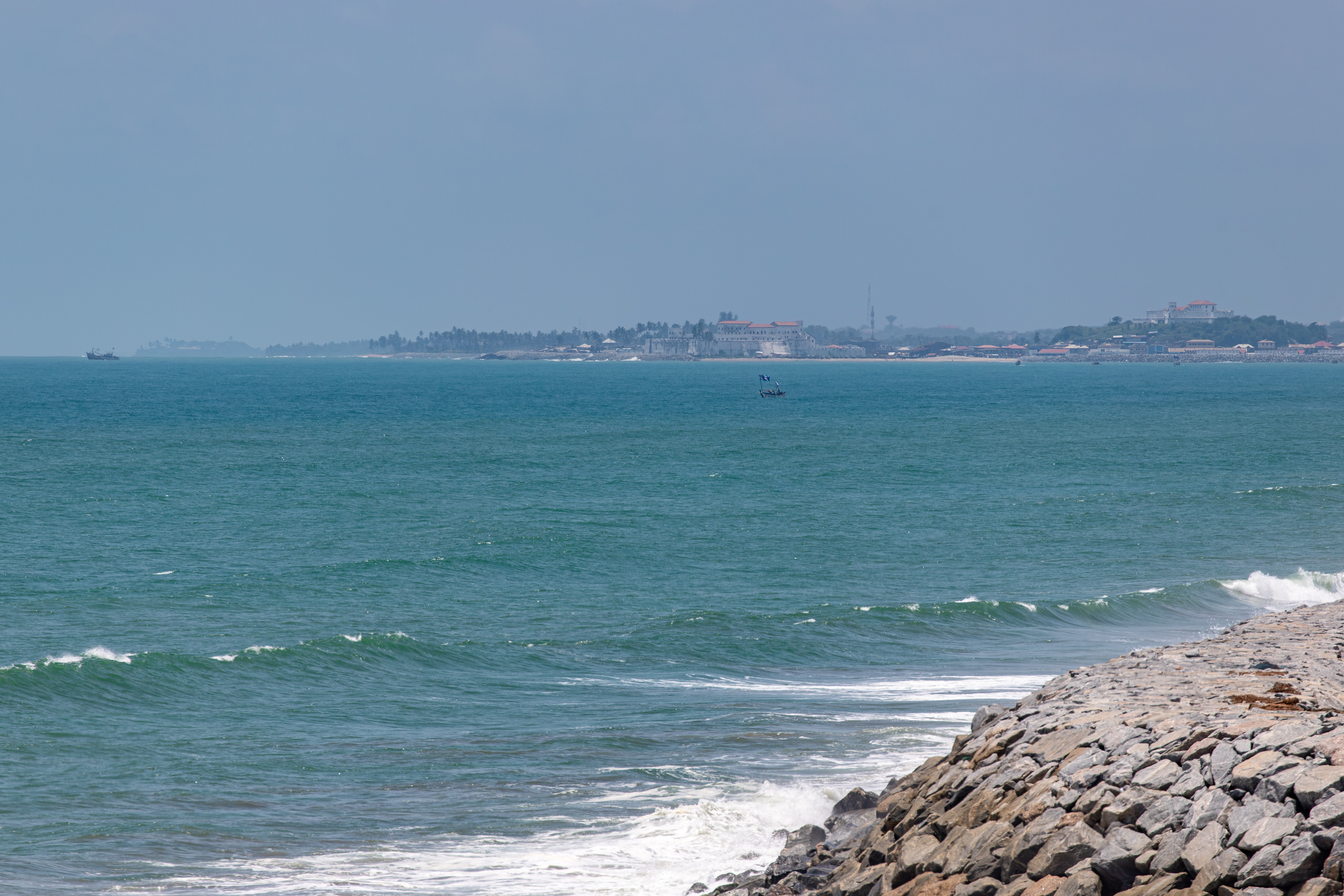
Also, in 1872, the Dutch and the British “traded” various colonial holdings, and the British got Elmina Castle from the Dutch in exchange for some land in Indonesia. This led to the English colonizing Ghana; otherwise perhaps the Dutch would have ruled. The Colonial period started when the local Fante chiefs agreed to let Brits use the land for 100 years to fight a common enemy, the Ashanti. The tour was a bit abbreviated since we’d received a similar tour yesterday, plus we had a long ride ahead of us in the afternoon on the way to Accra. The castle’s grounds and views were gorgeous, which makes the history all the more sad and depressing. We were there for just over an hour, and then went back to grab lunch.
 |
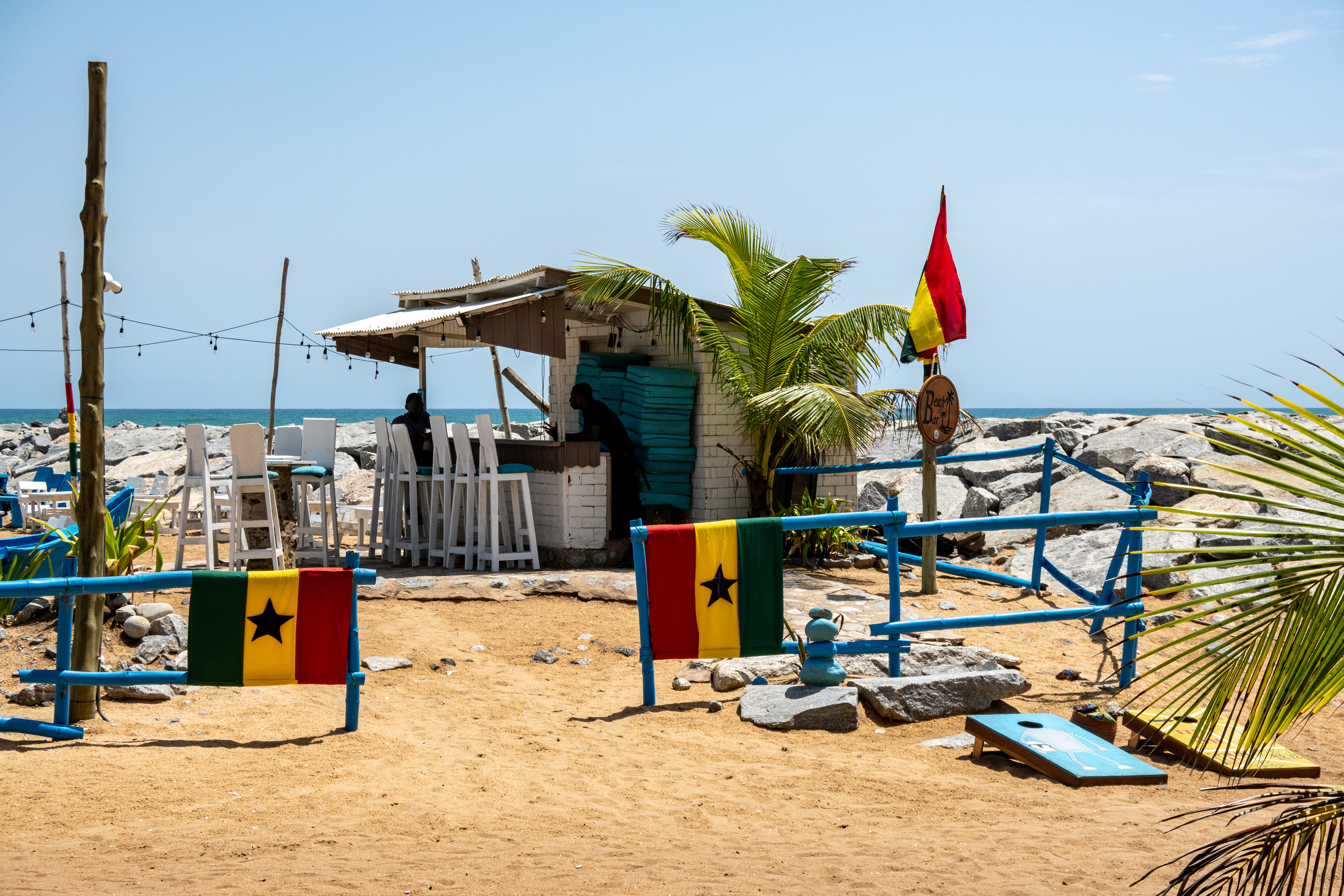 |
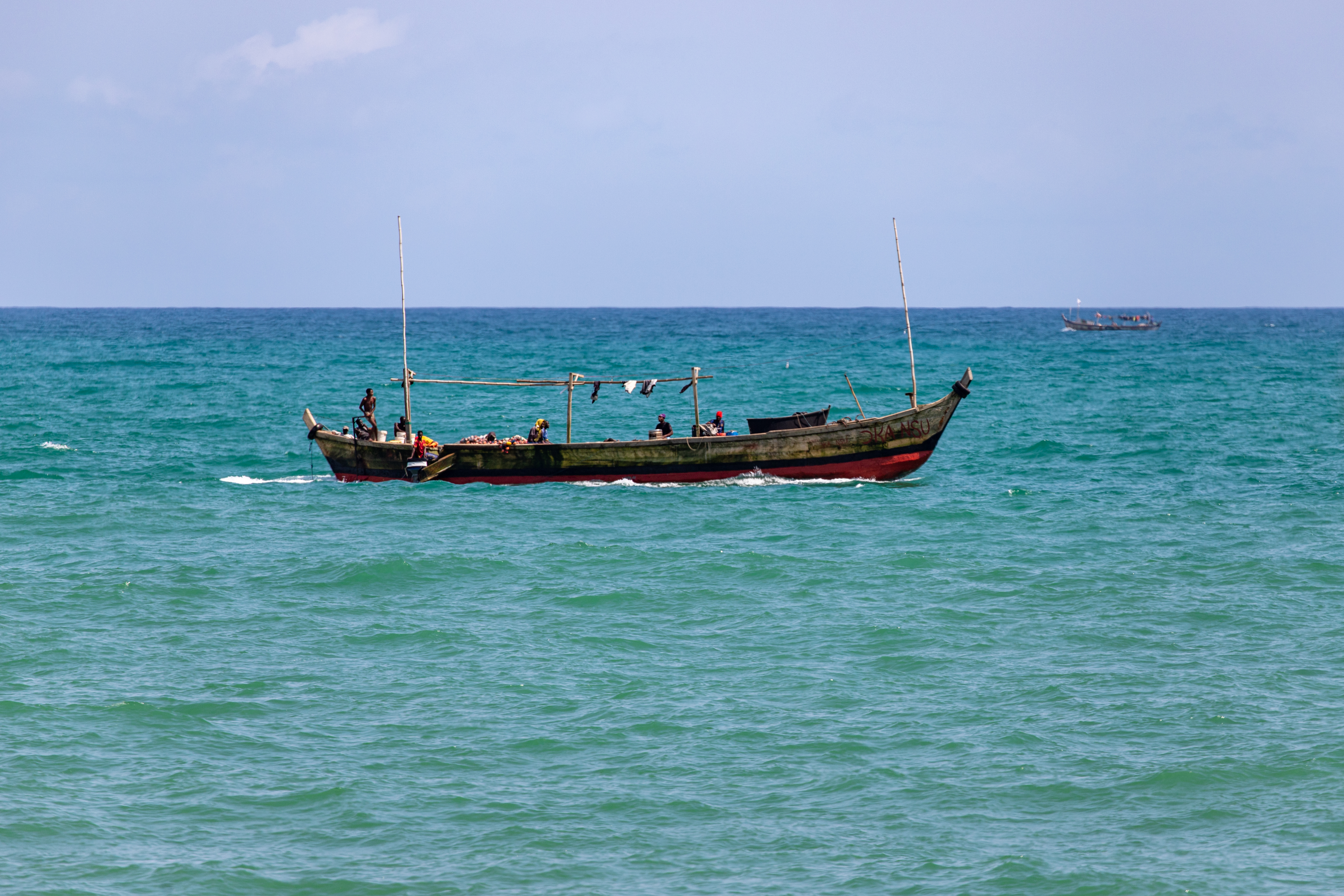
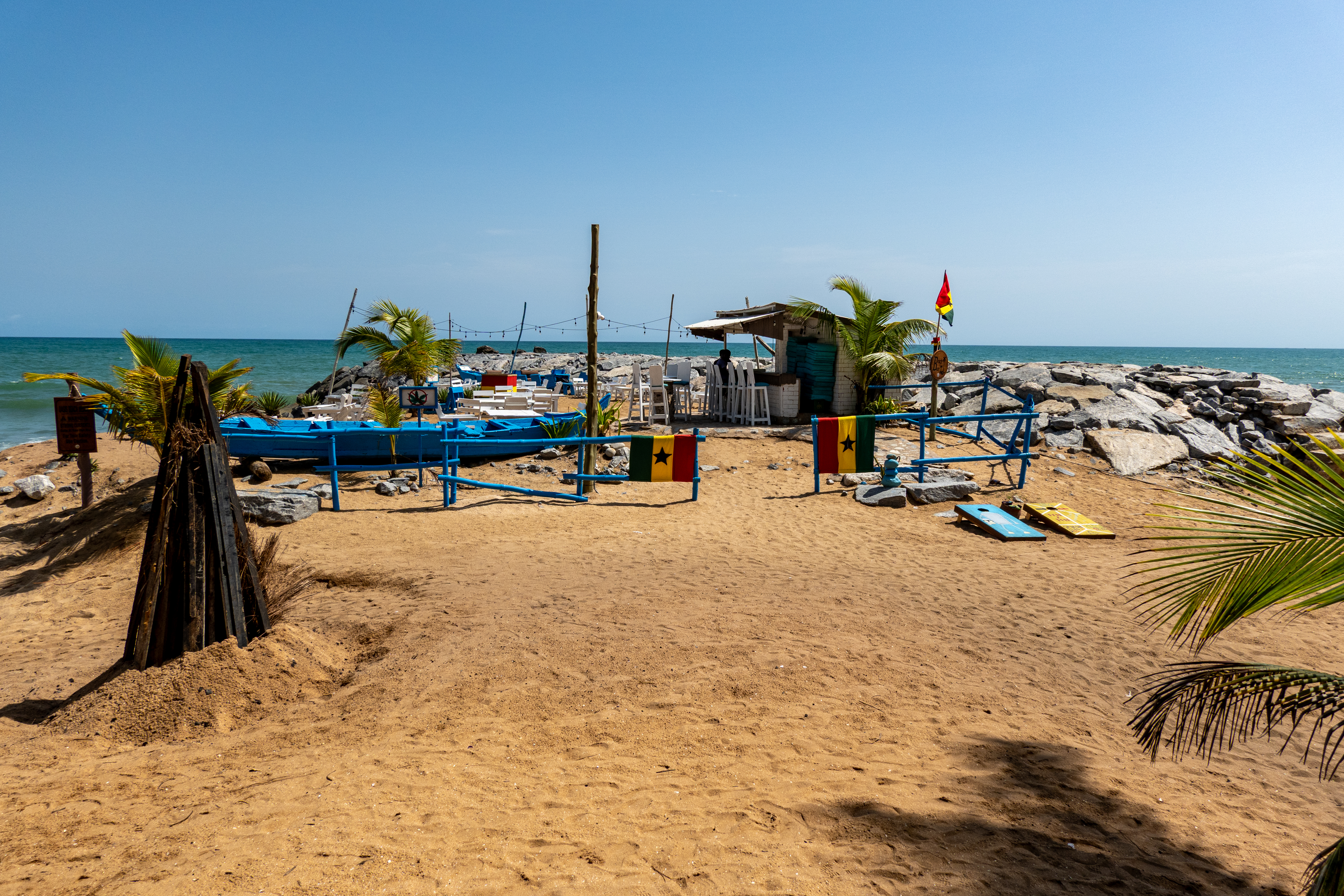
Lunch was significantly better than yesterday. Crystal had spicy prawns and a side salad, and Justin had jollof rice and grilled chicken. The view was really nice, there was a nice breeze, and the food came out quickly. After people finished eating, everyone but Hertz and us went to shop for 20 minutes. So we spent most of the time discussing his garden in the Bay Area, and we ordered a second round of drinks.
 |
 |
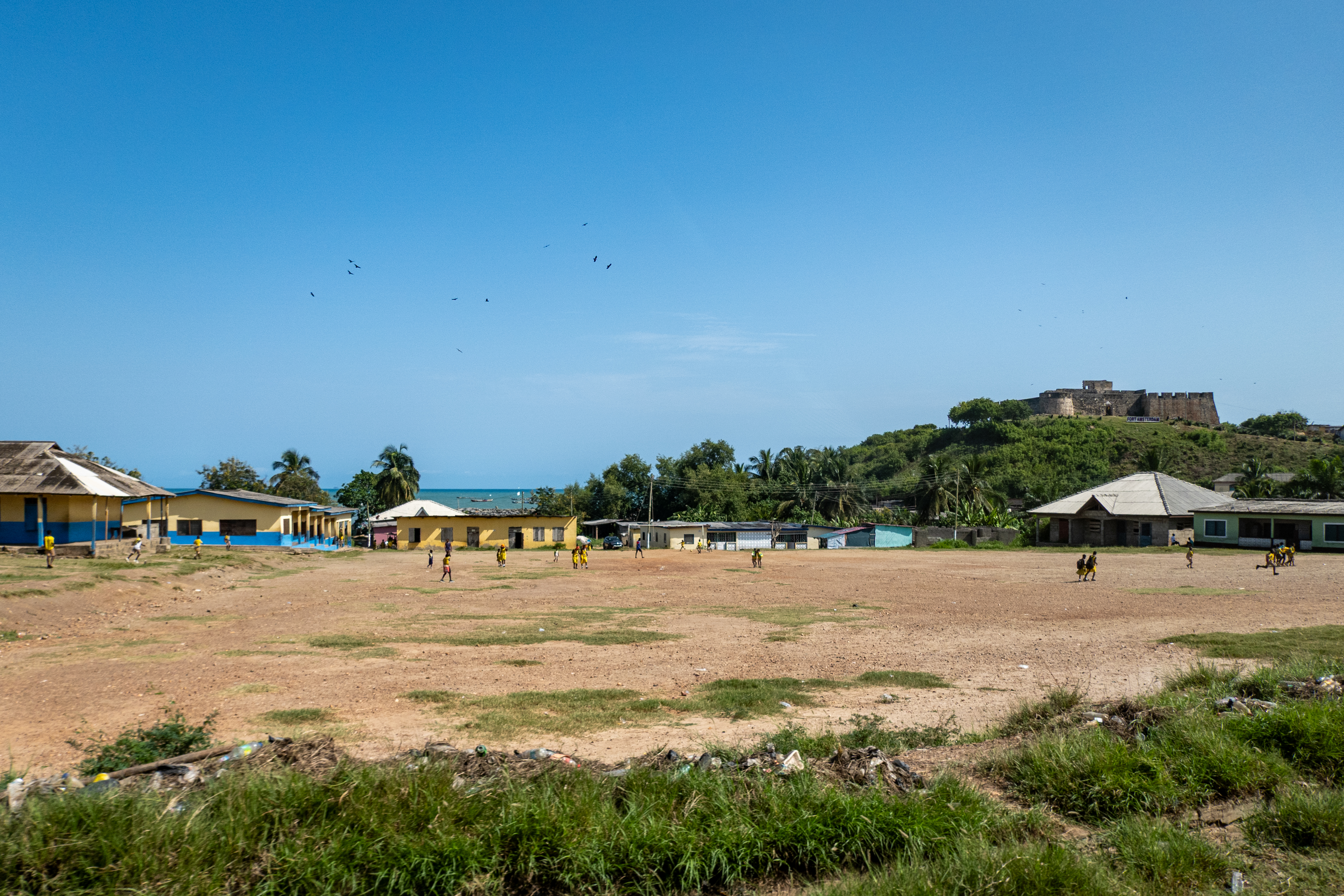
Our afternoon excursion was a ride on the highway to Accra. On the way out of Cape Coast, Crystal saw a sign with an unfortunate homophone - “Except The Lord.” Along the drive we saw several areas where it looked like they were constructing a new, wider and straighter, highway. We did not get to use any of these portions. Instead we found ourselves on the dirt part of the new highway, in constant dust, with no lane dividers. It was Mad Max Fury Road with more cars. Around Kasoa (basically the western suburbs of Accra), we finally got back onto the pavement and everyone clapped. It had been 2-2.5 hours of bumpy dirt roads.
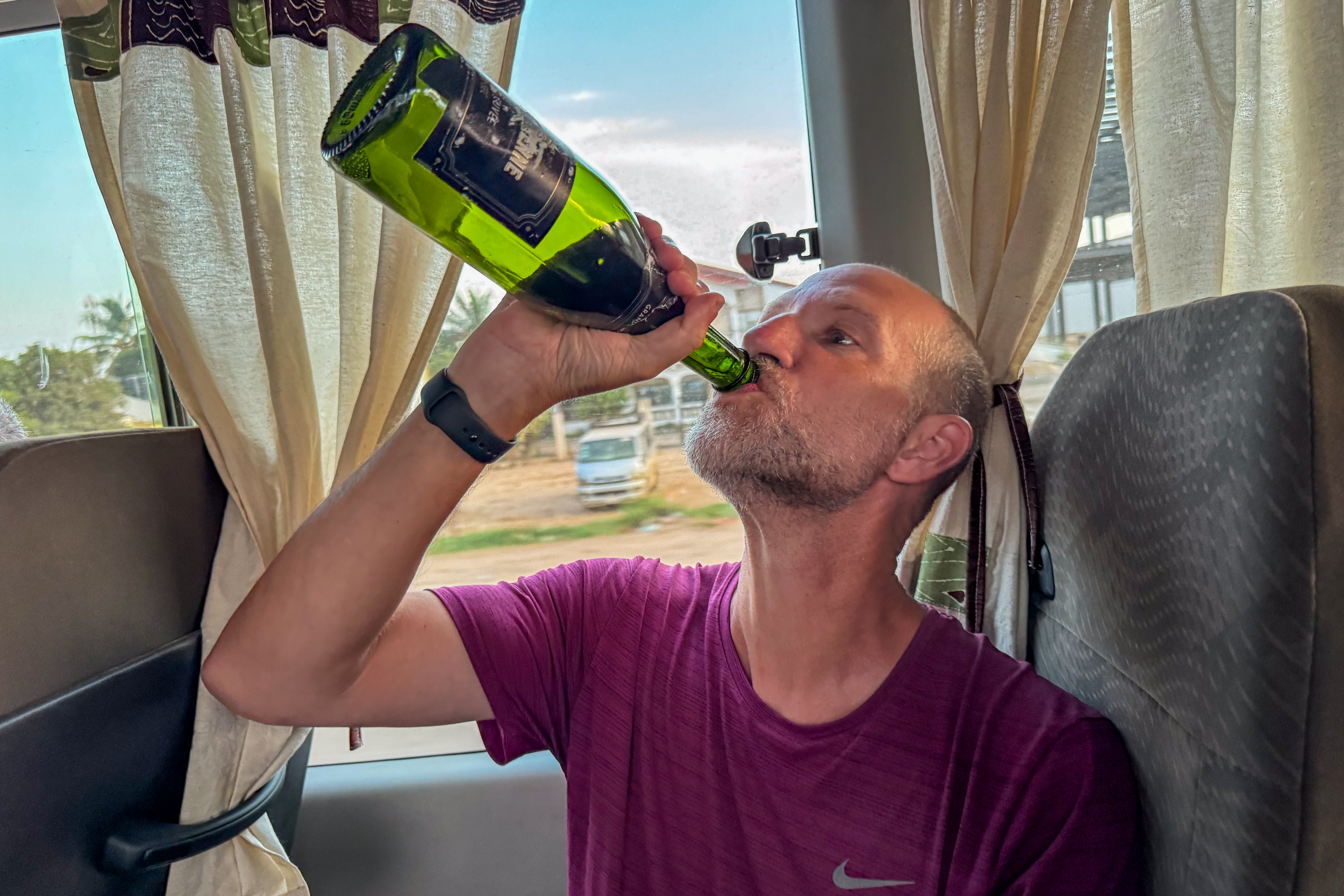
We briefly stopped at a giant mall on the outskirts of Accra, the West Hills Mall. Sena was asking if anyone wanted to stop in order to pee, but no one wanted to be the one to speak up, apparently. Justin mentioned “speak now or forever hold your piss.” Someone did finally say something, and once in the mall we used the facilities and bought disposable cups for the sparkling wine we got over a week ago, on Women’s Day. It had been in the cooler, getting warm, getting cold, bouncing up and down and side to side, for 9 days now, across multiple countries.
When we got back to the vehicle, before we started moving, Justin opened up the sparkling wine (without event, thankfully). Then he boarded and we all shared in some 9 day old, hot-cold-hot-cold-hot-cold, shaking constantly sparkling wine that we got 2 countries ago. As it turns out, it wasn’t too bad, and most of the reactions were “I’ve had worse.” Not a drop was spilled, either, which was nice given the circumstances. We made our way through city traffic, and got to our hotel (La Villa Boutique Hotel) a little after 18:30.
 |
 |
As was our custom now, we immediately went to the restaurant to put in our orders. They had lamb on the menu, so Justin (and Hertz) ordered that. Crystal ordered a Caesar Salad. We got to the room right at 19:00, with dinner being at 19:30. The AC was already on (good!) and there were (working) plugs right next to each side of the bed (great!), so this was immediately one of the top hotels of the trip.
Down at dinner - our farewell dinner - Sena went over the logistics for the next day, and for getting to the airport. All of our flights were within an hour of one another, so we decided to go all at the same time, and Brian would still have 2.5 hours (give or take) at the airport, and Jane would have about 3.5 hours - we’d have about 3. So would Taryn and Stephenie, who were slated to be on our flight. After logistics, Sena recapped what we’d done for the past two weeks, and some of the things we’d already forgotten about a bit.
The trip included a lot of driving, but we saw a lot of disparate events in far-flung places, and all the driving was the cost of that. Everyone seemed to have had a good time. Brian had us go around the table and mention the things we liked most from a different country. Justin got Benin, and said the stretch of Gran Popo. Crystal got Togo, and mentioned the Zangbeto Mask Dance with the big cones, where the little kids were so fascinated with us, and one of them fell asleep right behind Justin. We all discussed a variety of topics, and a little after 21:00 we started to slowly filter out. The two of us went outside by the pool for a couple more rounds, then went up to the room. We discussed the trip a bit more, and the pros and cons of group travel. Eventually we got to sleep around midnight.
| Previous Entry |