Somehow we slept fine, despite the lack of any real AC. We got up a bit early, got cleaned up and ready to go. We read up about the Oscars a little bit, and then went down to breakfast, where we saw the rest of the group. We headed out at 08:00 for a drive to the south.
On the drive south, Sena told us that apparently people in Ghana believe in Dwarfs, and that they have powers. The Dwarfs are the animistic thing that help priests in Ghana enter their trances. These Dwarfs are not analogous to little people, but rather more like spiritual dwarfs, maybe like elves or something. Actual dwarfs in Ghana are called Pygmy, and there’s a guy campaigning for their rights throughout the country. It was noteworthy to hear that in Togo it is the followers that go into trances, whereas in Ghana it’s the priests.
On the way out of Kumasi we saw so many more billboards for funerals. It struck us as kind of ironic that you never get to see your own billboard. Everyone was driving into town for work on a Monday morning, so it was good we were leaving, headed south. To pass the time, Sena told us about the Adinkra Symbols. Many of the people in Ghana came originally from Sudan - first to the Lake Chad area, then to the River Senegal/River Niger area, and then eventually to the Guinea Coast. They came with symbols rather than an alphabet.
Sena went through several of the symbols, starting with the Siamese crocodile, Funtunfunefu Denkyemfunefu (phonetically pronounced Foontoon Foonafoo Denchem Foonafoo). It is a symbol of two crocodiles sharing one stomach. The two mouths fight for food, but no matter who gets it, both will be satiated. It seems apropos of the primary/general election process in the United States - perhaps the Democrats should learn it.
|
|
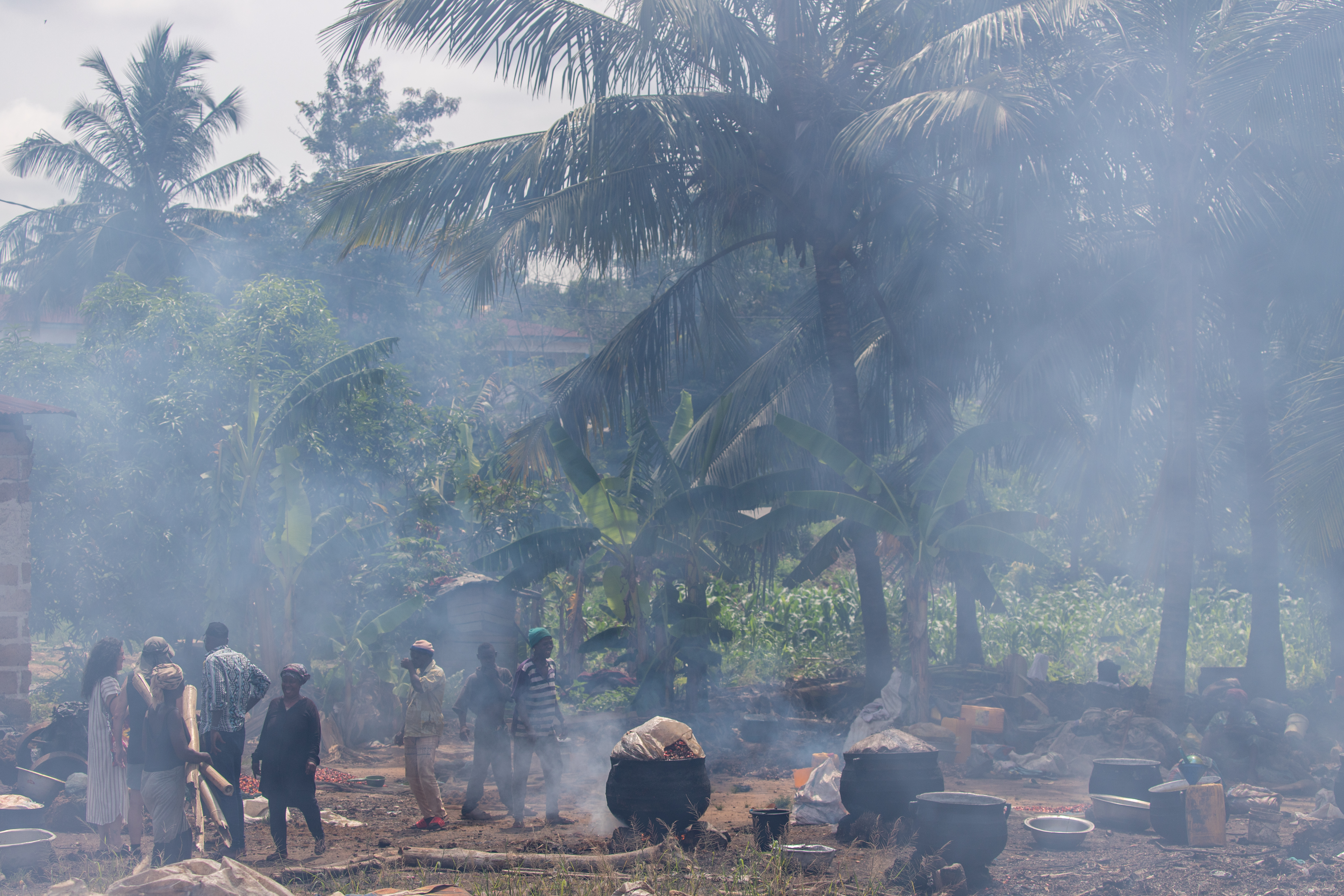
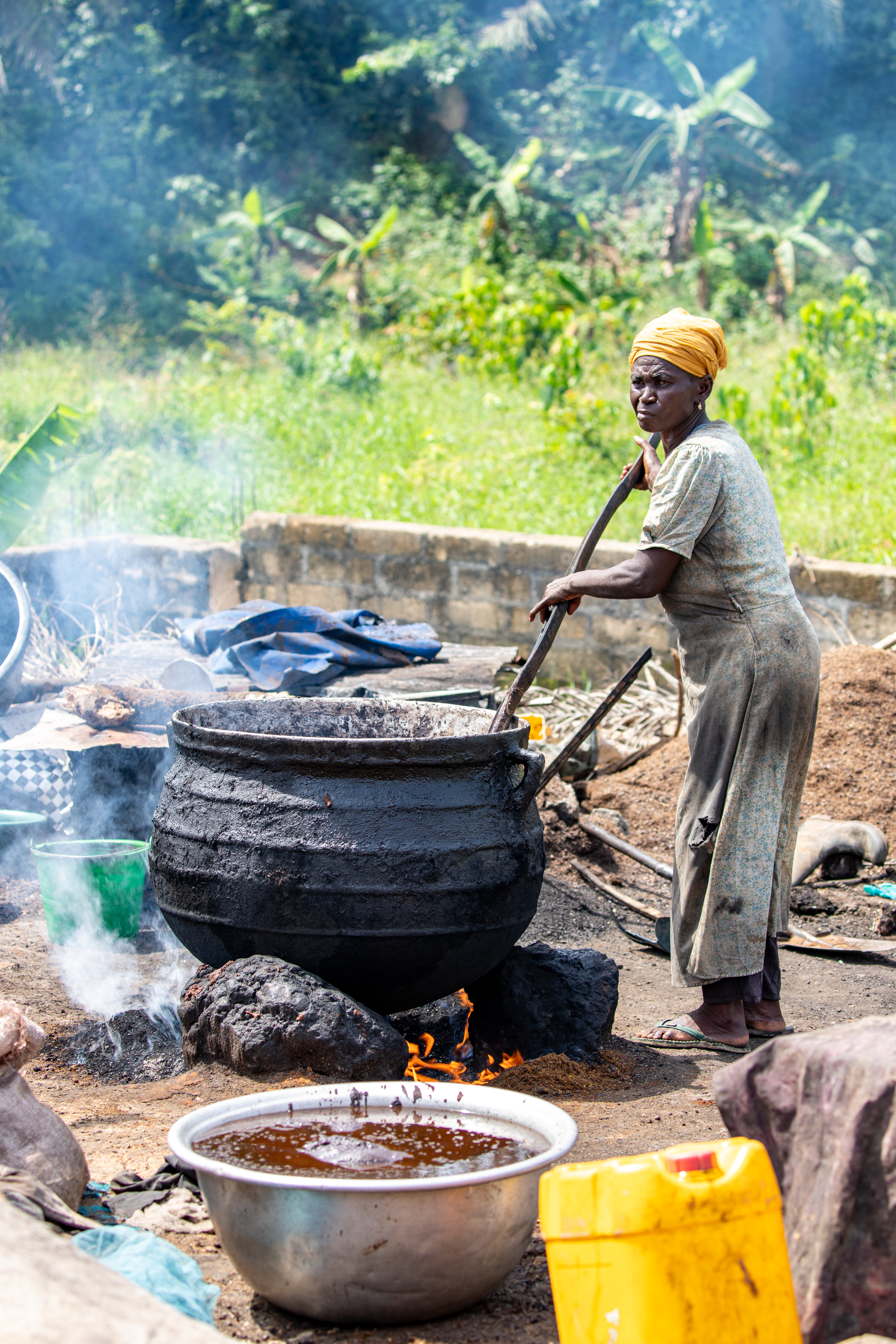
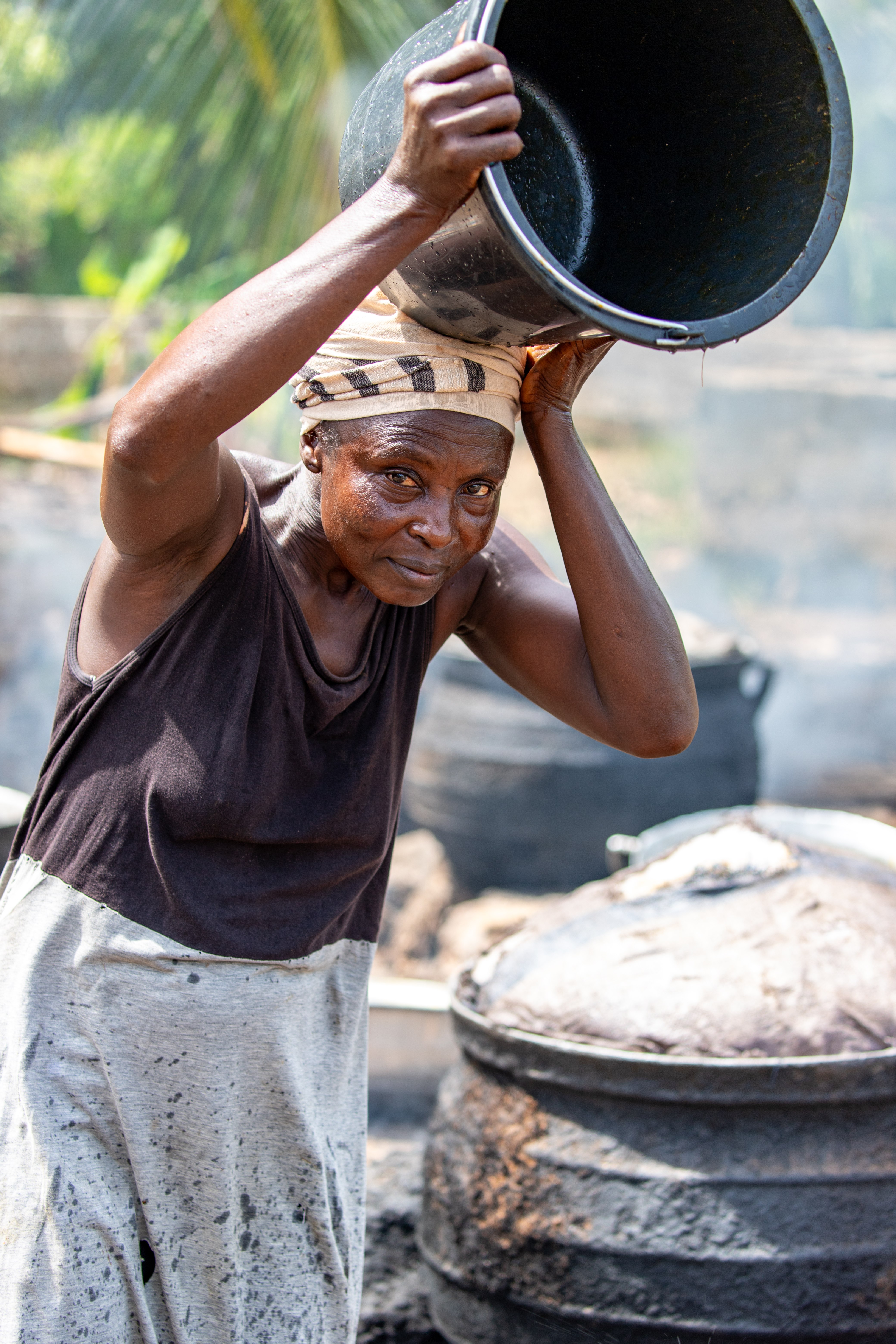
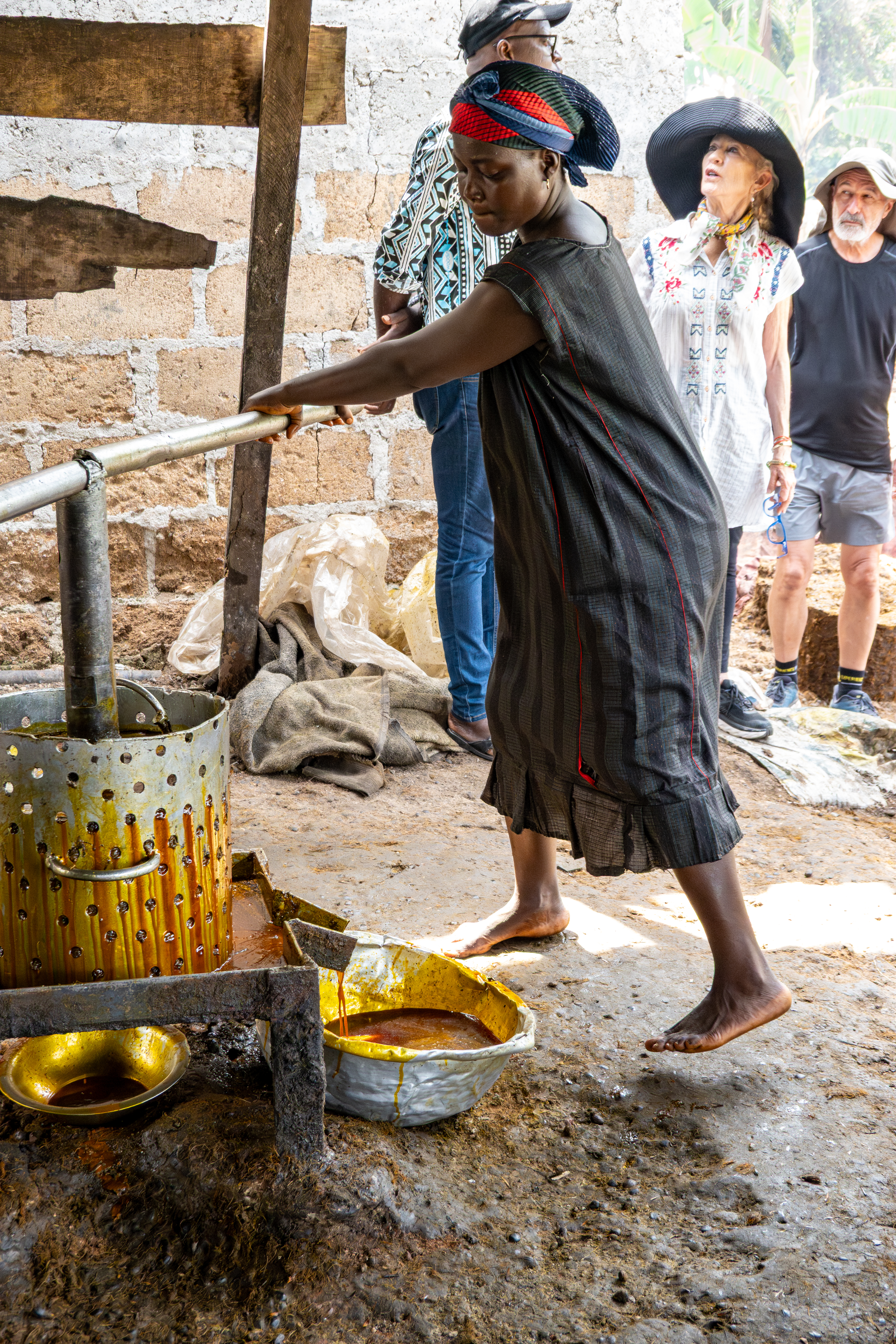
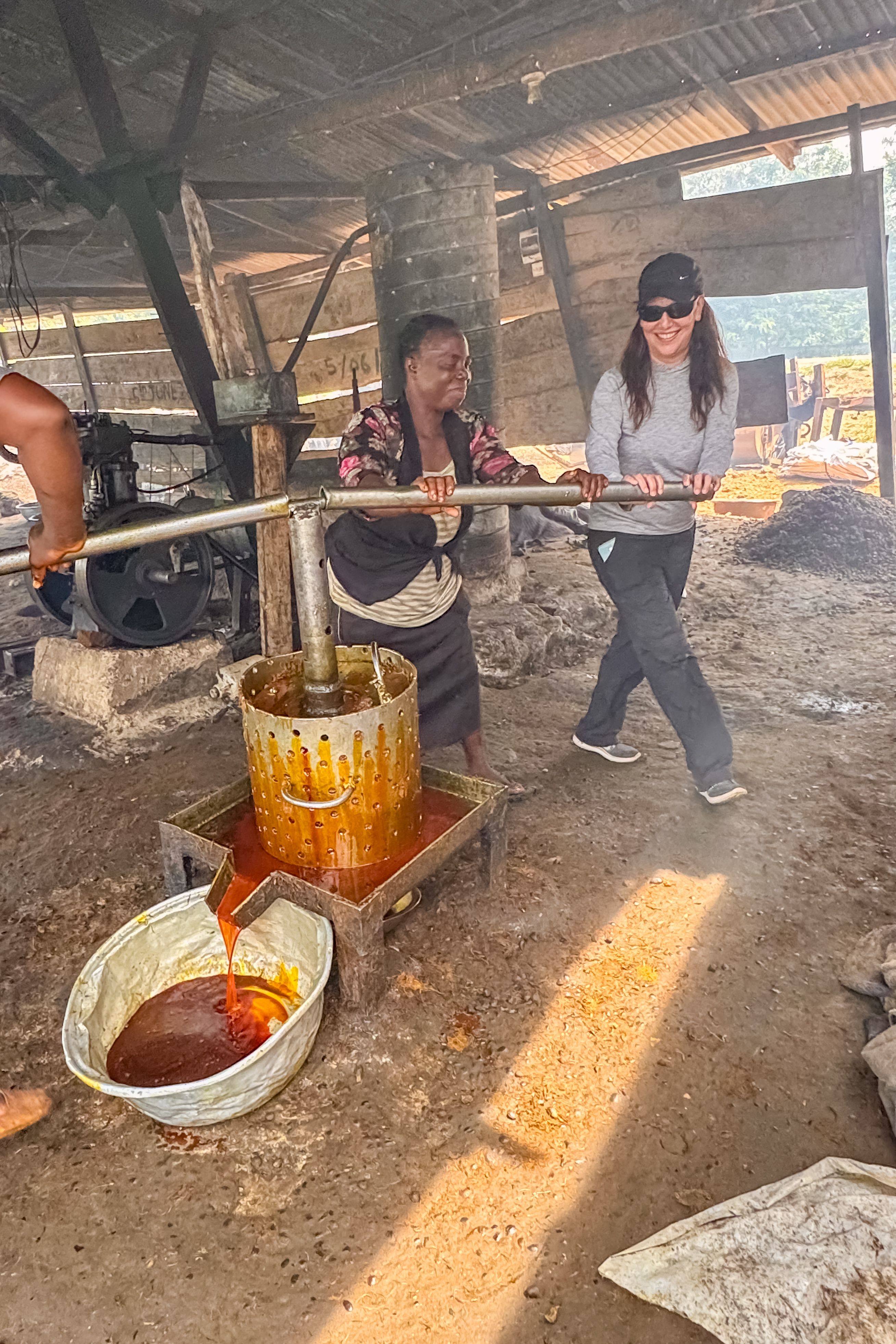
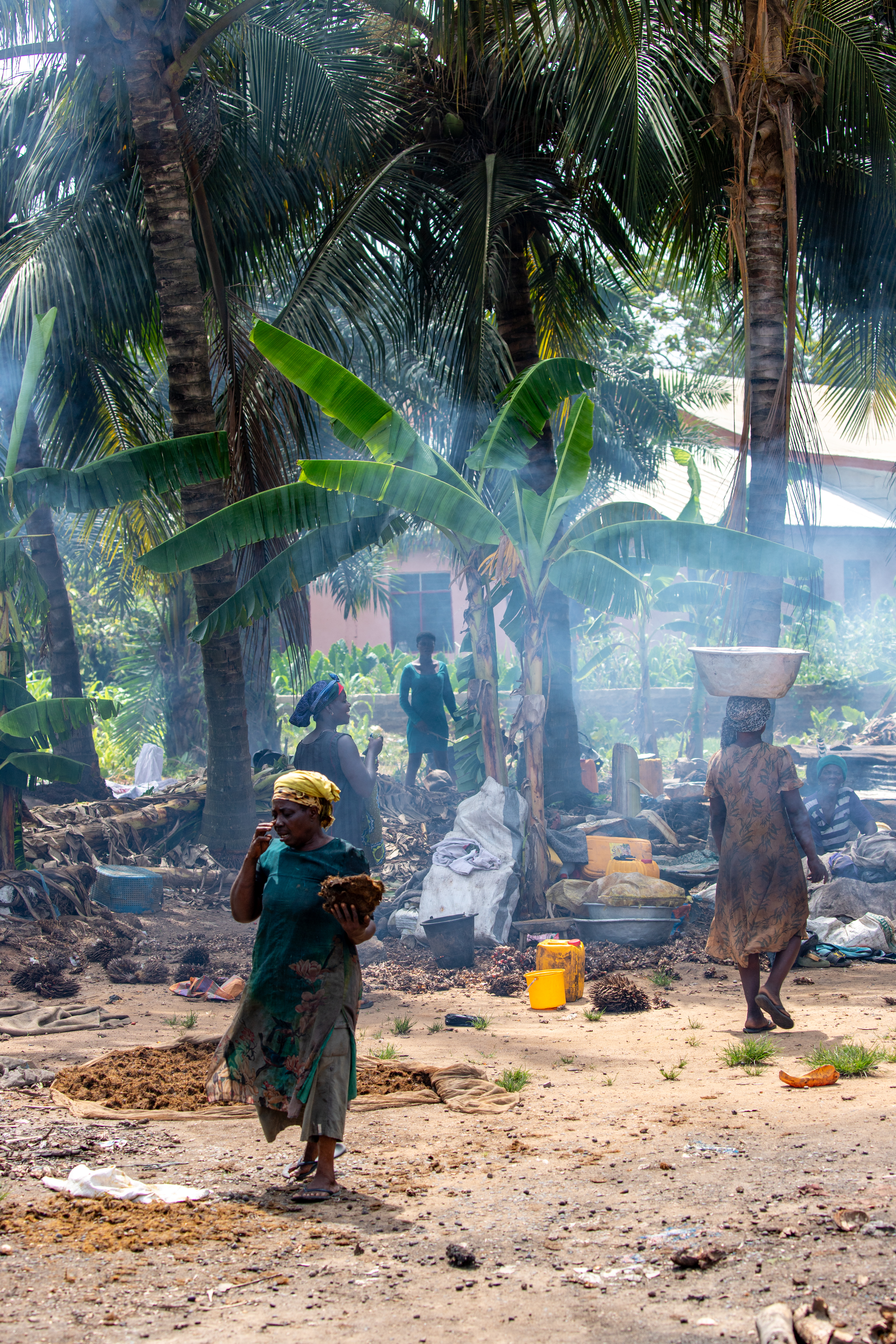
A little after 10:30 we stopped at a palm oil farm, and we got to see the process of how it is made. First they separate the red fruits from the inflorescence. Then they boil the fruits to soften them. Then they press the fruits. Crystal got to use the press for a bit - two people spin in a circle with a long pole (akin to a giant corkscrew) that slowly presses down on the fruits and spits out a mixture of palm oil and water. Finally they cook this liquid to boil off the water. Meanwhile the inflorescence and spent seeds are also pressed, and used as fuel for the fires. It was pretty interesting to see the process, but also pretty depressing because of Borneo and how oil palm plantations are devastating the rainforest.
 |
 |
There was a conversation about what the farmers make, and it seemed people were talking past one another, as some people thought only margin was being discussed, while others thought actual fixed amounts were being discussed. Either way, given the surroundings, we don’t think they were making a ton, and it didn’t look like easy work, either. But they seemed to be enjoying themselves, as they were some of the happiest/cheeriest people we saw on one of these short stops.
 |
|
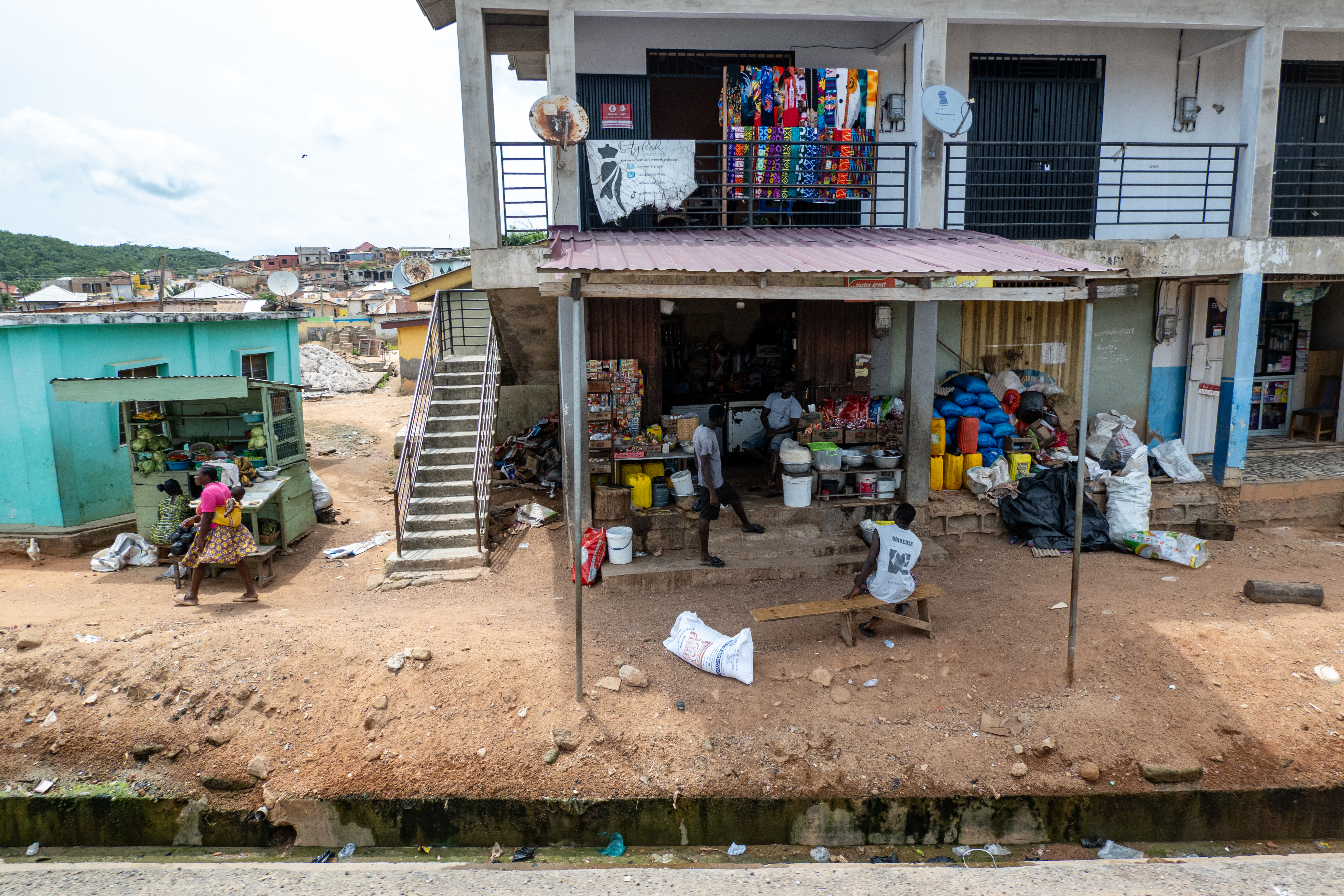
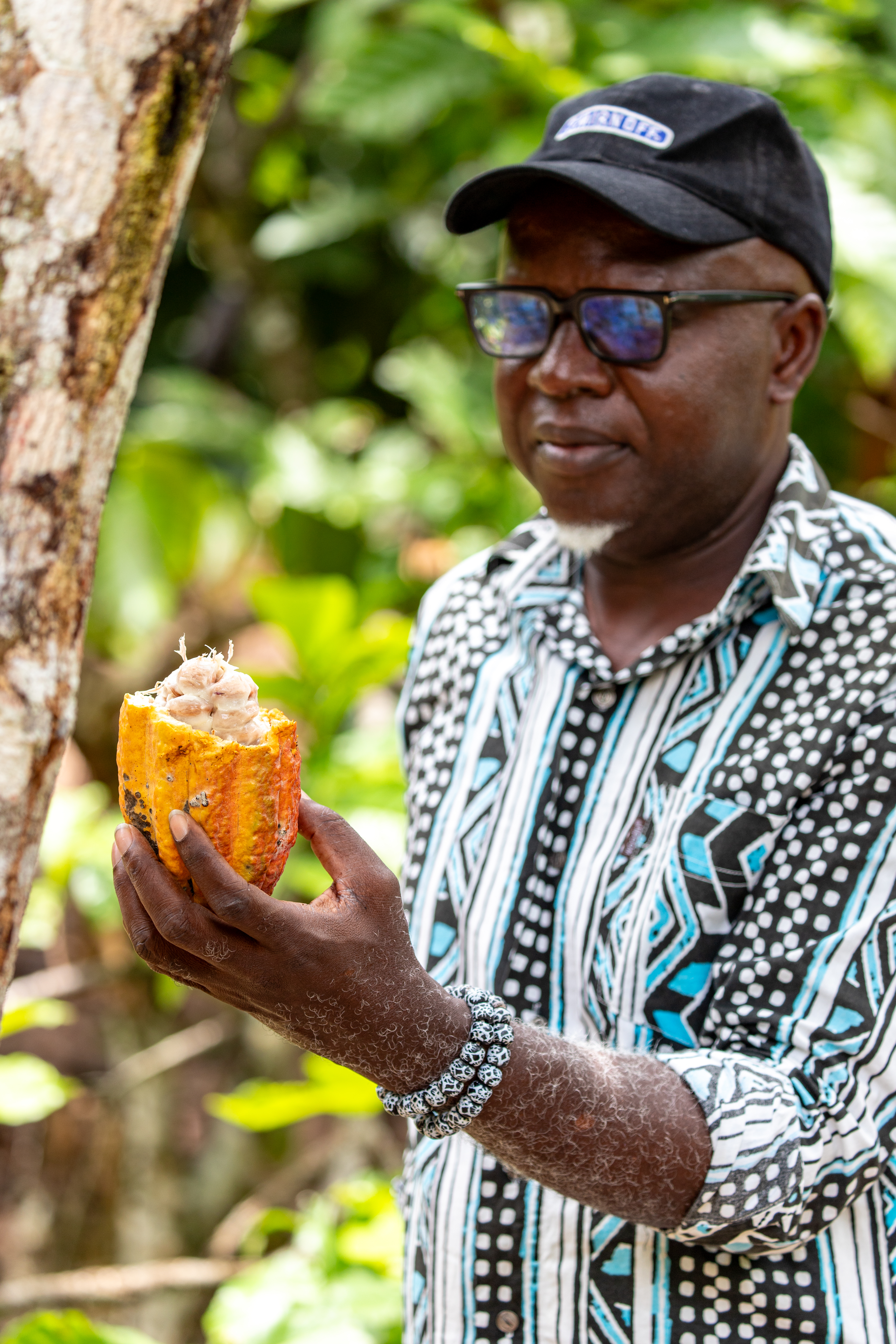
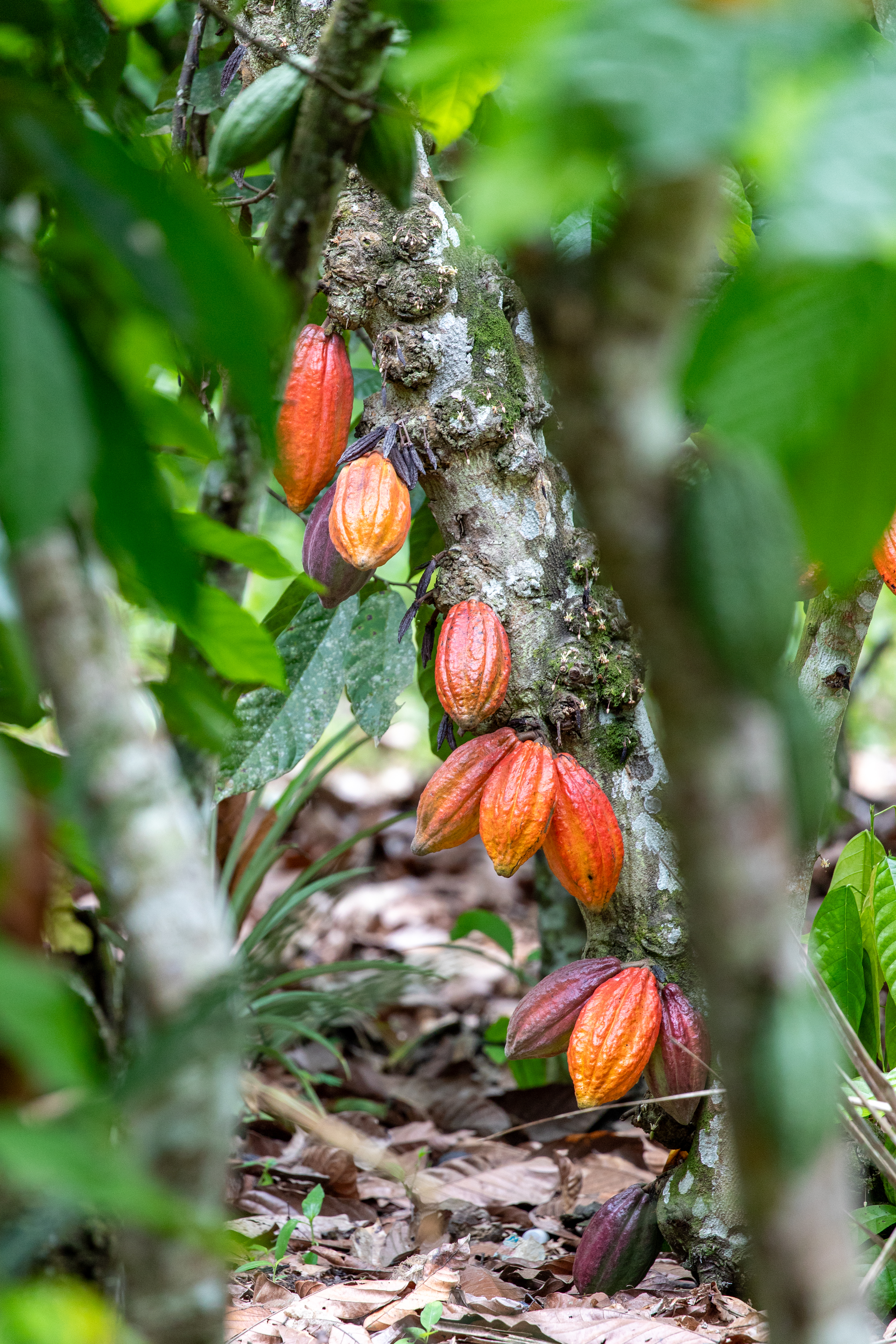
We had another short stop about an hour later, at a 6 acre Cacao farm. This was an exceedingly short stop, maybe 10 minutes. We got to see some ripe fruits, and the inside of one of the fruits. We also got to try some of the chocolate (which Sena had purchased from the store). From there we continued south towards Cape Coast. There were lots of small villages along the road. It was interesting to see so many people just living their lives at small storefronts, going to small schools, etc. It was a very contemplative kind of morning, thinking about the huge number of people on the planet that lead a totally different kind of life. It was also odd to think that much of America's wealth was built on the backs of people who lived in these forests several centuries ago.
 |
 |
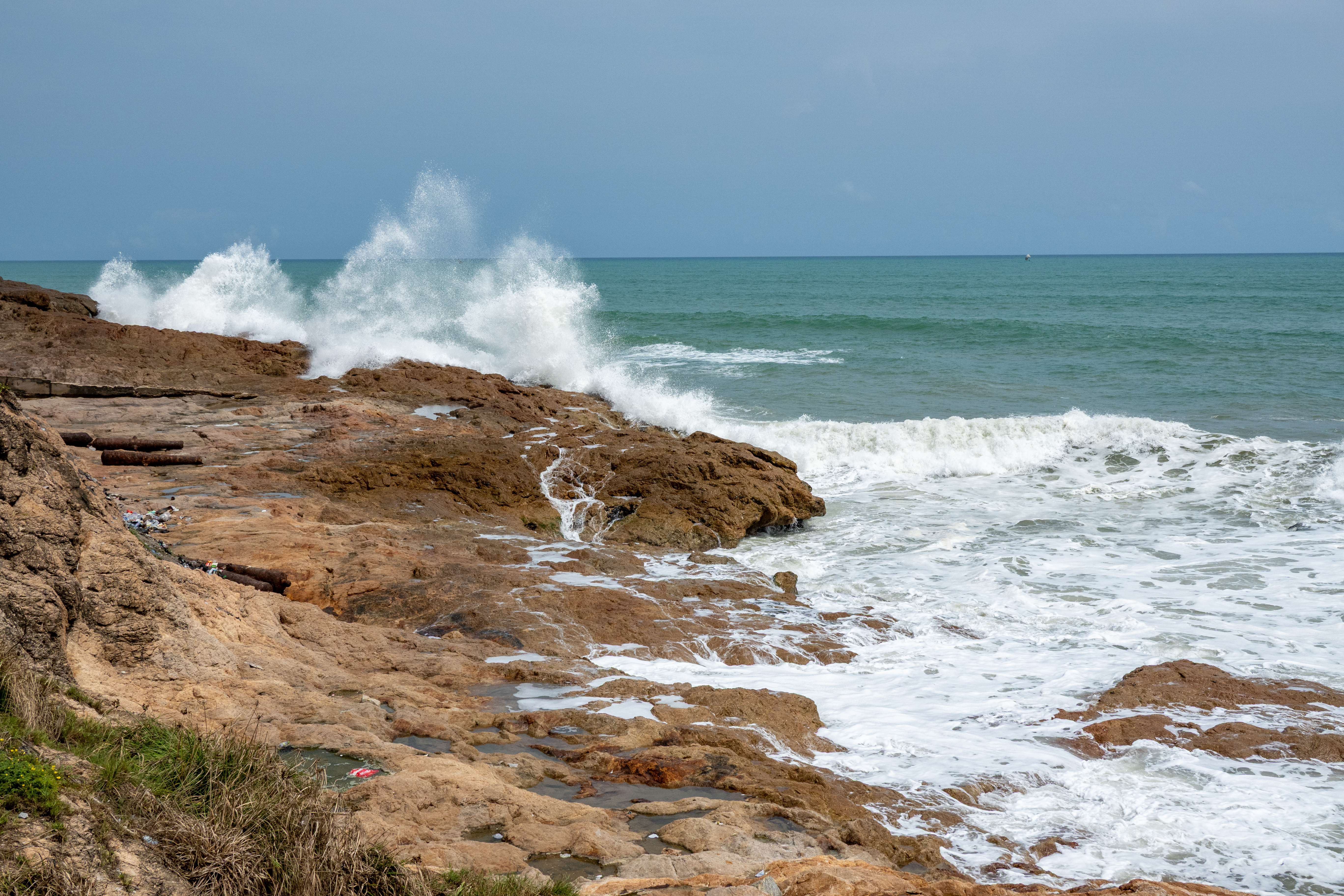
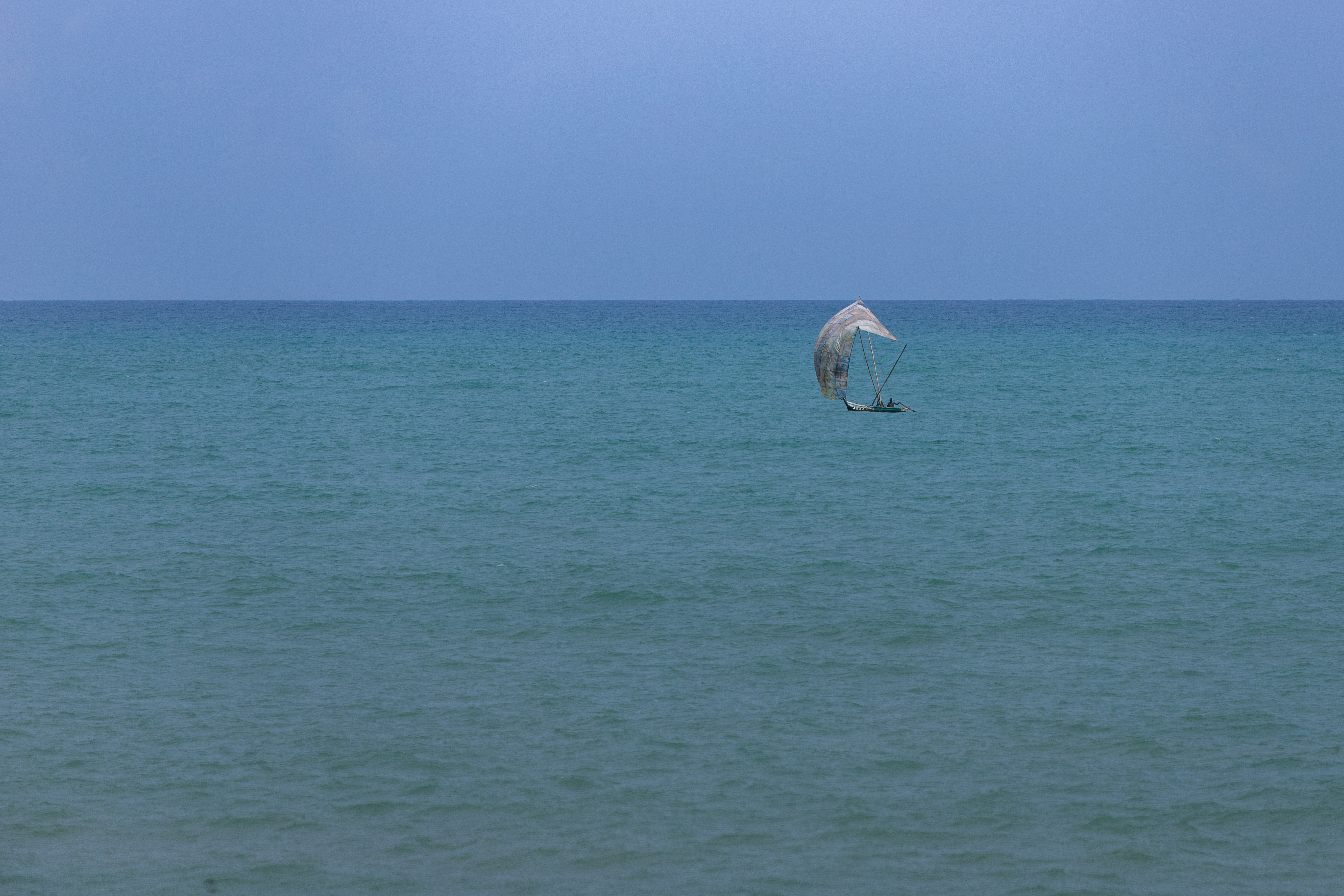
So anyway, lunch was next. It wasn’t the greatest. It was at the Castle Beach Restaurant, right next to the Cape Coast Castle. The restaurant, despite its prime location, was completely empty, which should’ve been a sign. Crystal got a giant red snapper. Justin got chicken. The food was eh. Apparently our food was some of the better food. We liked the music - 90’s soft hip hop, plus James Brown. Apparently we were alone in this. Jane won’t be coming back any time soon.
 |
 |
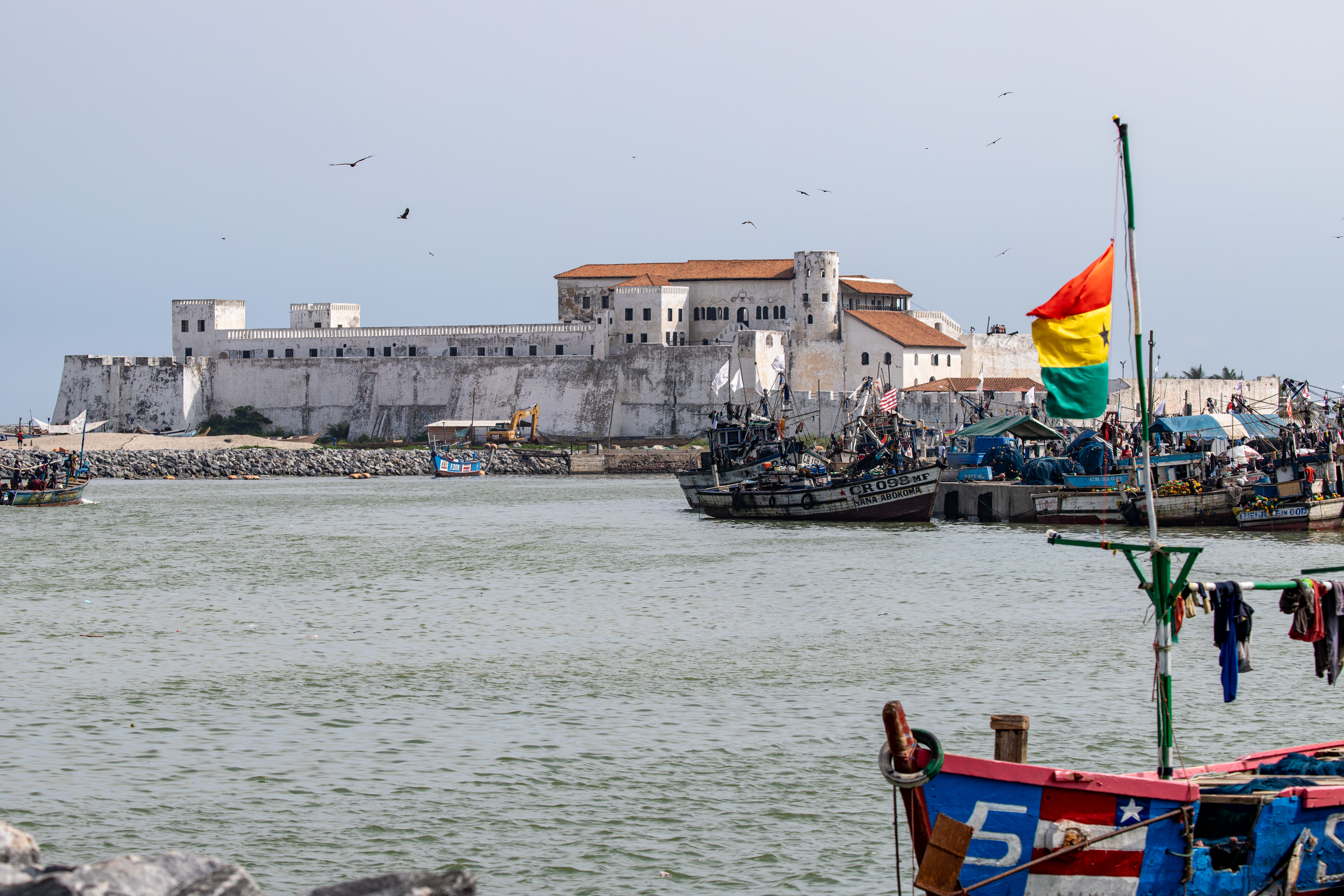
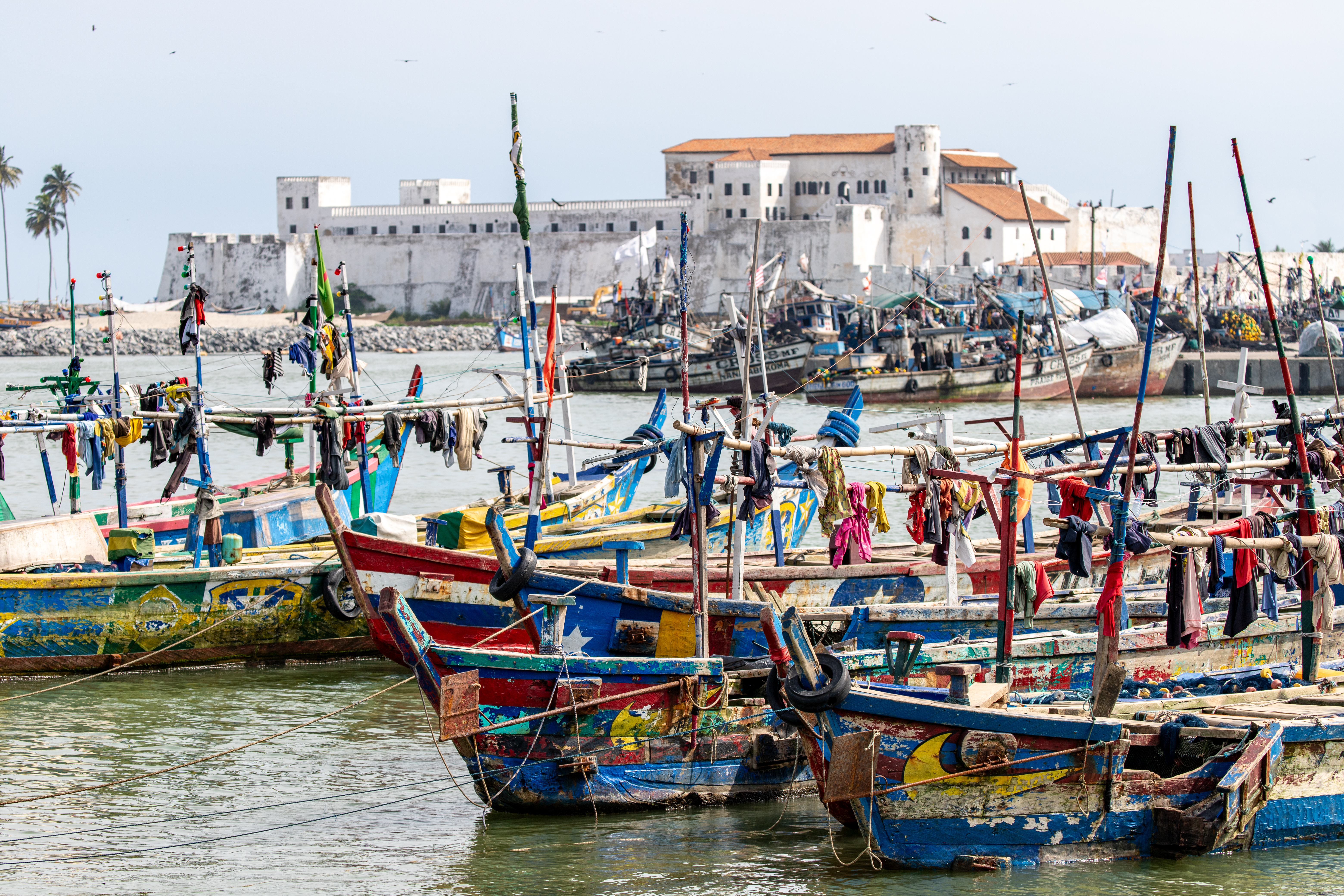
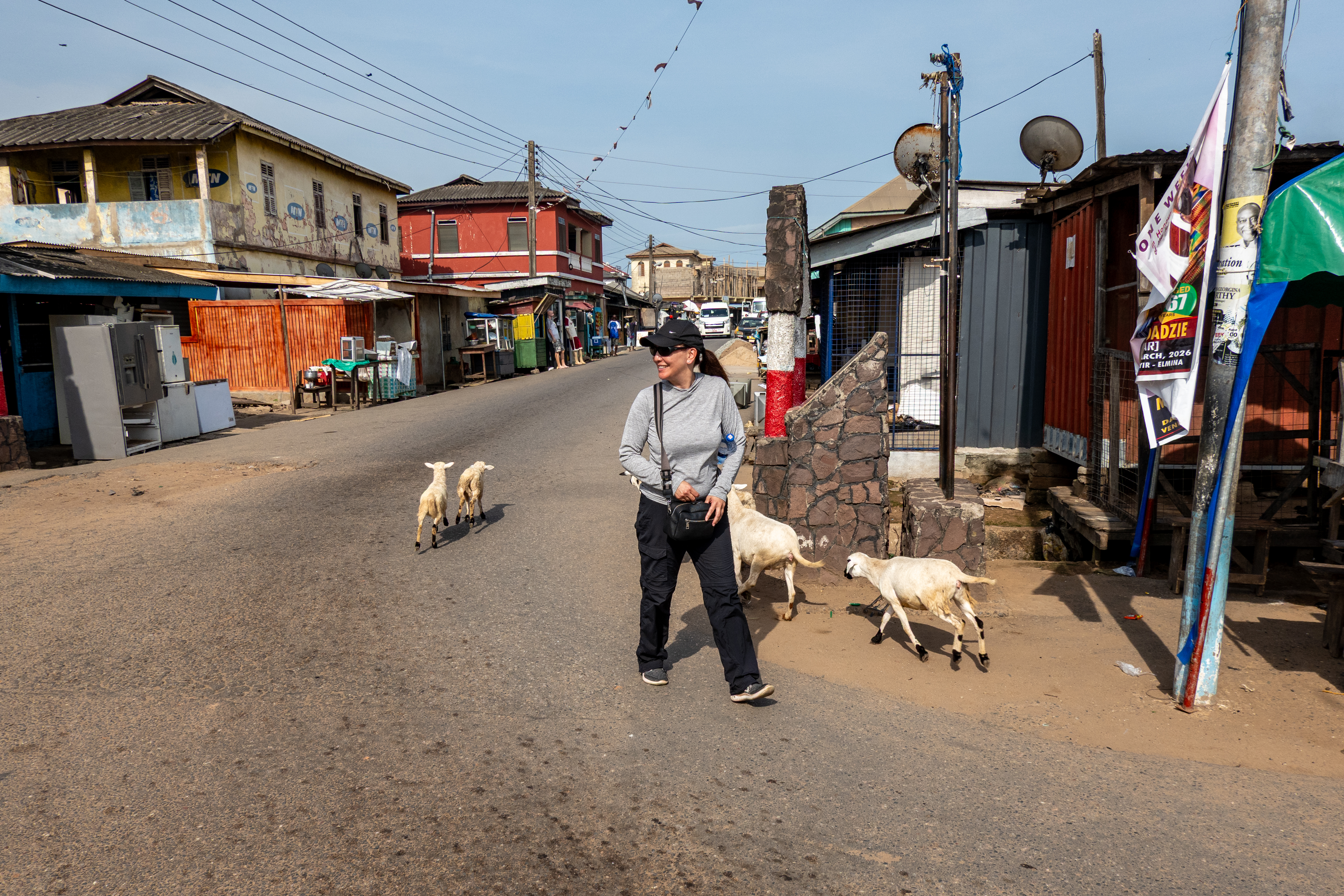
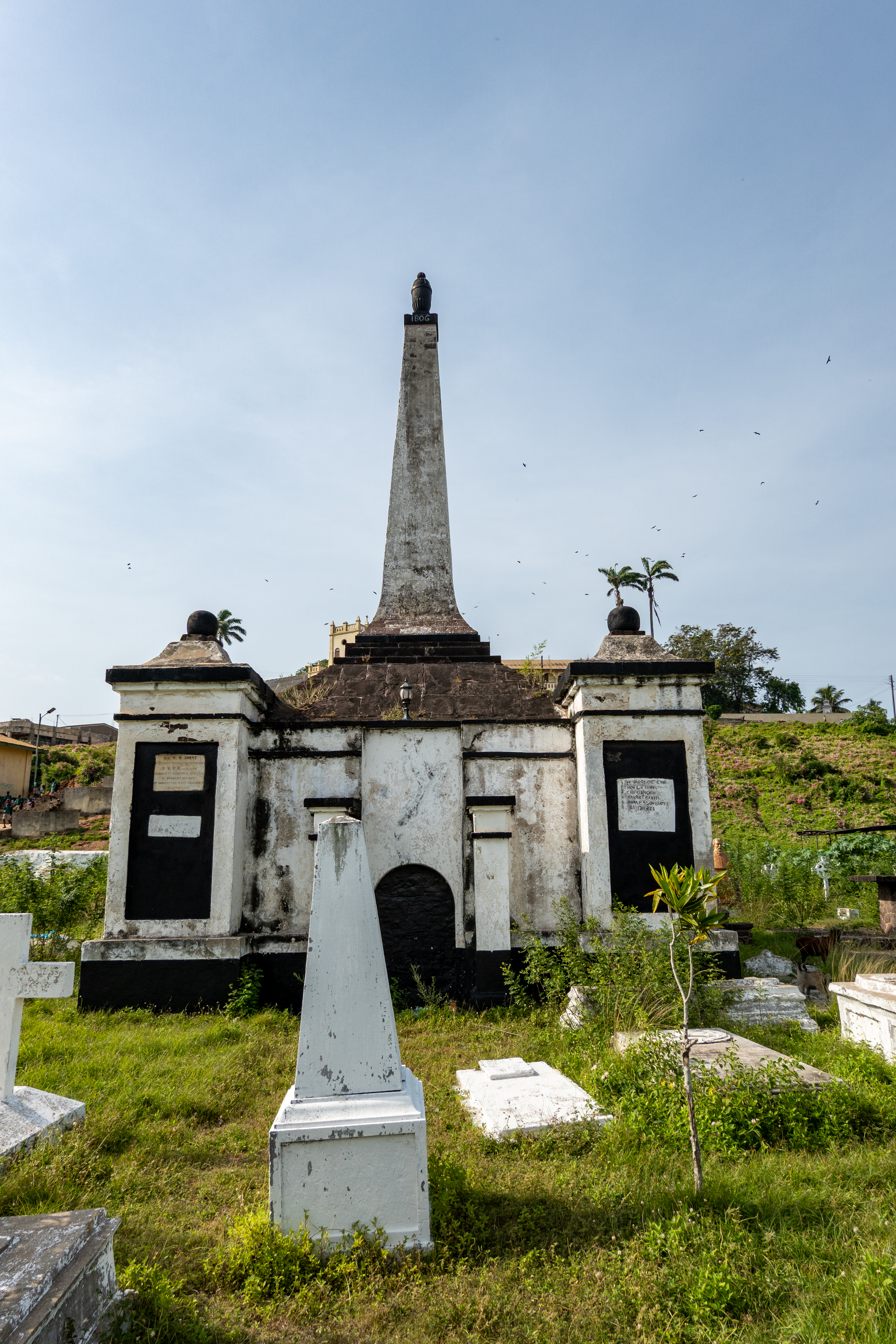
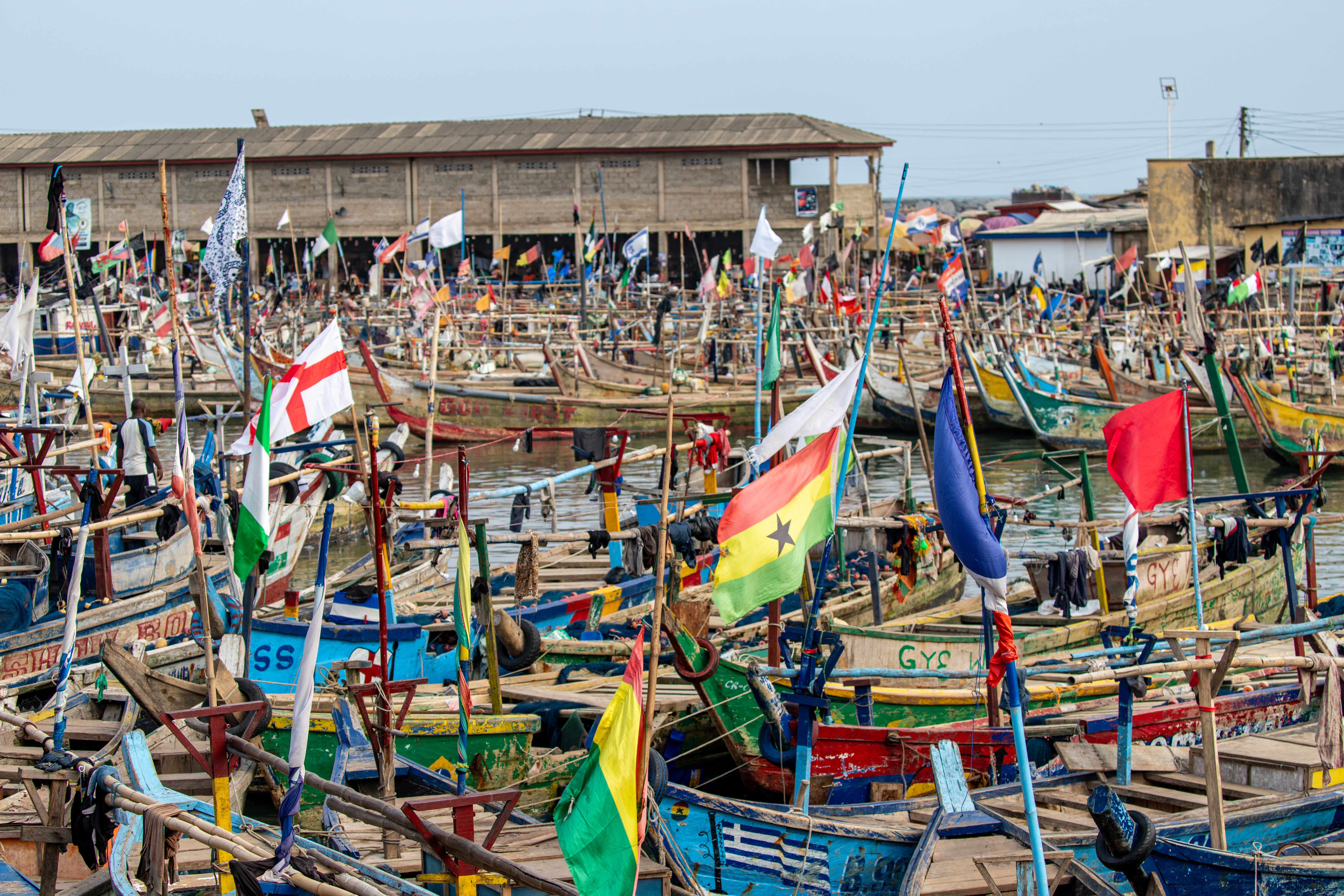
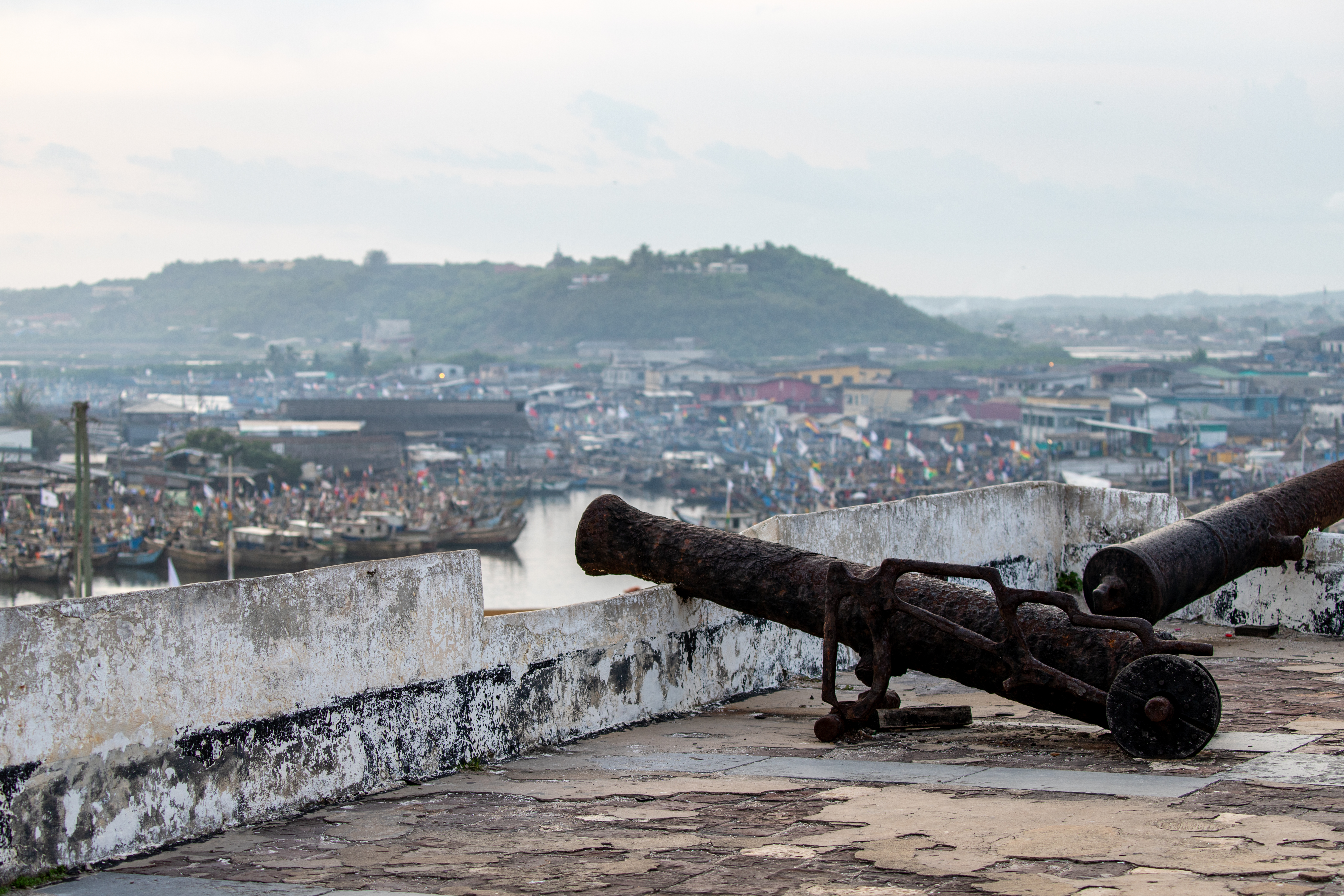
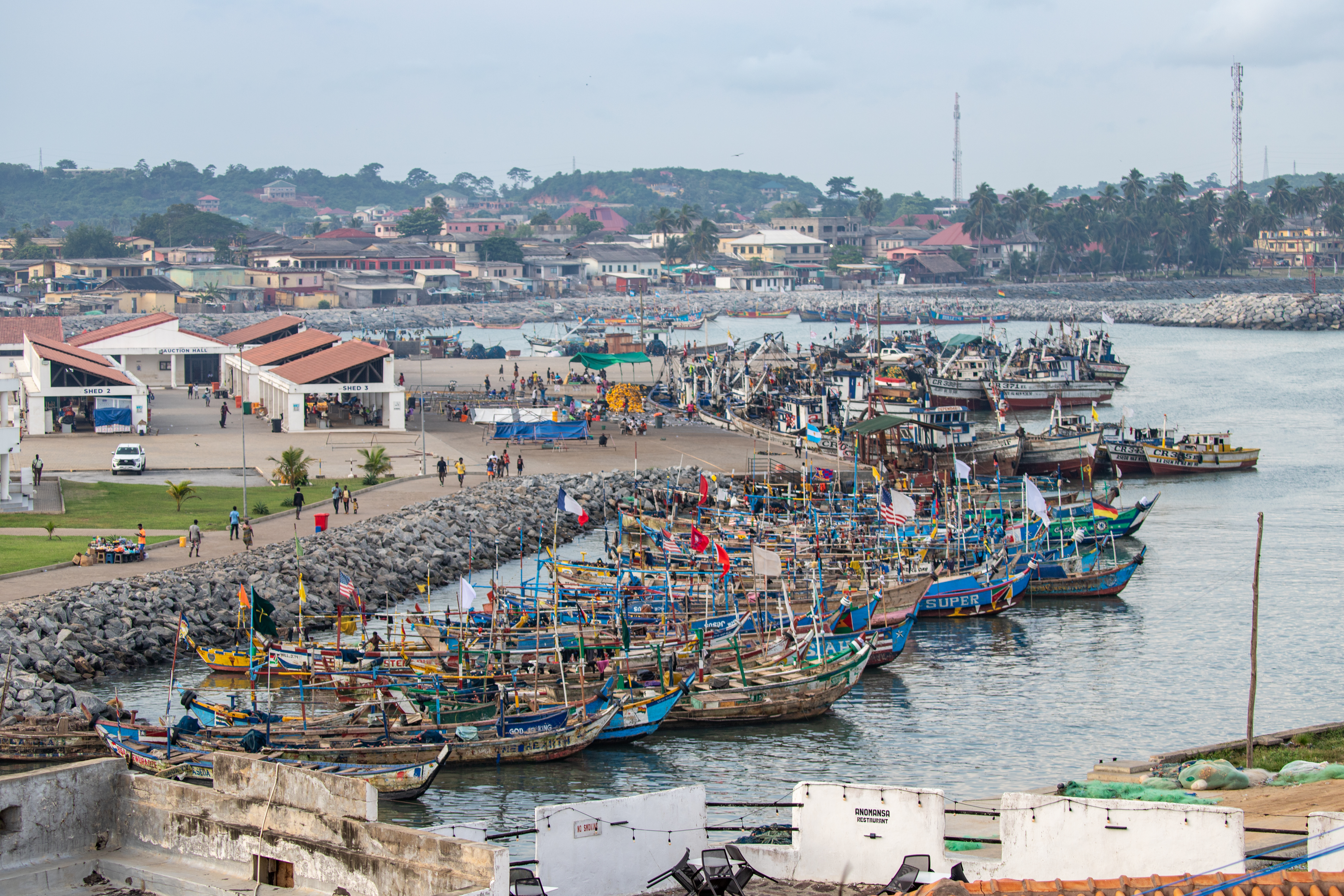
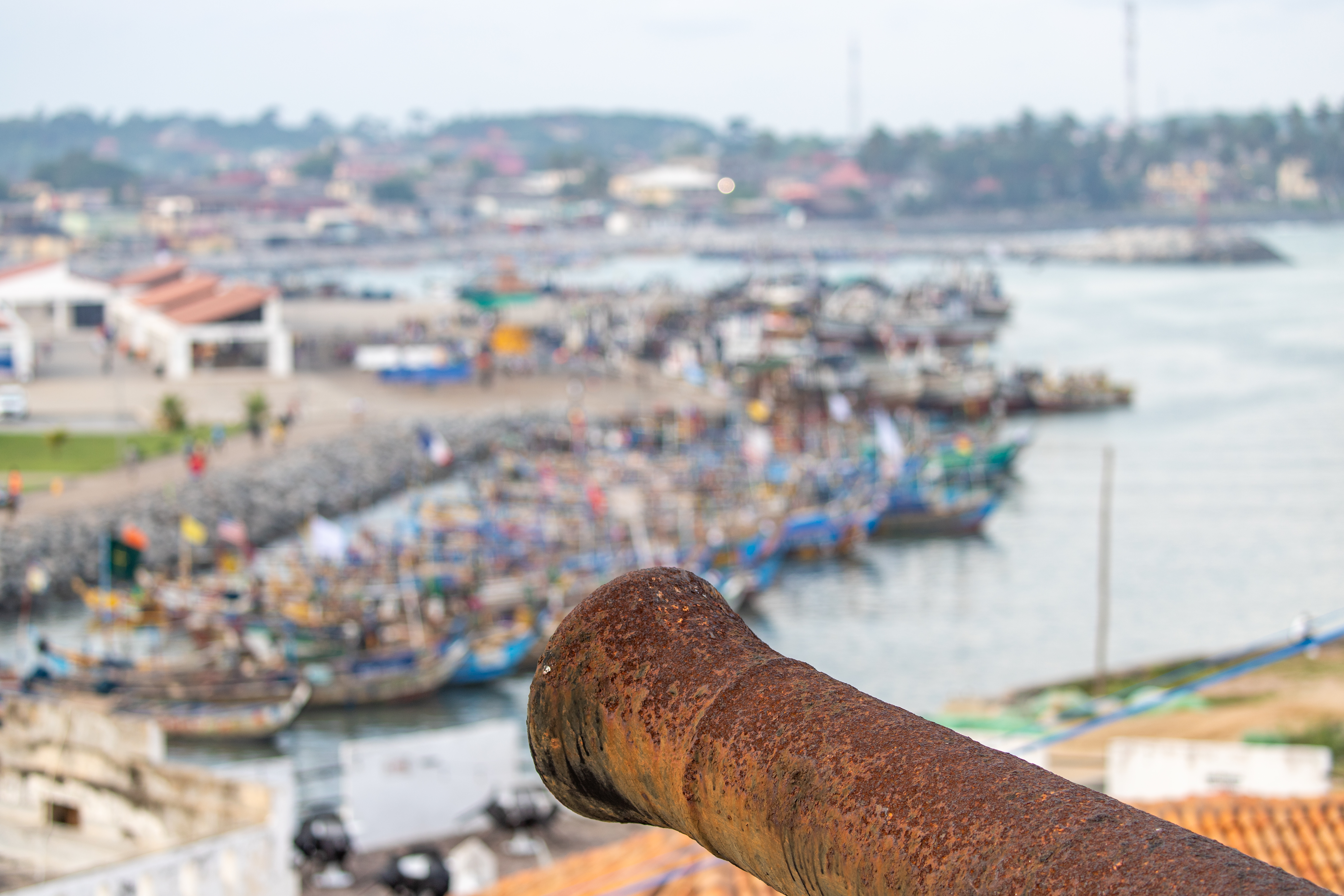
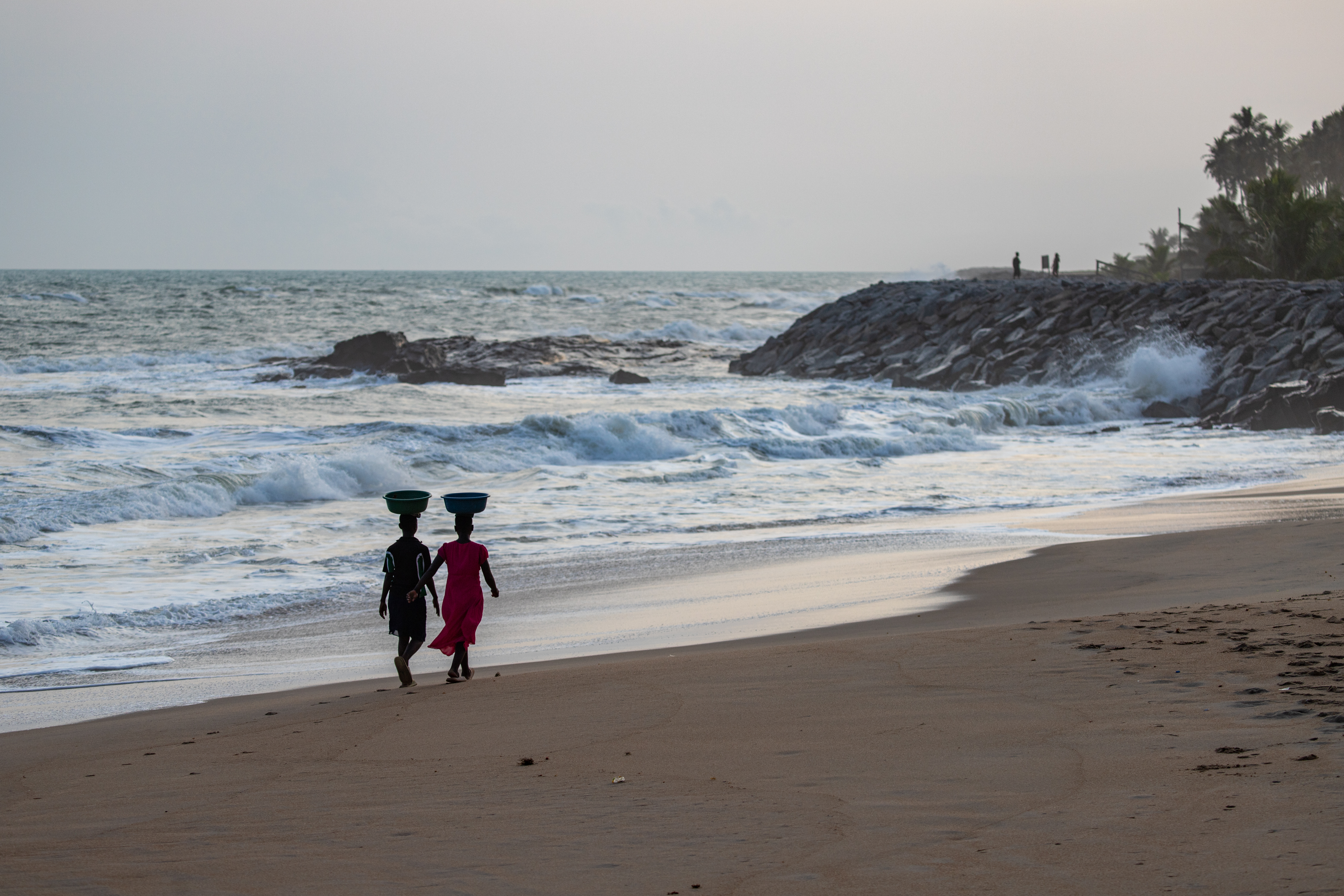
After lunch we drove down the coast, westwards, to Elmina. We started at the Dutch Cemetery. Sena told us that the point of the cemetery was to show potential doubters that they were here - it’s much harder trying to be a slave trade denier when there are dozens of headstones of Dutch people from centuries ago. Then we walked over to the Elmina fishing village. It was vaguely reminiscent of Marsaxlokk in Malta, but less upbeat.
 |
 |
 |
 |
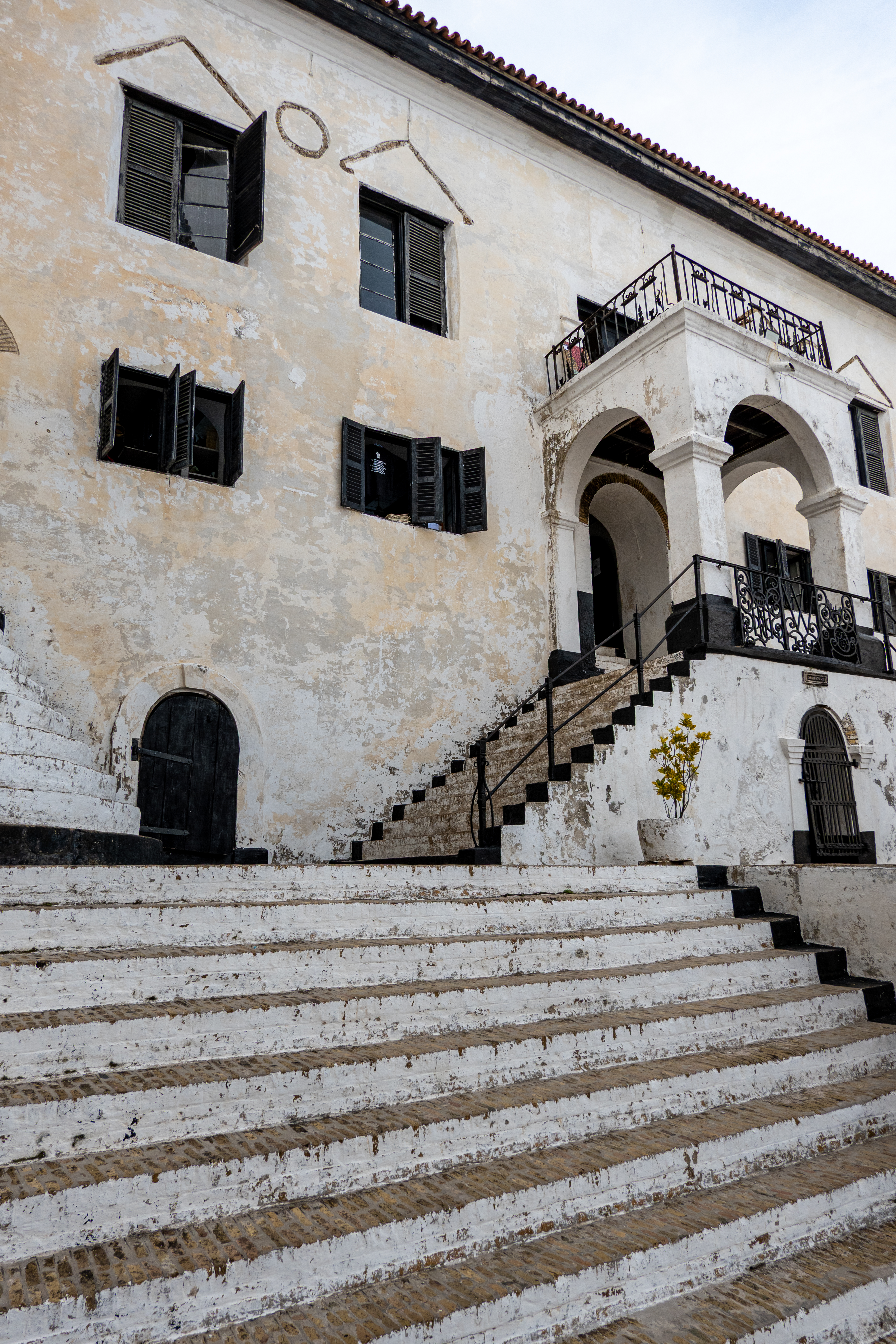
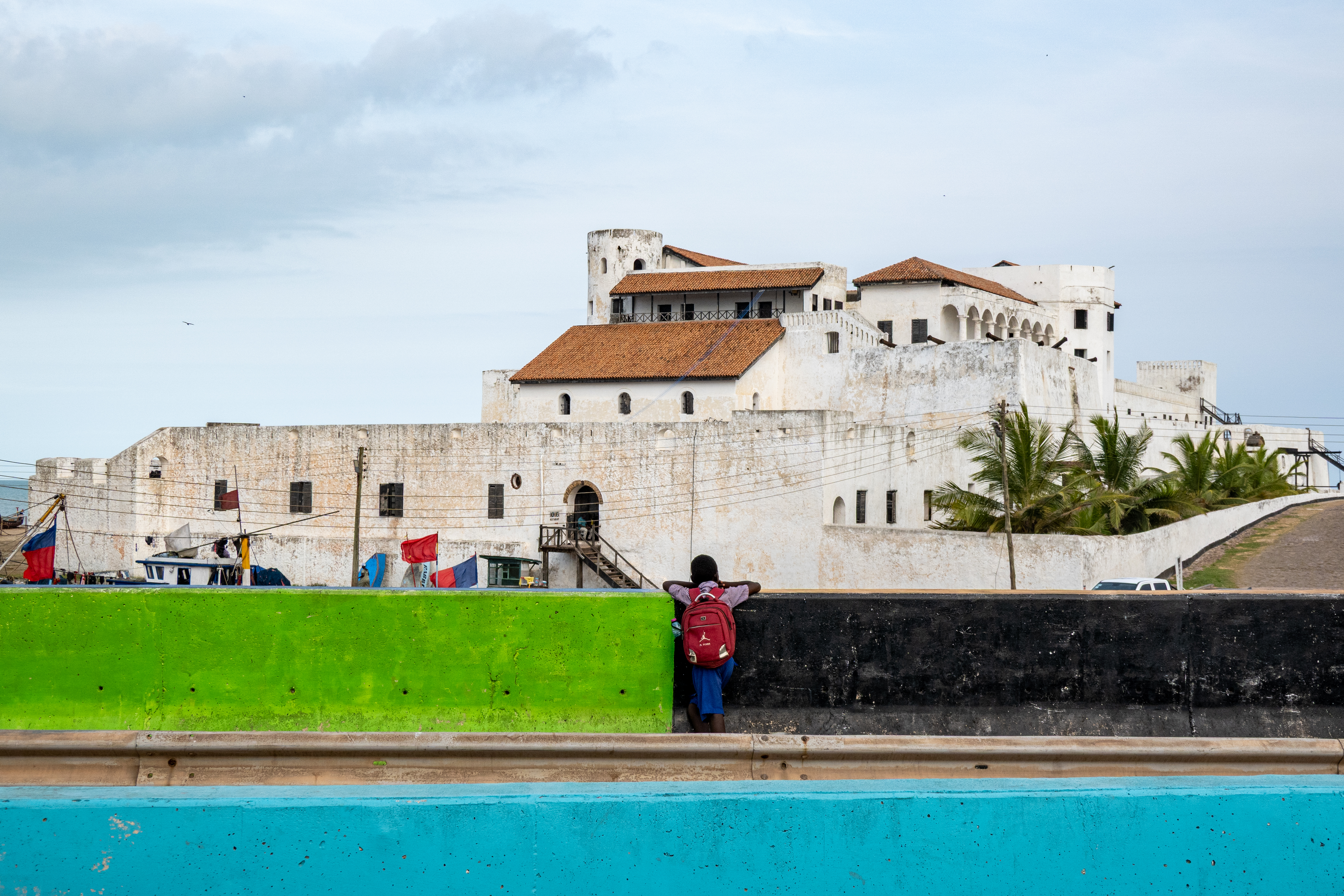
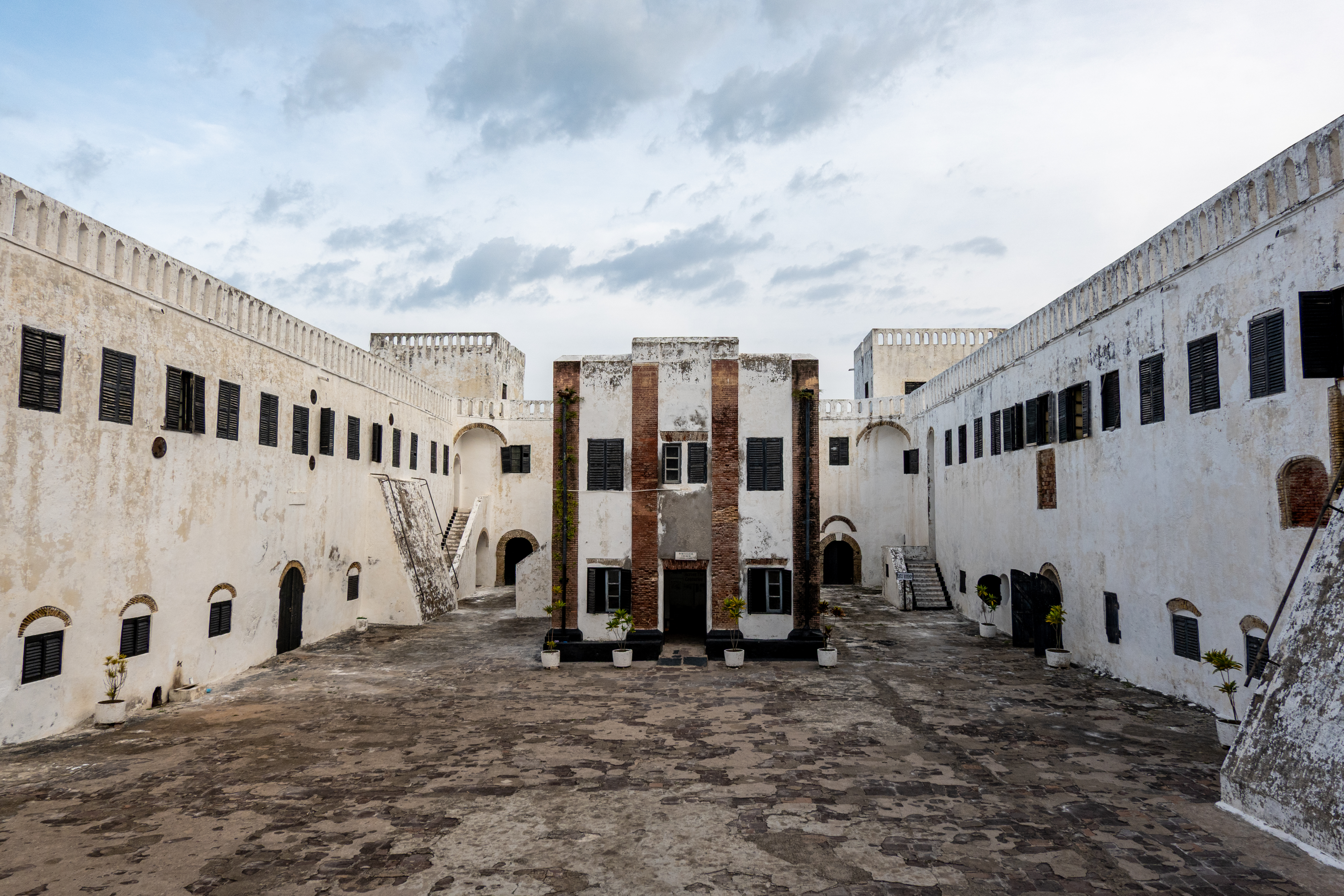
Finally we went to Elmina Castle, the first building constructed by the Europeans in sub-Saharan Africa. The Portuguese built in 1482, for bartering. They had traded in the area before, but bad weather made trade difficult for them without a permanent base. After Columbus “discovered” the New World, the castle was re-purposed, since Africans were better at working in the fields than prisoners or other people the Europeans initially attempted to use.
 |
 |
 |
 |
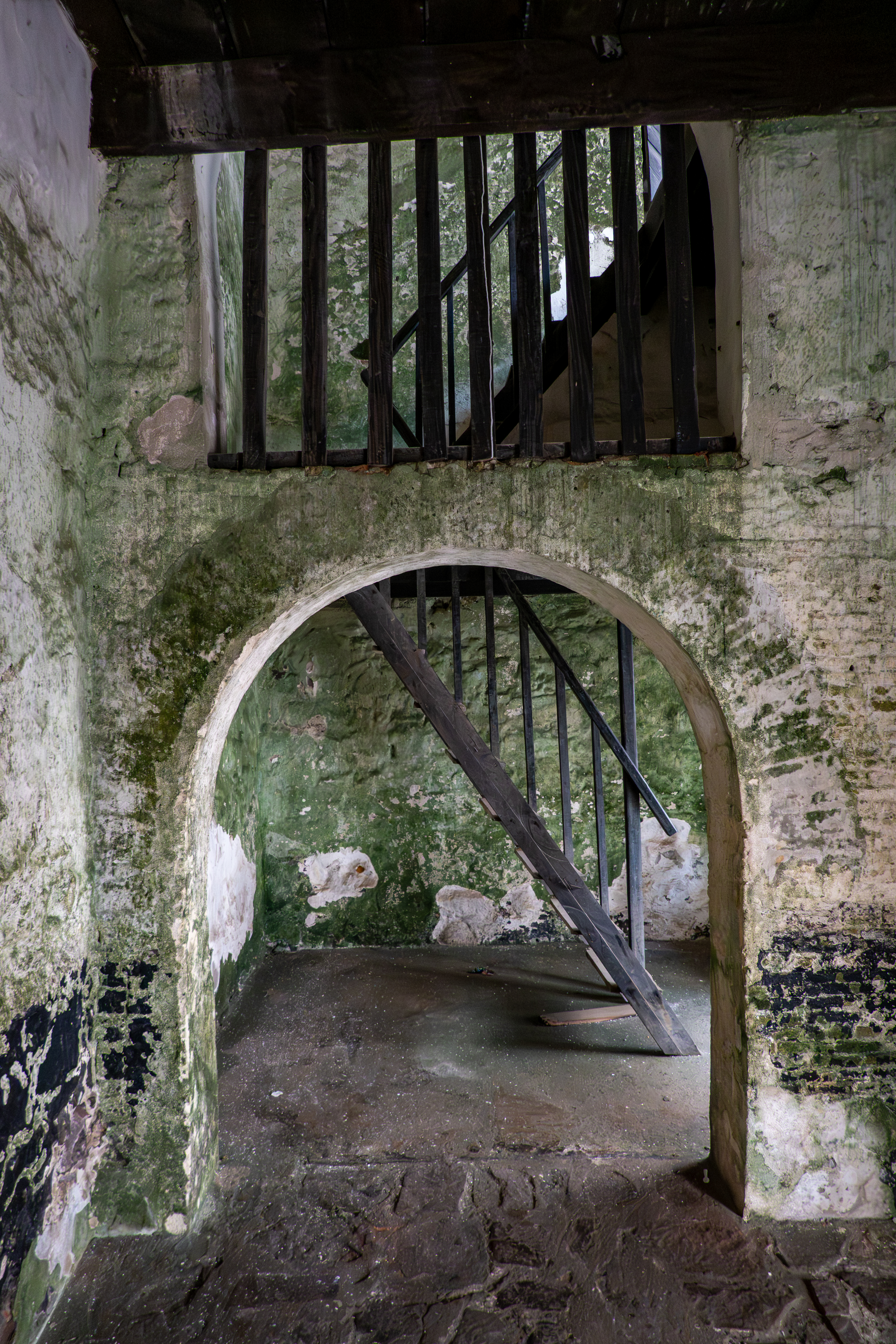
Frederick was our local guide. We started our tour in the area where there was a slave “market.” In the middle of the area was a Roman Catholic Church, which…what can you even say? The Portuguese used the castle first, and then the Dutch. Even after slavery was abolished by European nations, an illegal slave trade continued for decades. Frederick showed us the areas used for the 600 African men on the ground floor, with European employees on the upper levels. On average, 600 men and 400 women were transported every quarter, so 4000 a year, every year, for 250 years - so 1 million slaves (more or less) from just this one location.
 |
 |
 |
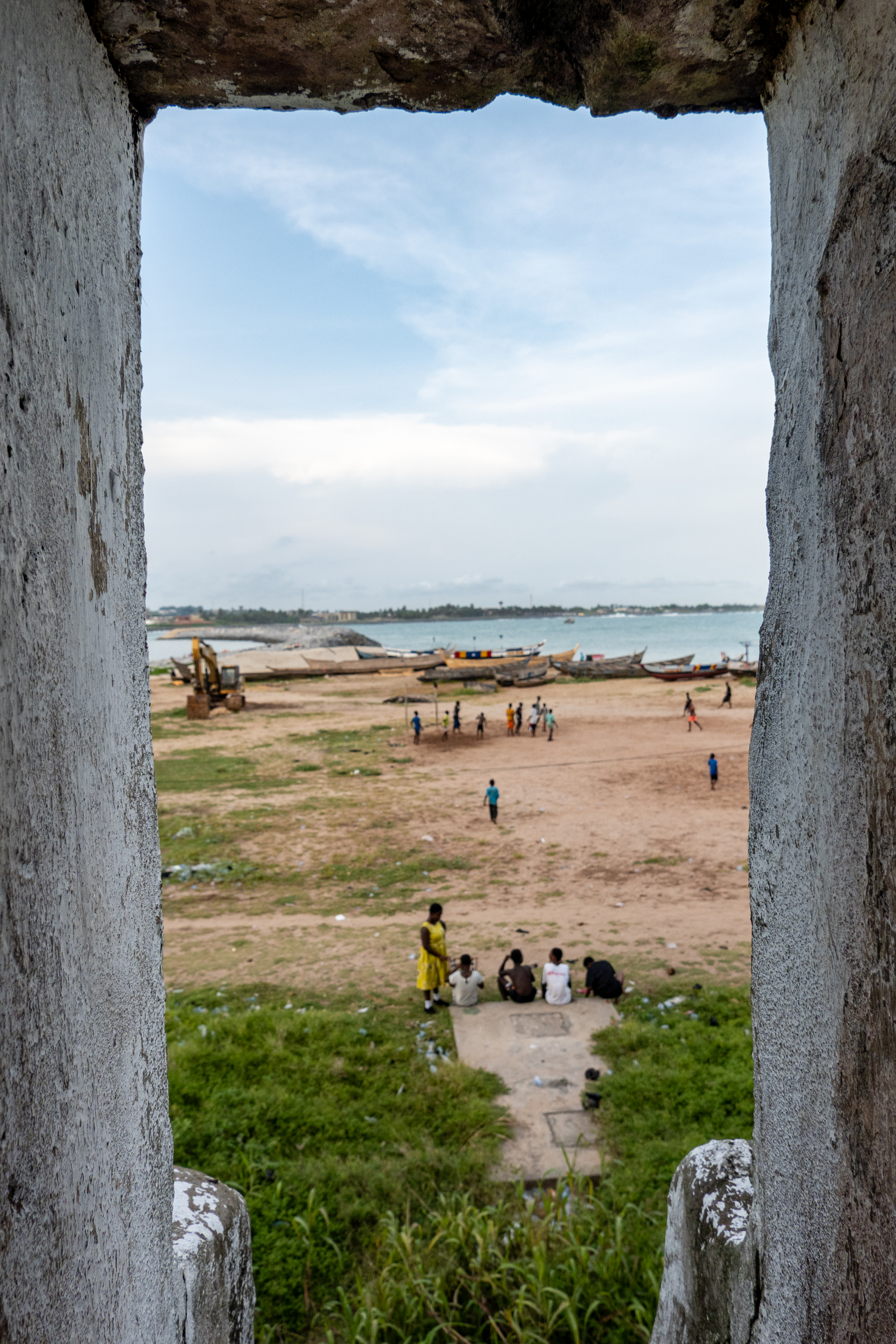 |
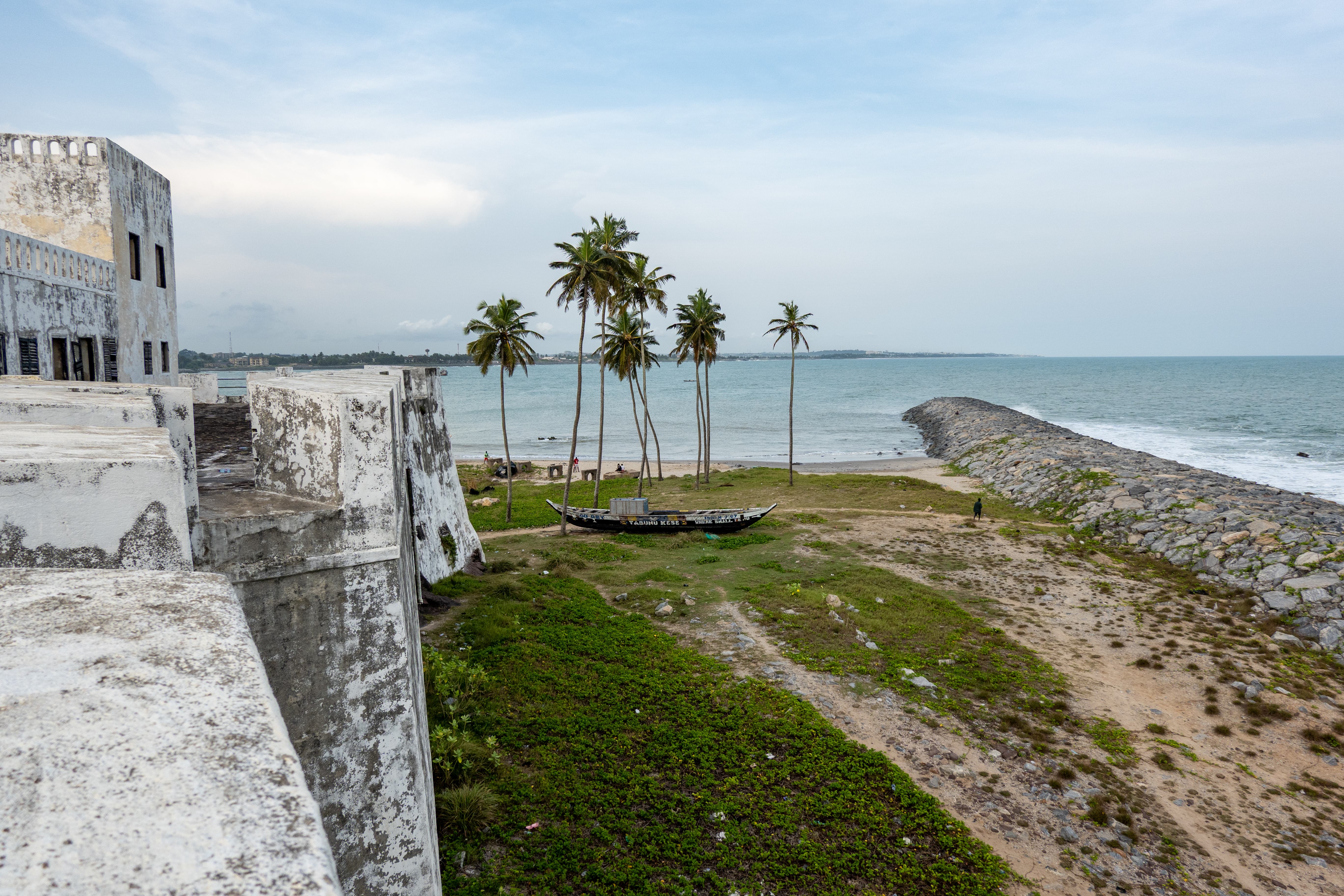
Frederick showed us that in the women’s area, there was a direct stairwell from the women’s dungeons to the governor’s bedroom. If a chosen woman resisted, she was chained to a heavy weight in the middle of the dungeon. Towards the end of the tour, we saw the Point of No Return, a narrow door leading out to small boats, which took the slaves to the larger ships that were anchored offshore. Then we went upstairs and went out on one of the terraces. There was also a room up there with a bunch of pictures of Barcelona, which seemed weird. It was intended to show how the slave traders had profited off of the slave trade, but showing a bunch of buildings from Gaudi - as opposed to the White House, the British Museum, or dozens of other places - seemed pretty random.
 |
 |
Our guide seemed irritated with us. It could be that he maybe just wanted to get home, as we were the last tour of the day. Or it could be we were just feeling shame-filled and guilty, who knows. The two of us didn’t see it, but apparently others in our group got yelled at on the way to the castle, so maybe the local people just weren’t fans of people who systematically profited off of the enslavement of local people for hundreds of years. If that’s the case, a couple random comments doesn’t seem untoward.
 |
 |
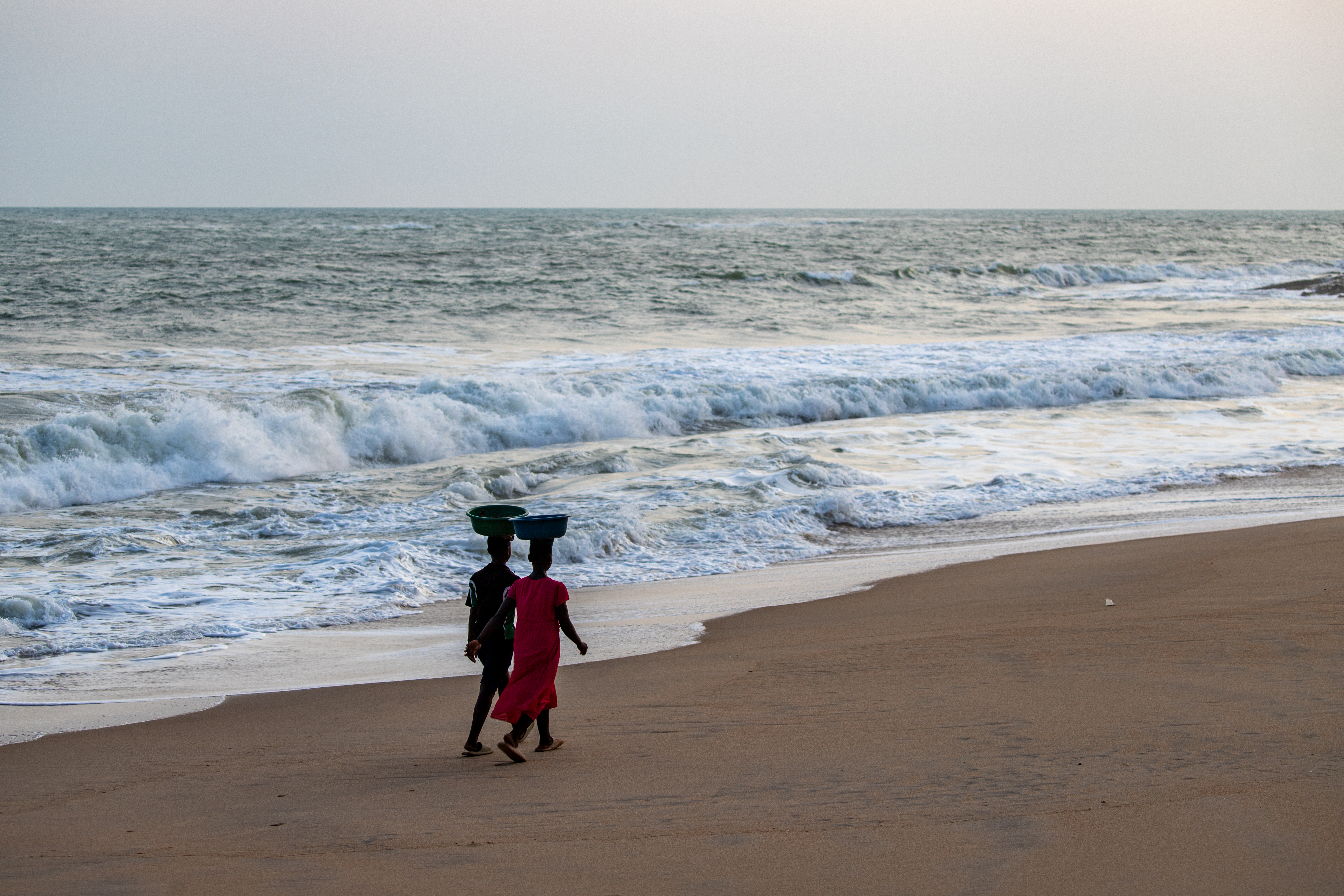
We left Elmina Castle at 17:30. Thankfully it was a short drive to our hotel (Hotel Coconut Grove Resort). The AC was much better than at the Lancaster Hotel, but that wasn’t saying much. There was a fan as well, so at least there was some air movement. A replay of the Oscars was on the TV, and we watched until the In Memoriam portion, when we had to go to dinner.
 |
 |
Despite us ordering ahead of time, the food and drink was taking forever. Sena had told us several days prior why we kept ordering ahead of time. Many of these restaurants don’t have a ton of food on hand, so often times people will literally wait until there is an order until they go to the store or market to purchase it. Thus, if three people order tilapia for dinner, someone will go over to the local market to get three tilapia. Hence, ordering ahead of time saves the waiting time for the cooks getting the ingredients.
But tonight, that wasn’t saving us much time, and he was irked. In happier news, he told us that he has a trip to Cote D’Ivoire coming up. He’s been asked to do Senegal trips before, but he doesn’t want to be that far away from his territory - Cote D’Ivoire is about as far away as he is comfortable going. He told us why booking something with TransAfrica (but not through Wilderness) might not be a good idea. In his experience, almost all of the Wilderness clients are American, and accustomed to a certain standard of hotel and restaurant. [We can confirm we noted this.]
With other operators, however, usually there is a mix of people from various countries and cultures, sometimes with bad results. He recounted one trip where some British and Italians almost came to blows, and separate vehicles had to be used by the end of the trip. He told us that he worries when we’re quiet in the car, but then he hears Jane laugh and he knows everything is okay. Somehow the conversation morphed into sumo wrestling, and it turns out Hertz is a huge fan. None of us had that on our Bingo card, and it was a humorous surprise. Sena said because of traffic tomorrow, he hoped to leave at 07:30, but he didn’t trust the hotel to have breakfast ready for us at 07:00. So he put the fear of God into them before we left the table. We went back to our room and went to sleep around 22:00.
| Previous Entry |