We finally slept much better, pretty much the first time all trip. Crystal woke up a bit after 06:00 and Justin a bit after 07:00. Down at breakfast, Taryn and Brian and Stephenie and Jane were already there, chatting about movies. We sat down at the table next to them, but we couldn’t talk for too long though, since our luggage needed to be outside at 08:15. Everyone was looking forward to sleeping on the bus, like a sea day on a cruise. The last couple days had been quite packed with activities, and this one was supposed to be much more laid back.
We left the hotel at 08:30. We went basically the same way we’d come in yesterday from Ganvie. We saw a martial arts class outside near one of the major intersections, which was unexpected. We continued northwest from there, passing by Ganvie, and eventually getting to the outskirts around 09:15. It was very interesting to just look out the window and people watch. Shortly after leaving town we passed by a new industrial area, one specifically set up for industry, in the hopes of relocating a lot of industry out of downtown Cotonou.
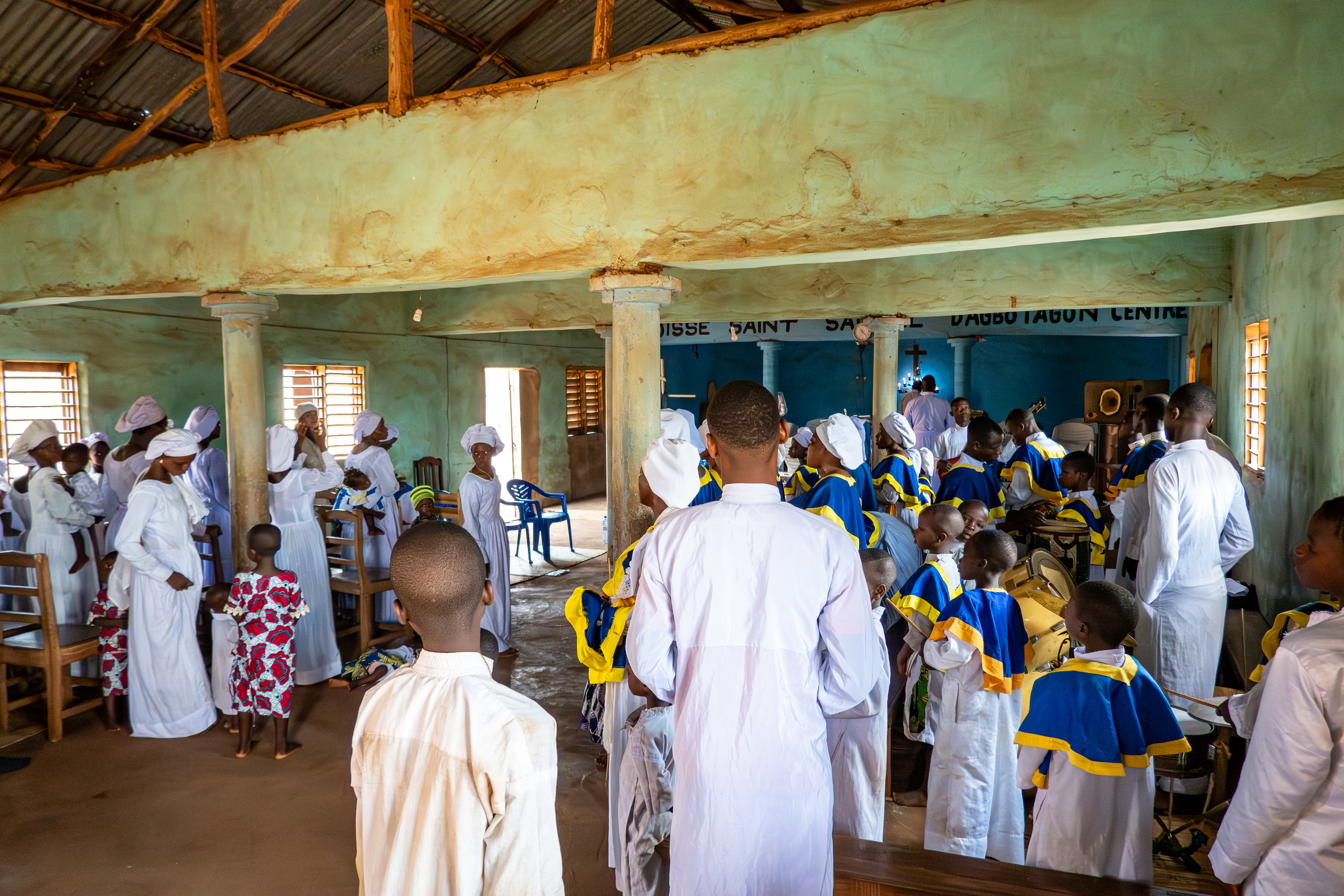
We turned north in Allada. Sena told us that Allada is renowned for pineapple. We had noted that the pineapple at breakfast was excellent, on par with the good stuff in Hawaii. We stopped briefly at a Celestial Church in Abotagon, where we had to remove our shoes if we wanted to enter. No one seemed to know we’d be doing this, and only Justin had sandals on. A couple people, including Crystal, just waited outside. Some other people walked across the dirt/sand area in their socks. Inside there were a ton of kids, and the women were taking things much more seriously than the men. There was a woman with a stick, keeping the unserious teenage boys in line.
|
|
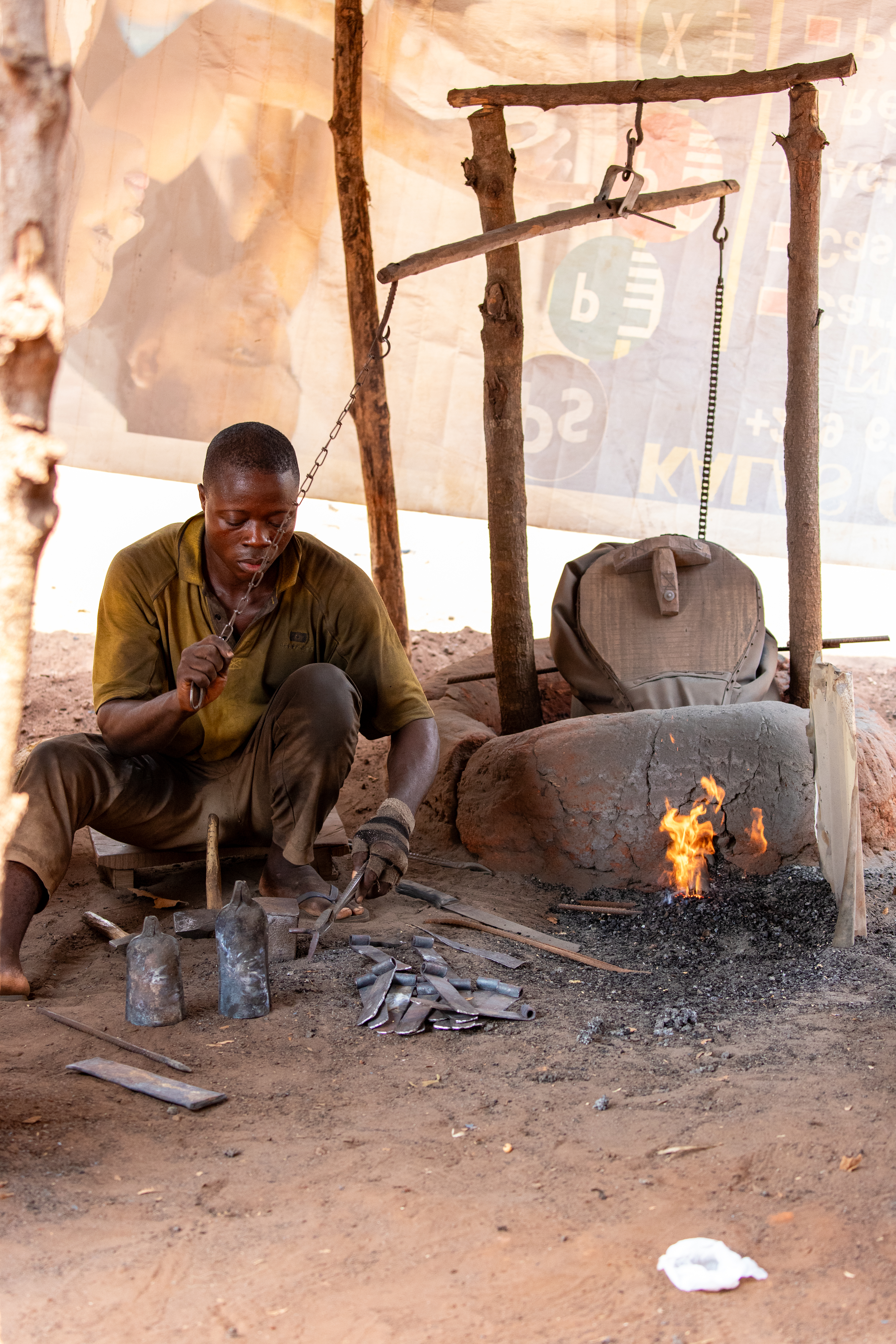
Our next stop was at a small village near Abomey with blacksmiths. Today was a Sunday, and only one seemed to be working. The guy was sitting basically on the ground, making door hinges. It looked like it would be incredibly difficult work, and we wondered why he hadn’t dug out some sort of a trench for his legs and feet.
 |
 |
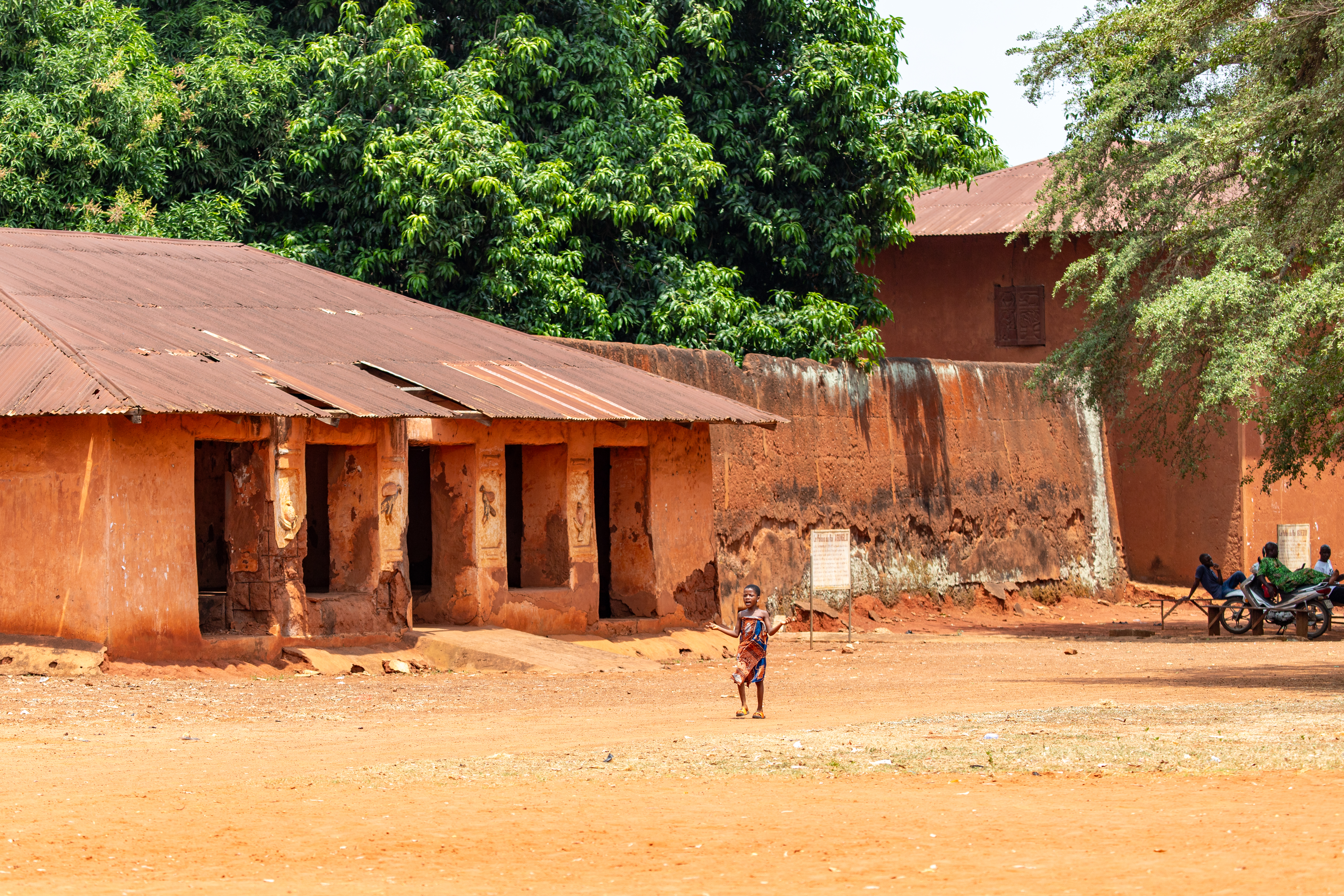
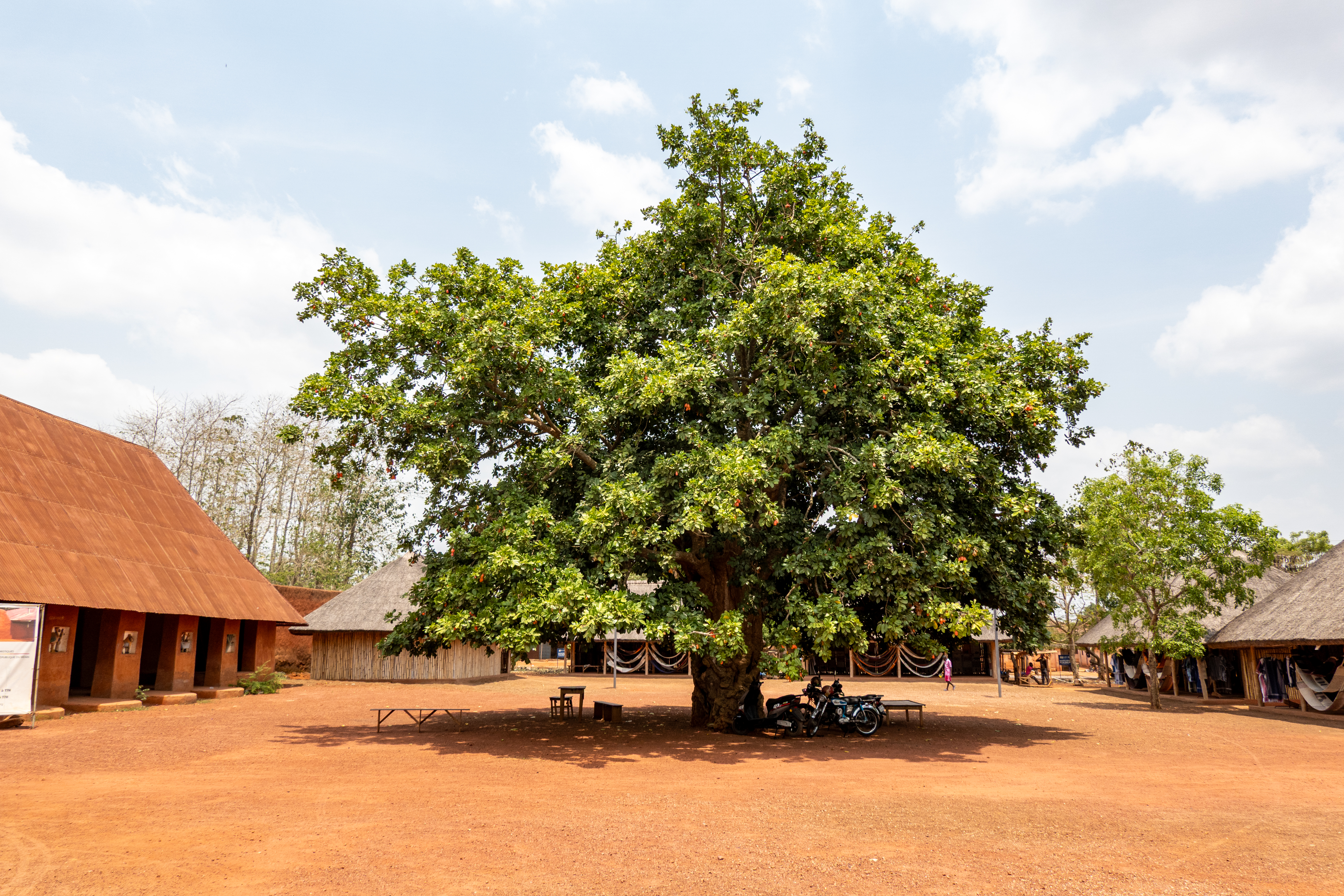
We continued on to the Royal Palaces of Abomey, where 12 palaces were built by Kings of the Dahomey Kingdom. The Dahomey Kingdom was one of the largest partners of the European slave traders, and it became a vicious circle as more arms from the Europeans led to more prisoners taken by the Dahomey. We unfortunately couldn’t see any of the palaces today, however, since it was a Sunday. Instead we walked around the perimeter to the extent we could. During the walk Sena told us a story about how the female military regiment started. Long ago there was a King with a twin sister, and when the King died, his sister assumed his role. Eventually it became an open secret, but in the meantime she set up a military regiment that was very successful for multiple centuries.
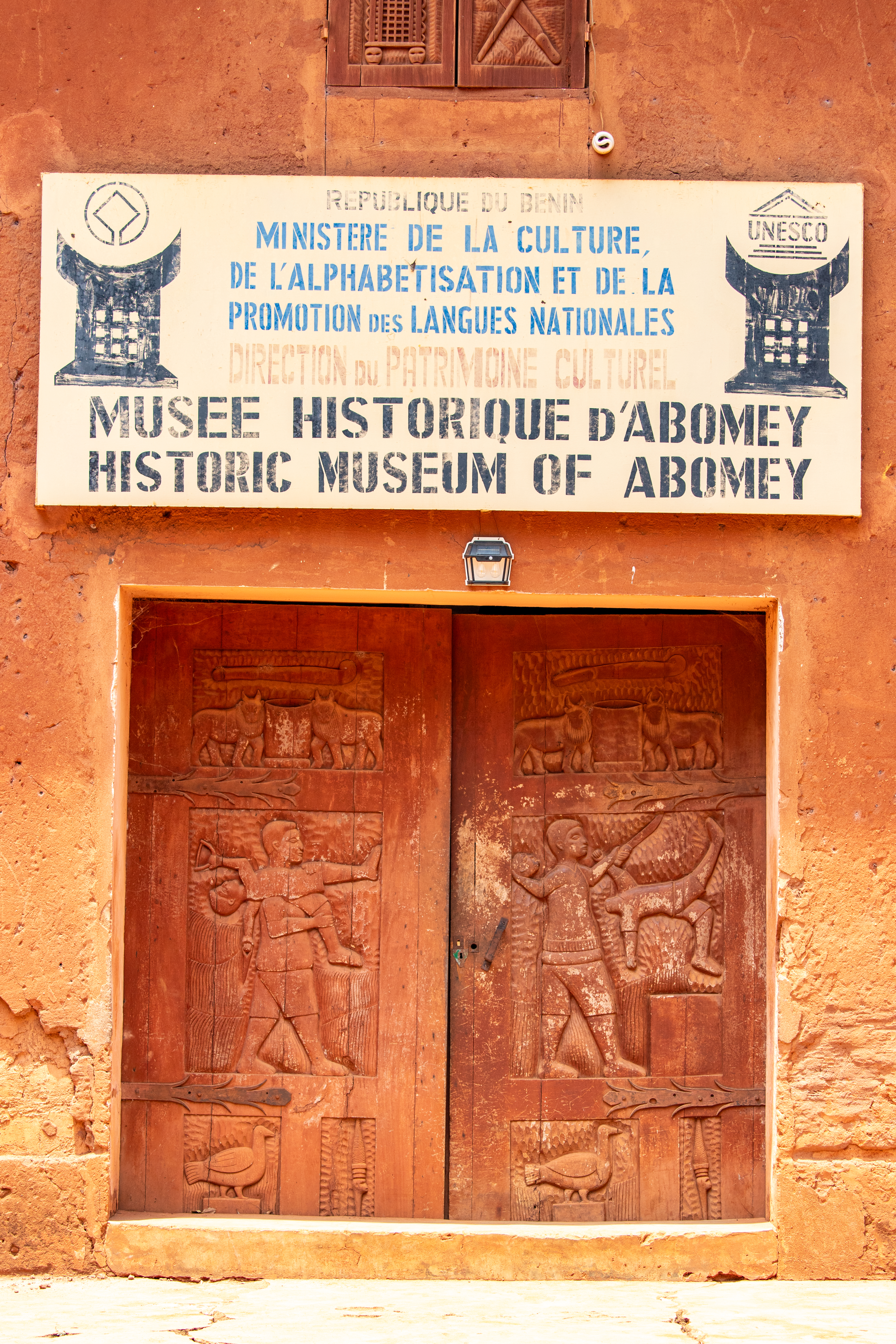
We stopped briefly at a small museum, showing pictures of some things Benin is going to get back from France and Finland. We weren’t surprised that France might have some things that Benin wants back, but Finland threw us for a loop. Then someone suggested that some French museum might have exchanged some goods with a Finnish museum, so Finland would actually be returning something it received secondhand. That makes as much sense as anything.
 |
 |
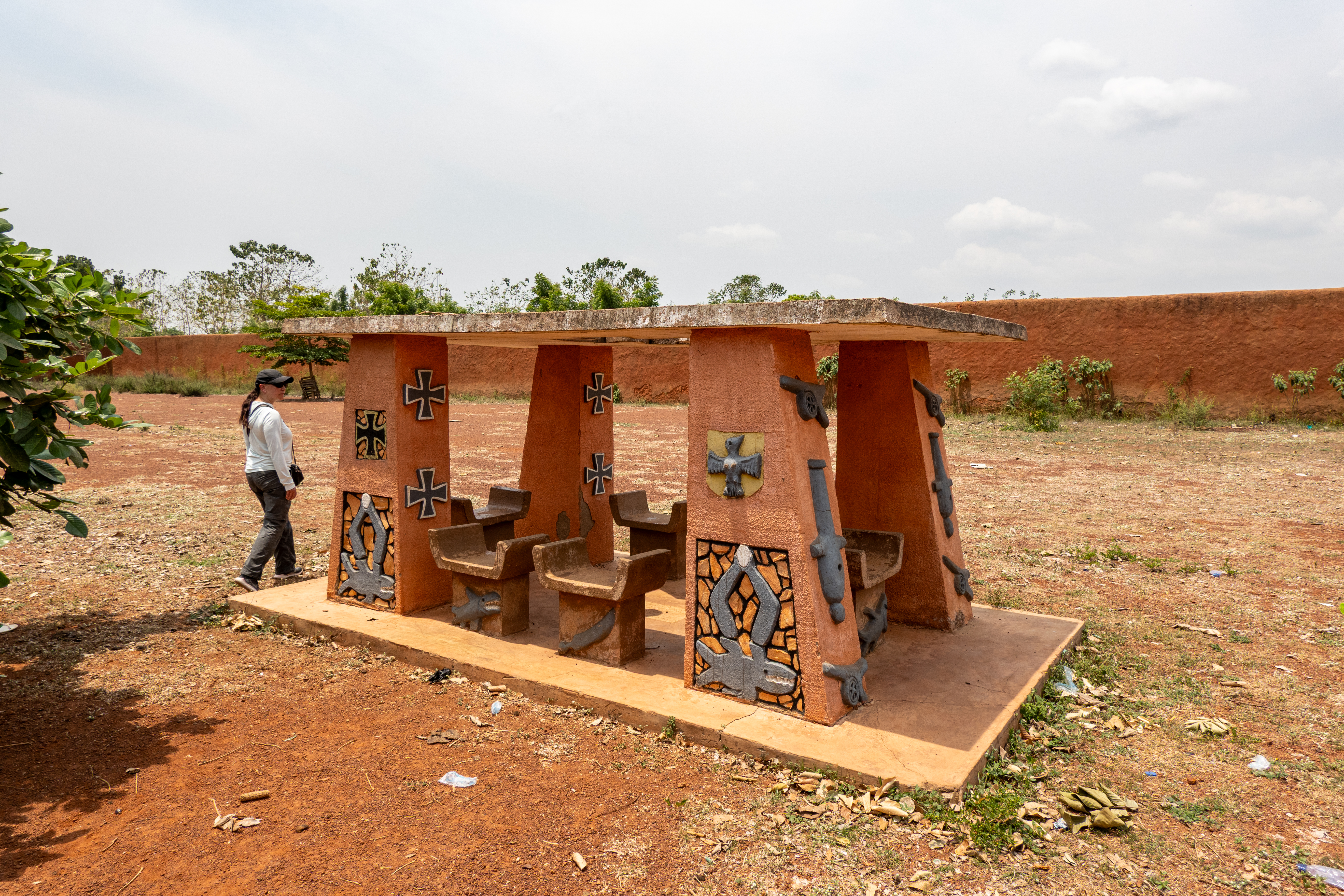
After seeing the soon-to-be museum, we had 25 minutes to shop. It was quite hot outside, and Justin had limited interest in shopping, so he went back to the bus. On the bus he heard Brian and Hertz arguing about Iran, and immediately turned around and left. Crystal used her 25 minutes to return to a monument we’d walked past earlier, to German and Belgian mercenaries who tried to help the Dahomey Kingdom fight the French. Three Germans and one Belgian worked with the Dahomey warriors, helping to train them. They painted their faces black to avoid being spotted by the French, but eventually the French caught on, captured them, and executed them. But the Dahomey built a small monument to memorialize their assistance.
 |
 |
It was a short ride over to lunch, which was at a place with already prepared food. All we had to do was point at whatever we wanted and then go sit down - the staff would put everything on a plate. Crystal got a fried swordfish, but probably not the same kind of swordfish that she was accustomed to. Justin got grilled chicken (called “bicycle chicken” by Sena because of how you have to move your hands to eat it), a spicy onion and peppers side dish, and some rice. The table discussed famous TV commercials at lunch, starting with “Mikey likes it!” Brian was quite a bit younger than us, so we were curious if he was even aware of that commercial.
 |
 |
 |
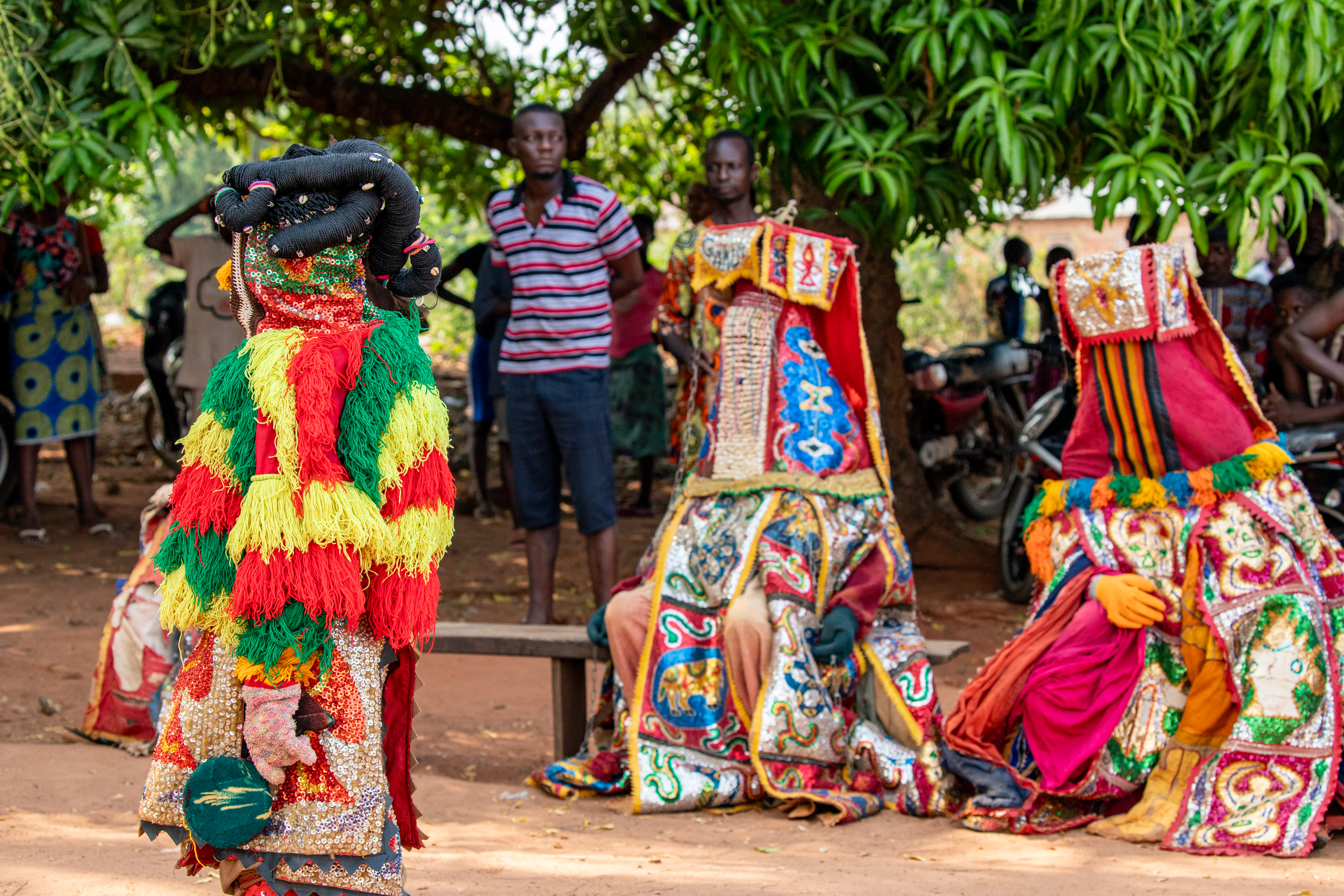 |
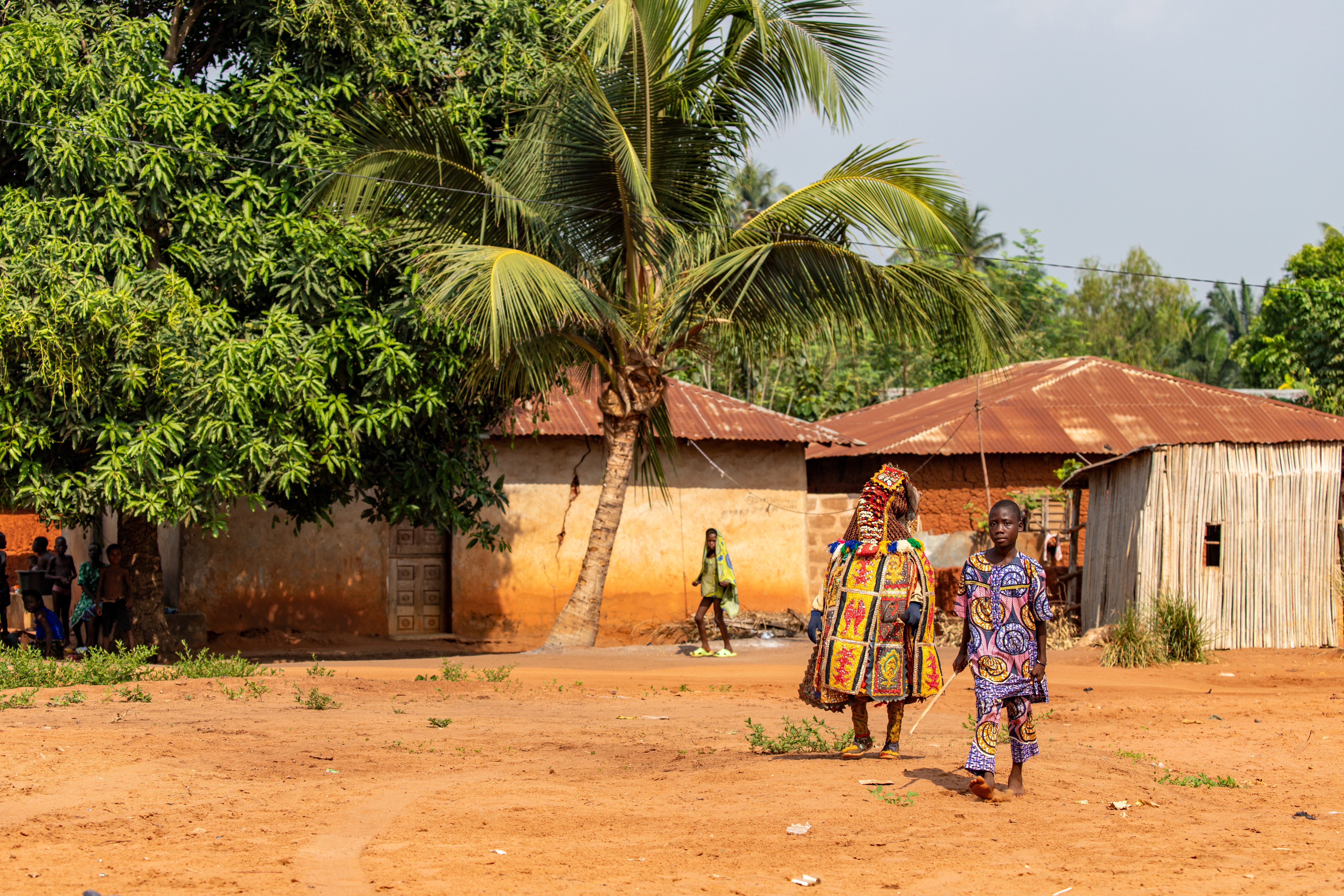
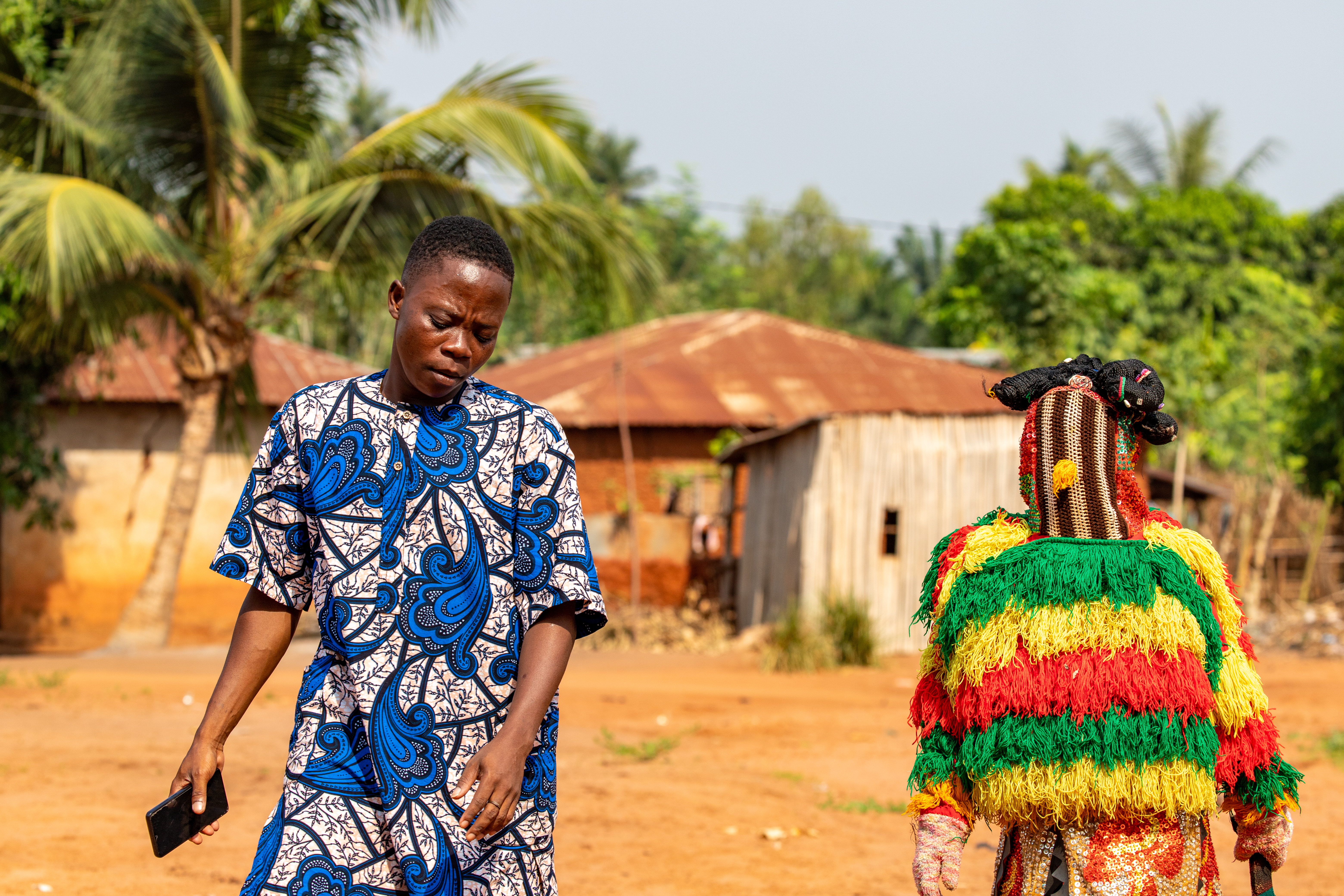
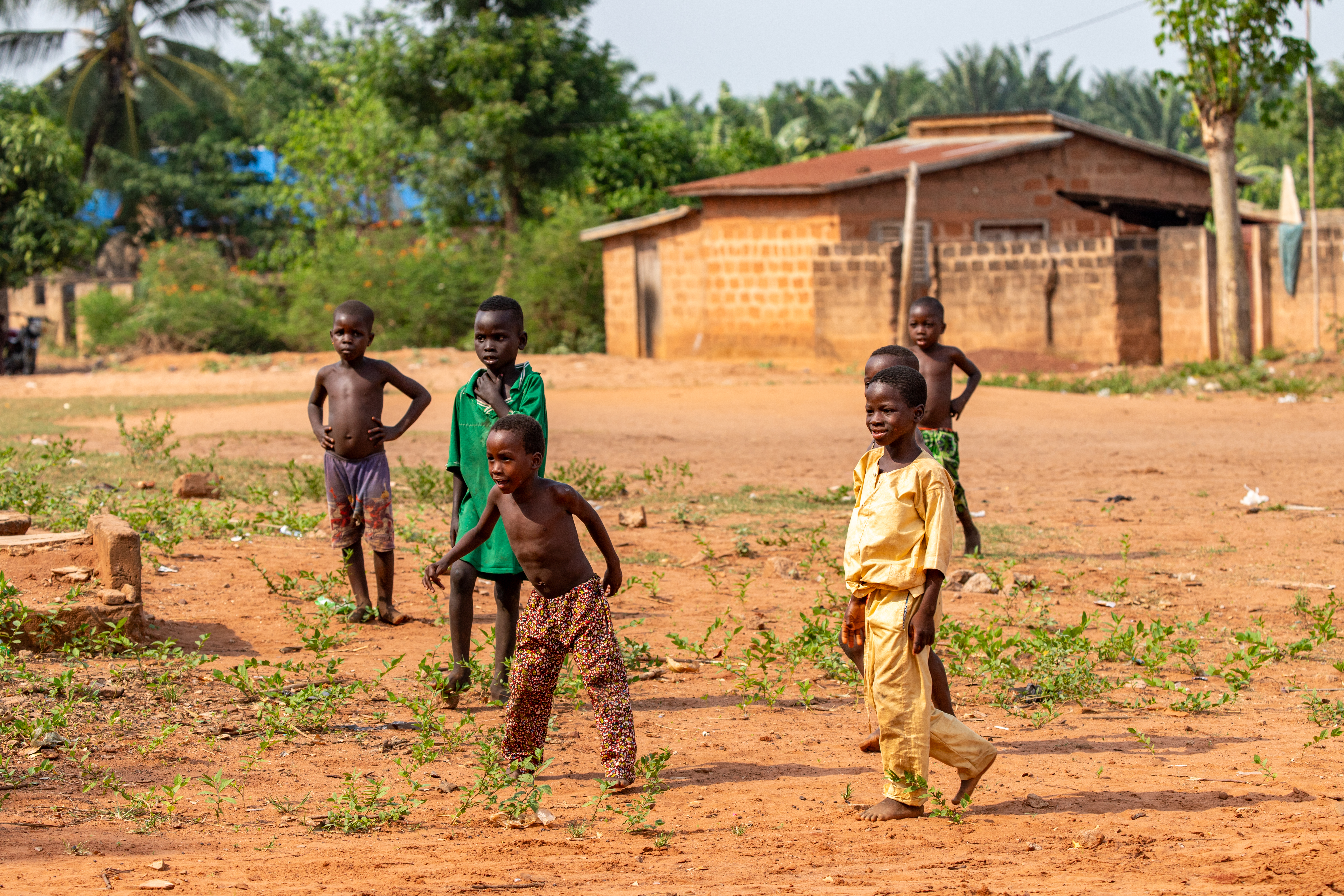
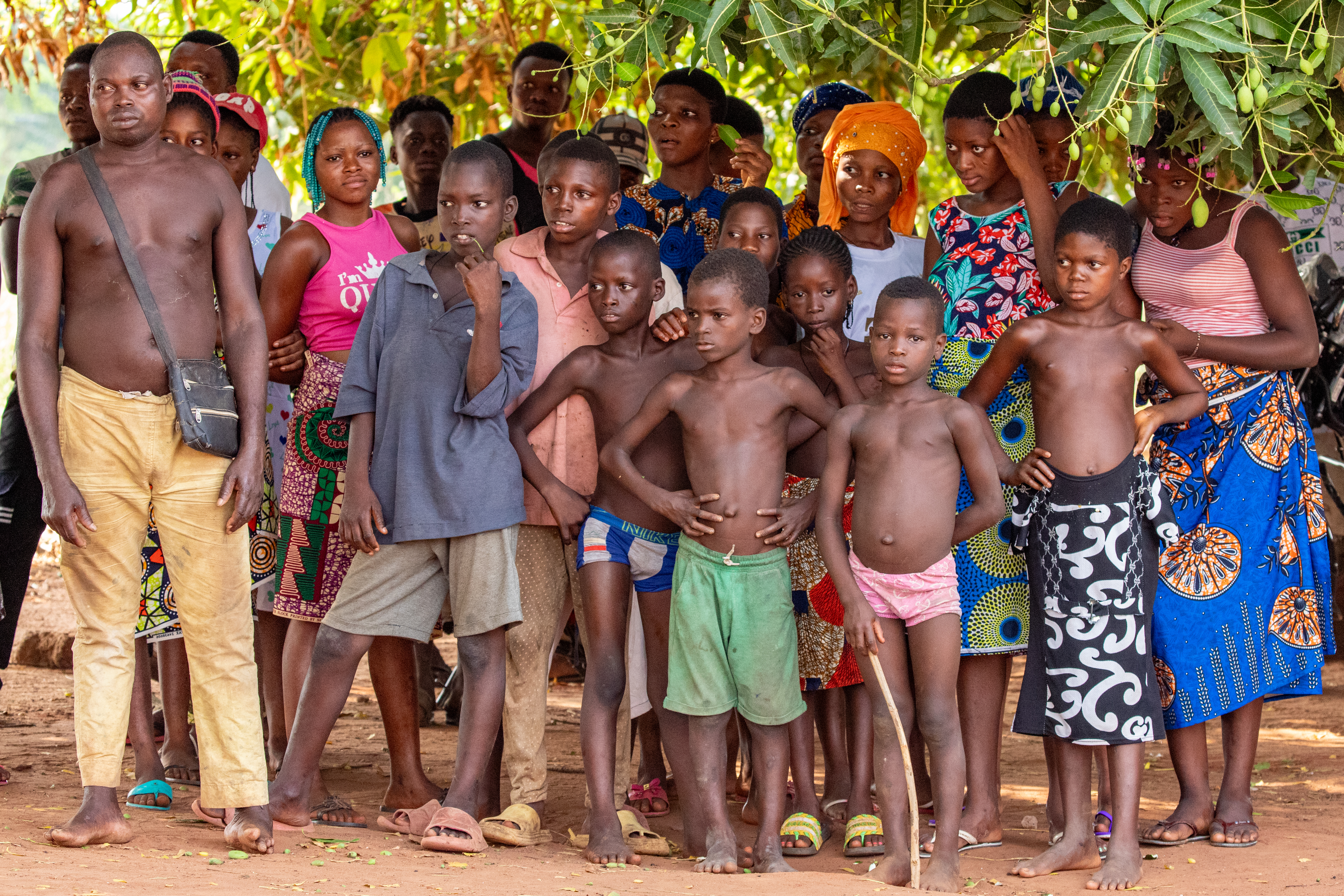
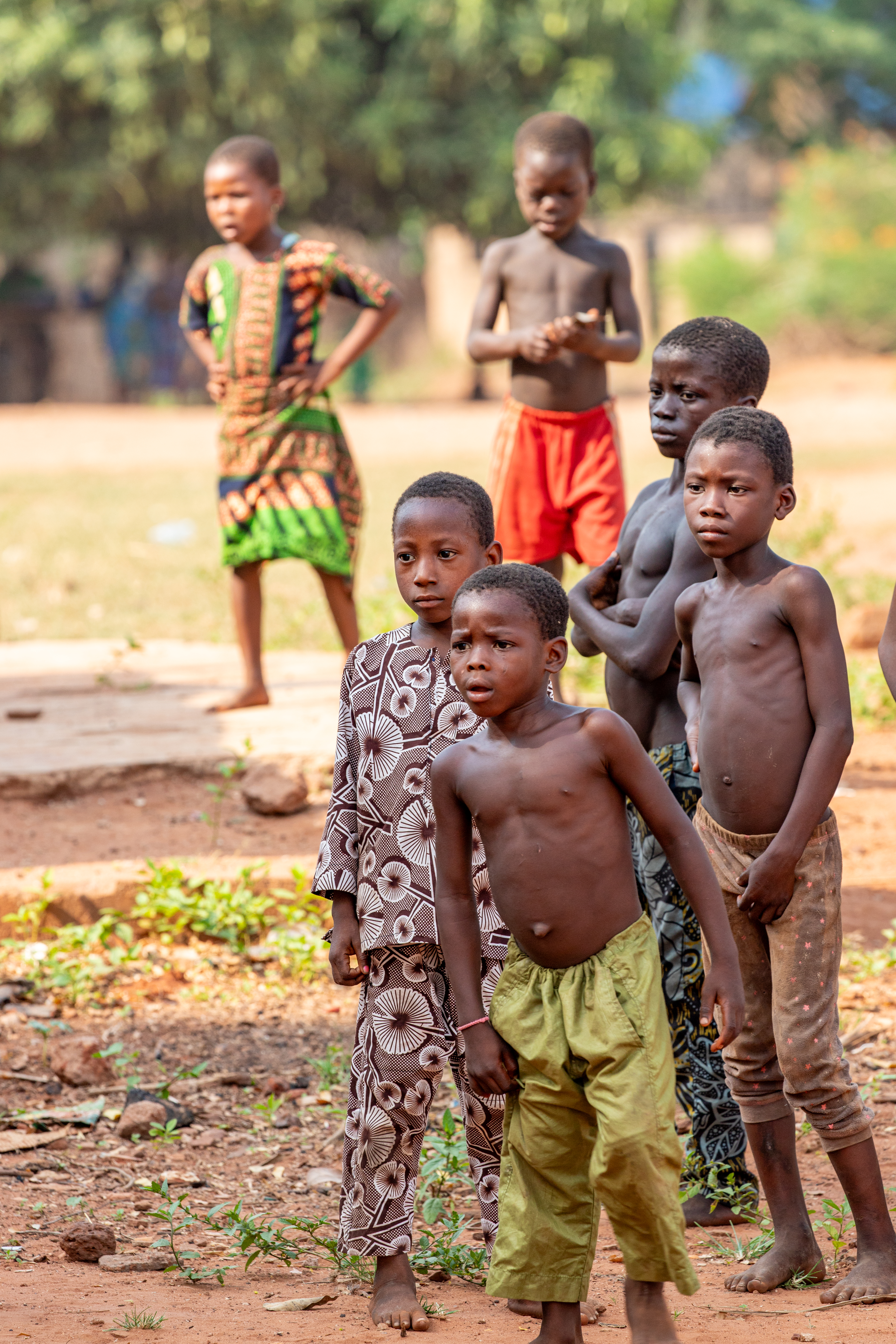
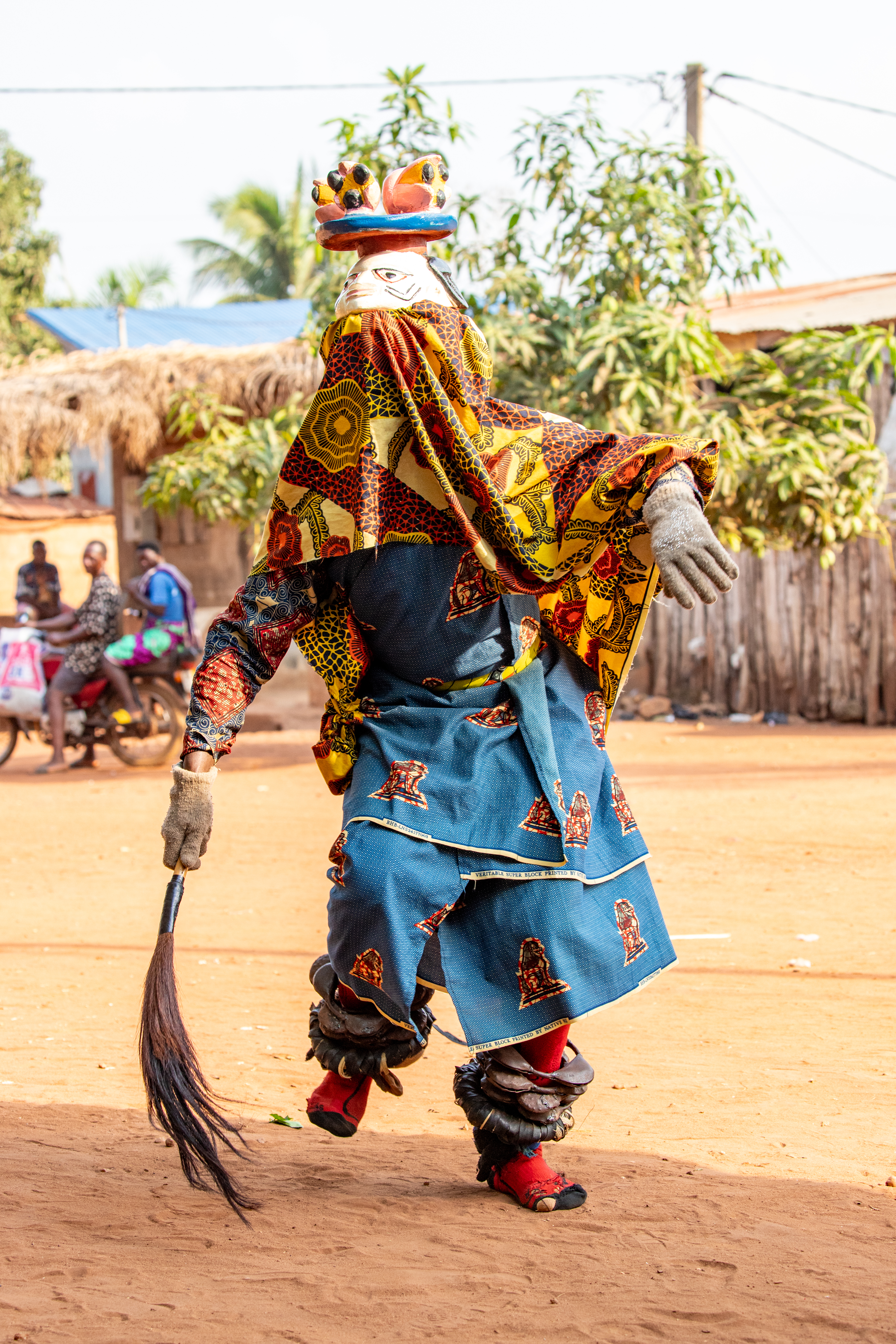
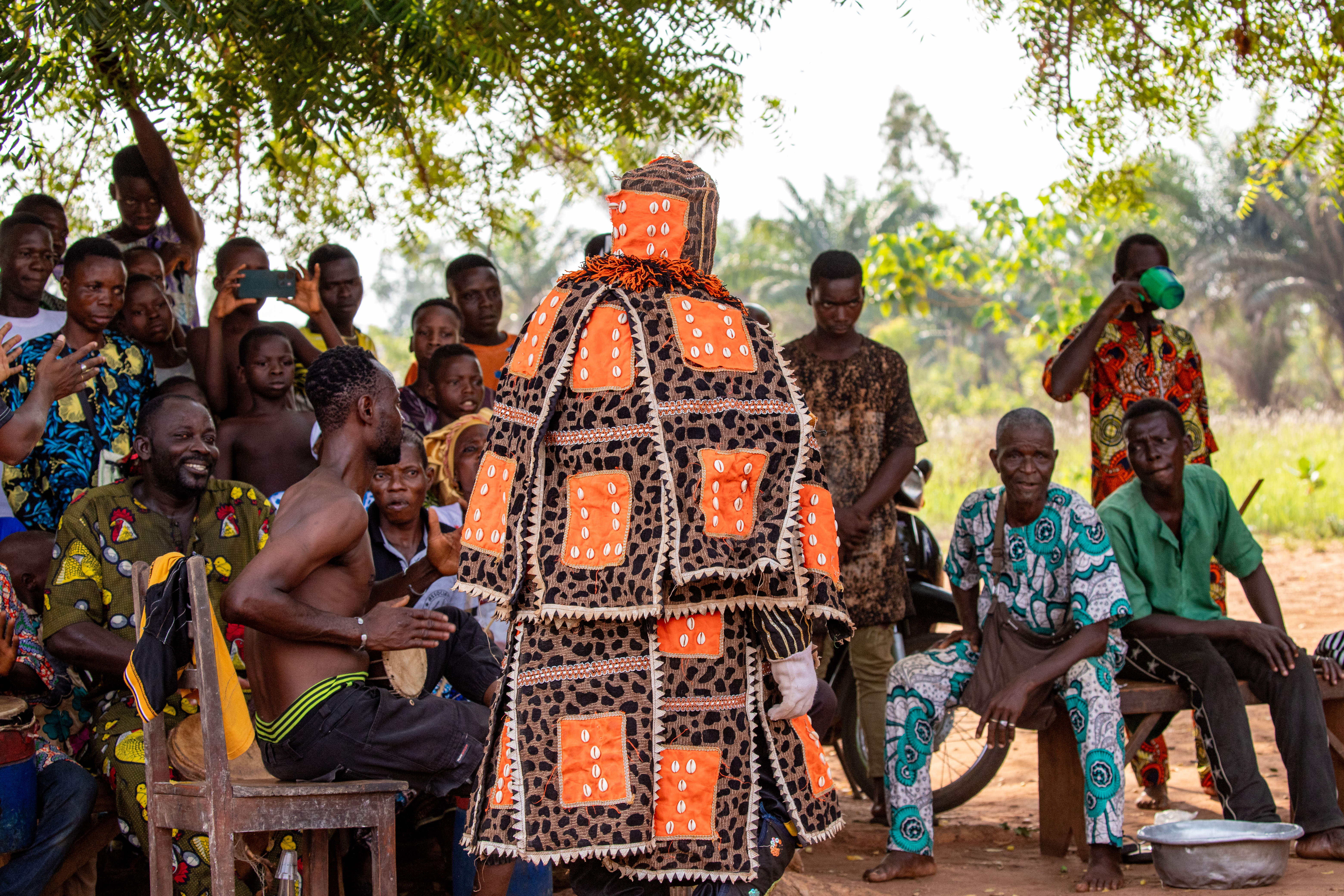
We headed east from Abomey to a small village, so small it does not appear to have a name on Google Maps. Sena said the name is Gangoua, but that doesn’t show up on Google. Fortunately we made sure to note the GPS - 7.18012408719746, 2.287384673034341. The village was chock full of little kids; in all seriousness, there appeared to be 10 kids for every adult we saw. Everyone was gathered for an Egun Mask Dance. We were told that Egun masks represent the spirits of the deceased, and sometimes people consider people wearing the masks to actually be the deceased. The masks are full costumes, usually in very bright colors, and people who wear the costumes are part of a secret society.
 |
 |
 |
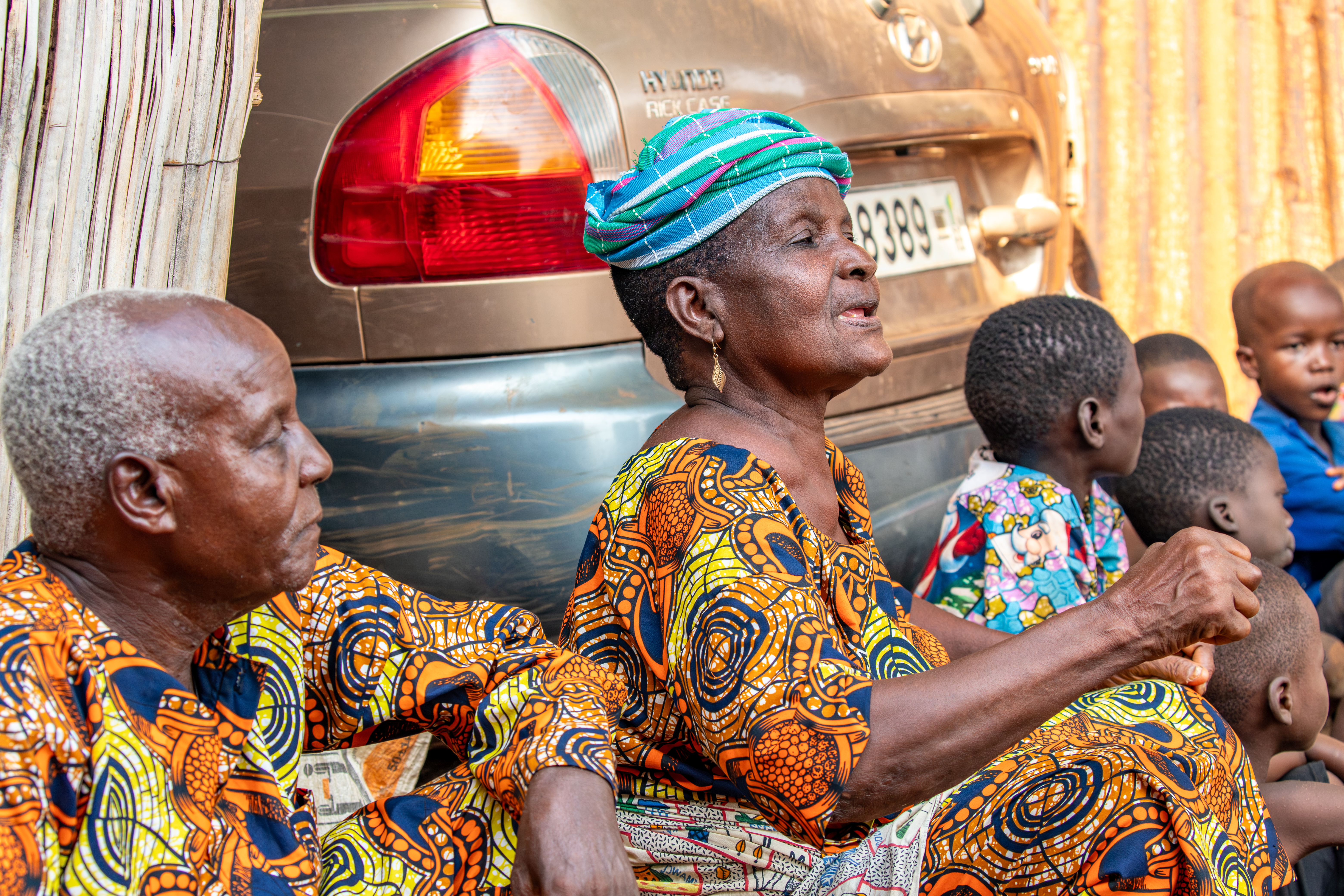 |
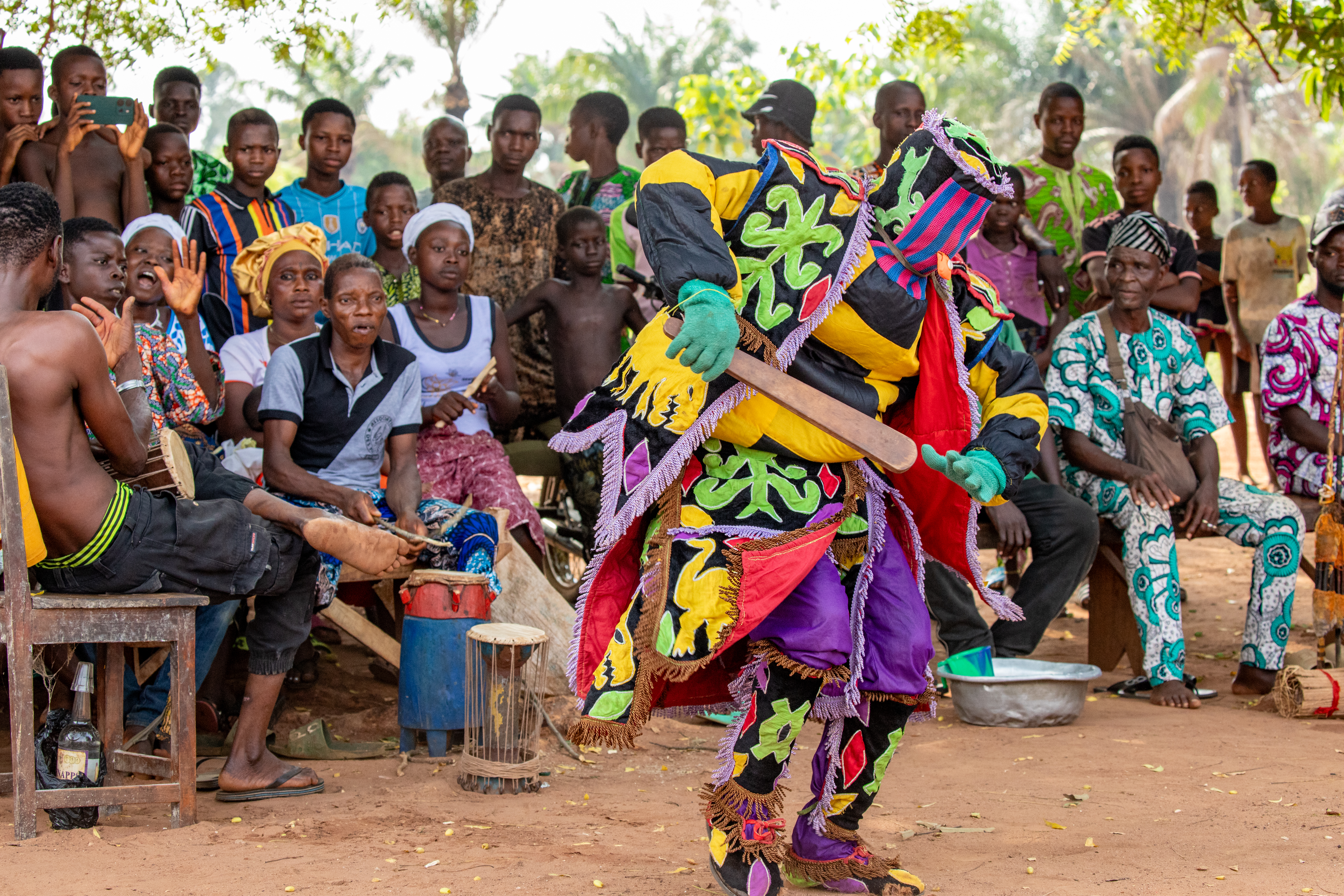
We were seated near a group of people playing musical instruments, with dozens more standing nearby. One by one, people dressed in costumes appeared, walking in from the south side of town. As they approached, the little kids (and some adults) were very wary, and kept a safe distance. Eventually there were 6 or 7 people in costume, including what we assume were 2 children. They would do intricate dances, and sometimes run towards audience members, causing chaos and mayhem as the audience scurried away. There were goats and piglets around, and the people scurrying had the animals scurrying as well. We saw one of the masked participants hurdle a chair in his bulky costume, which was very impressive. We constantly remarked that those costumes must have been incredibly hot.
 |
 |
 |
 |
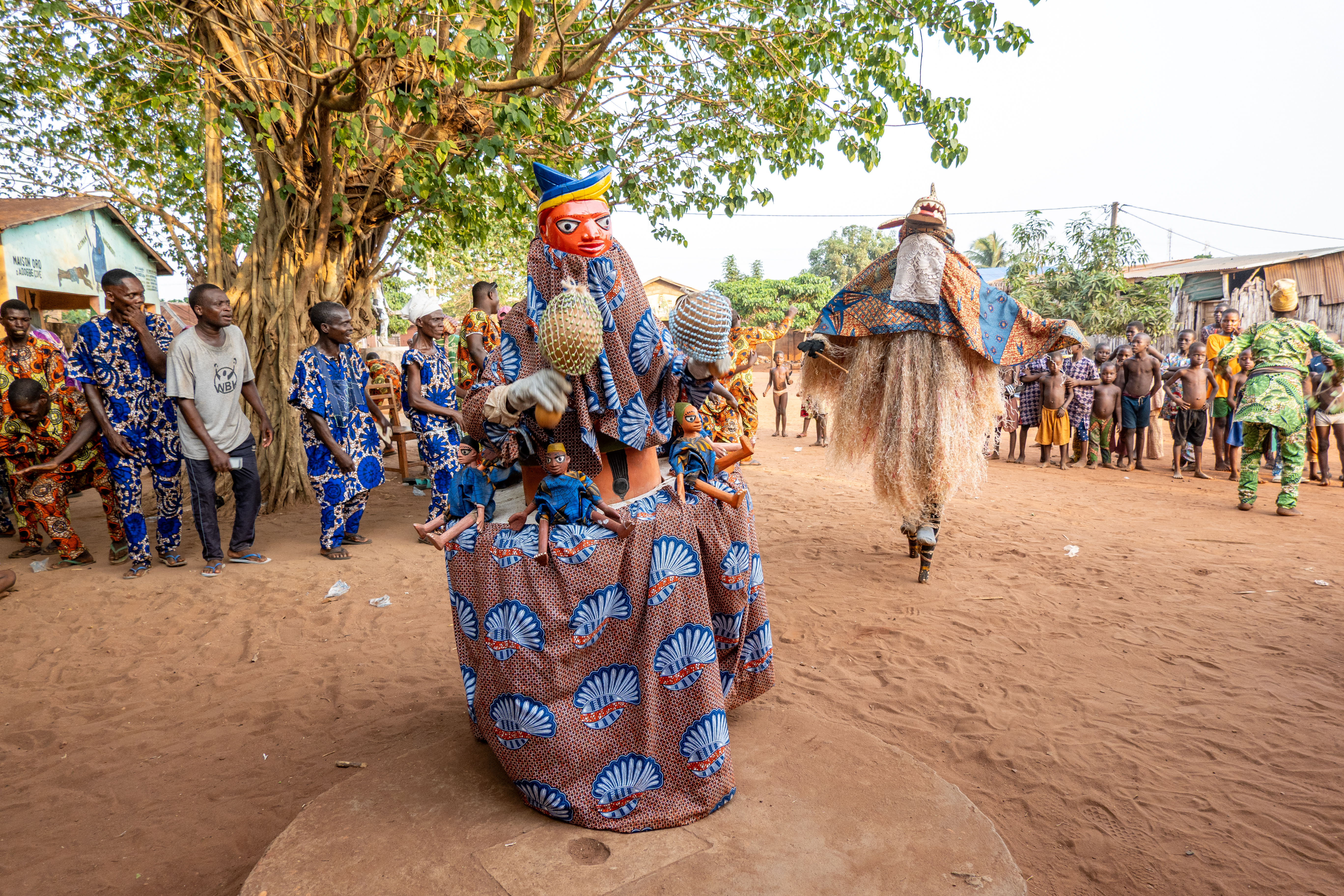
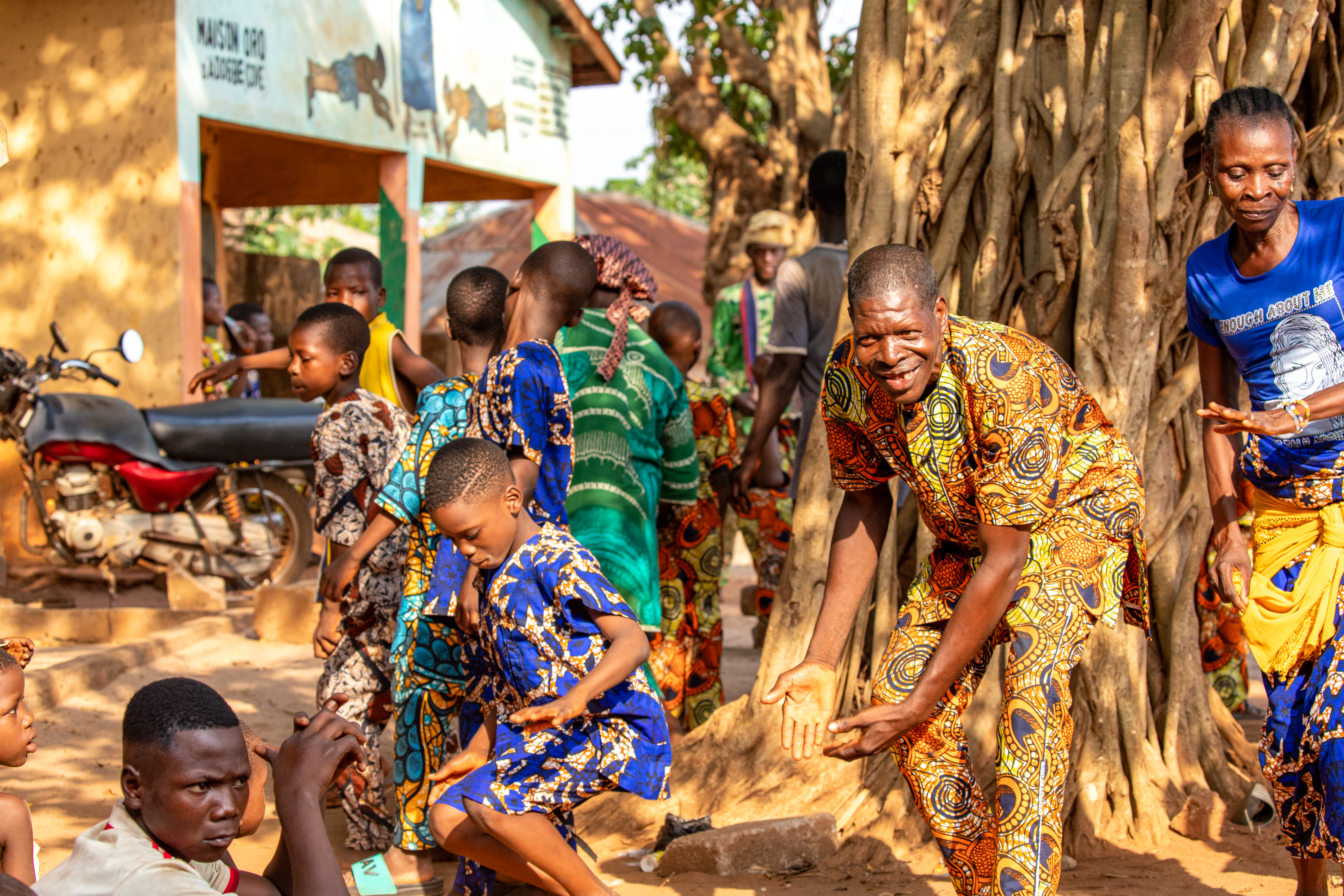
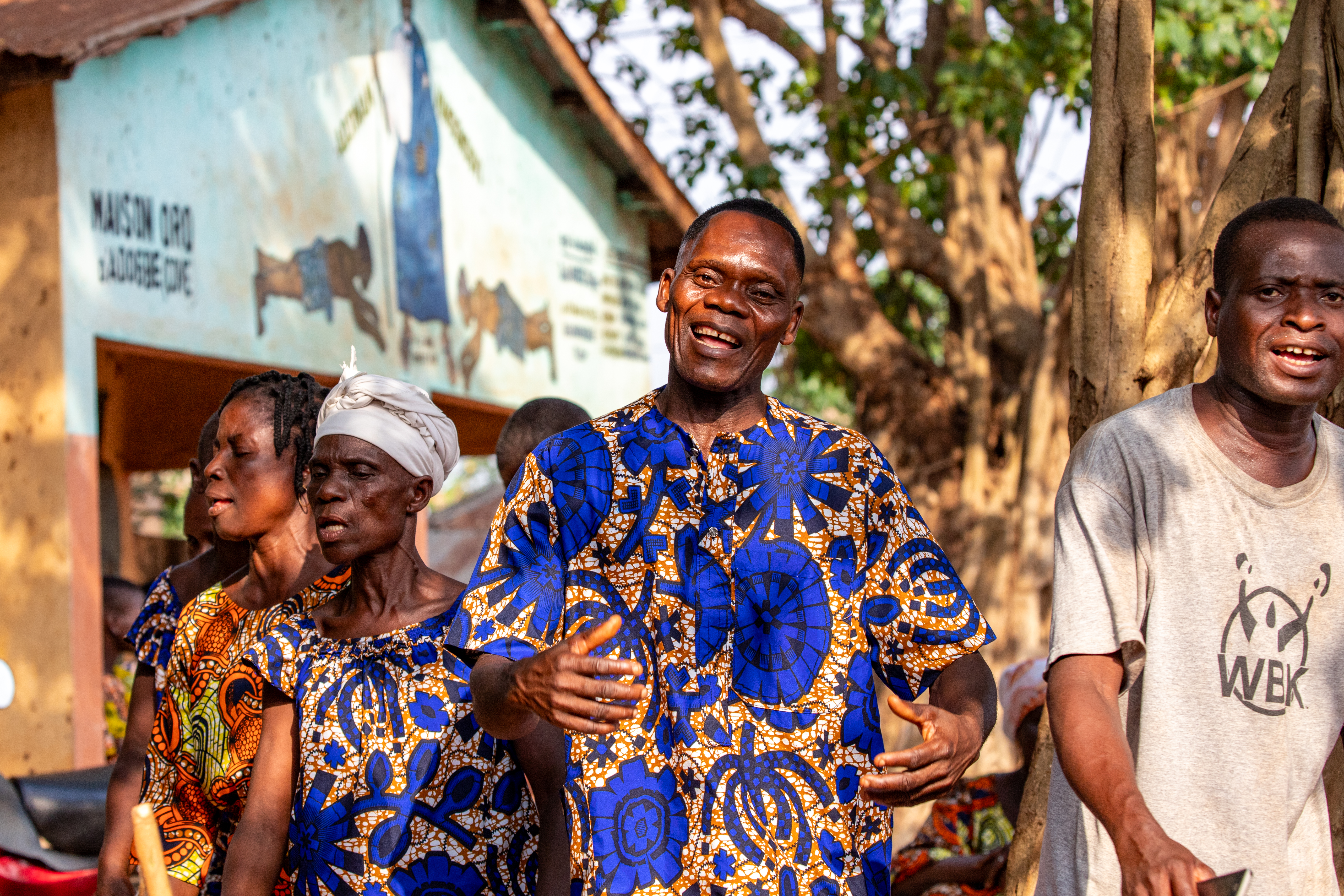
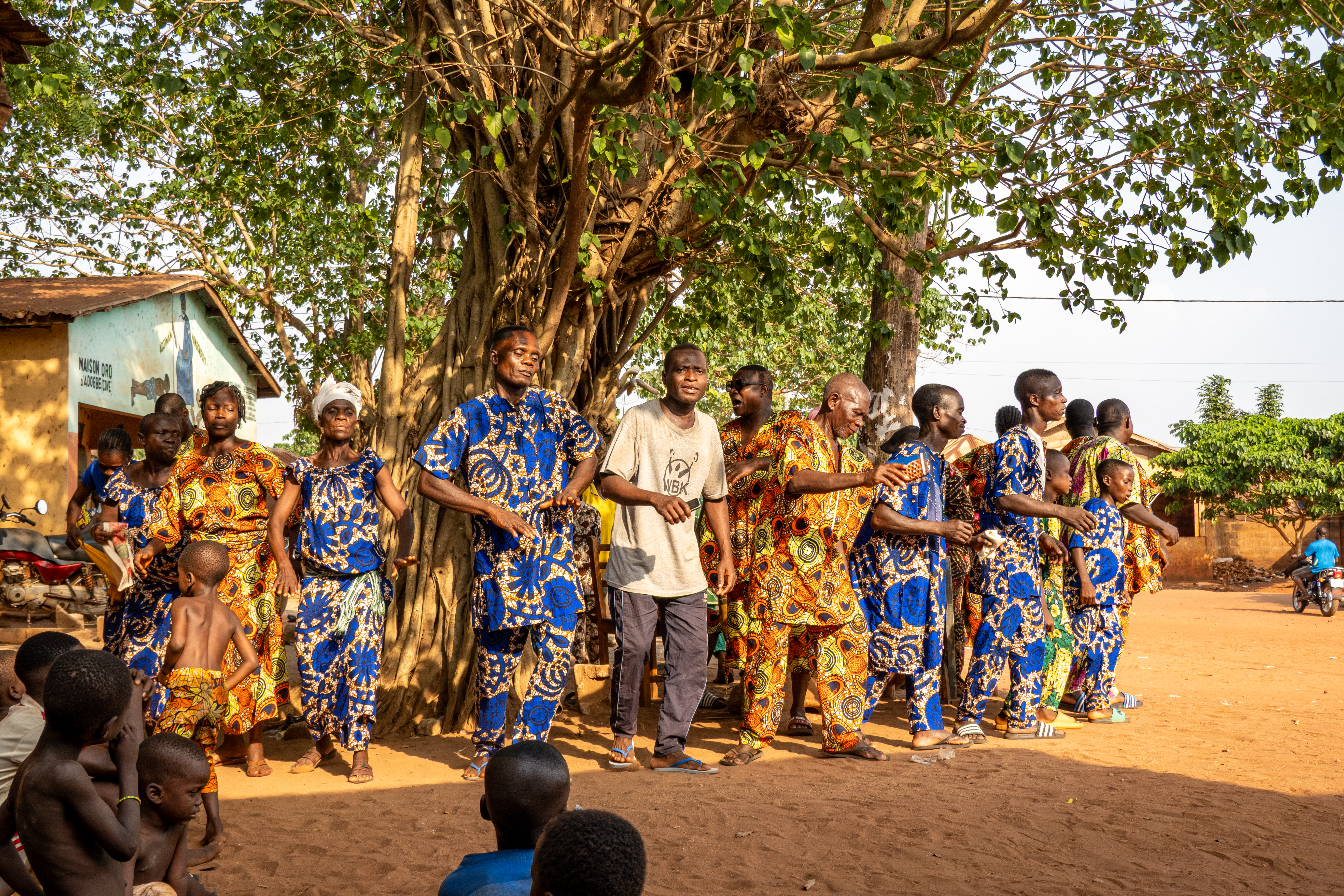
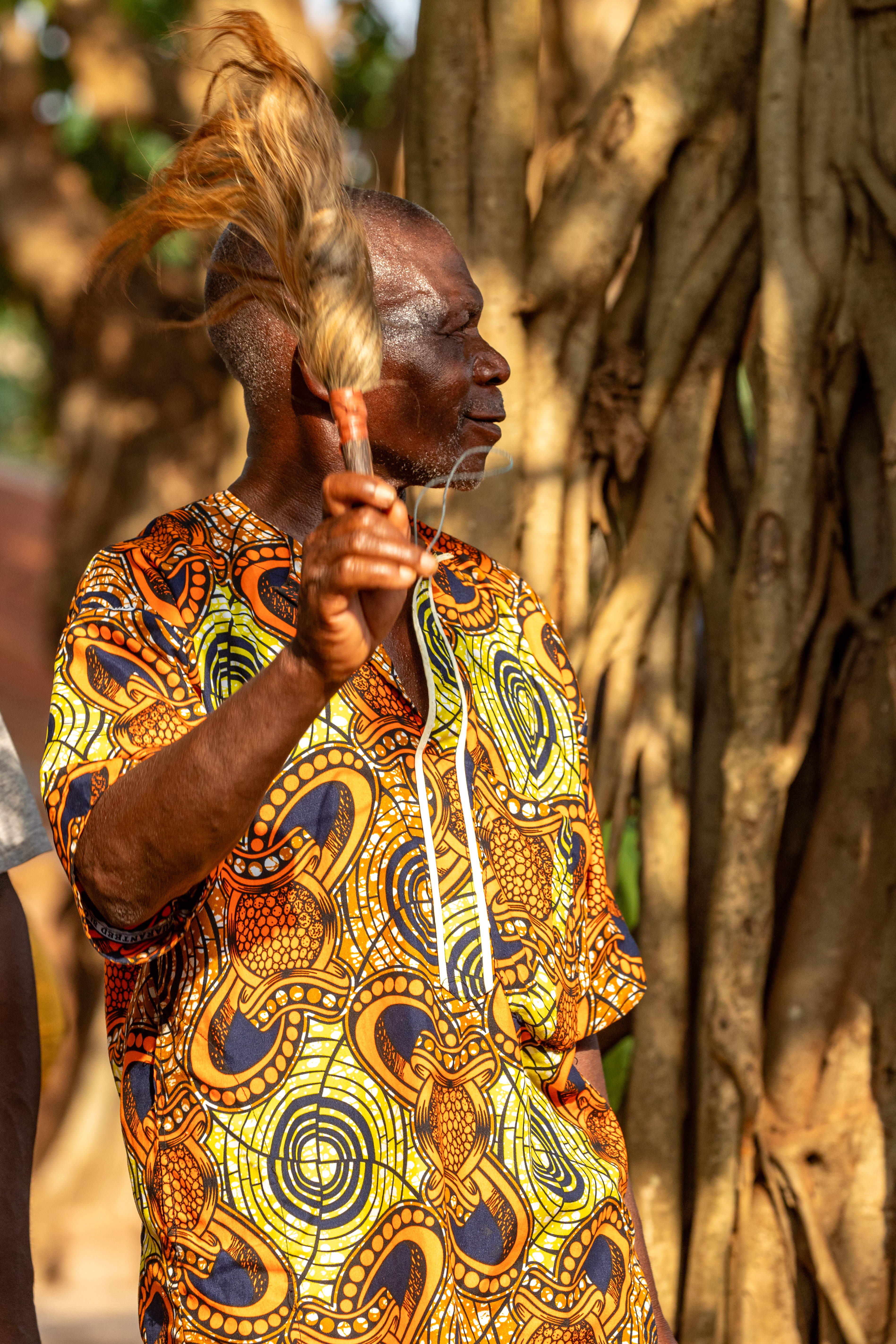
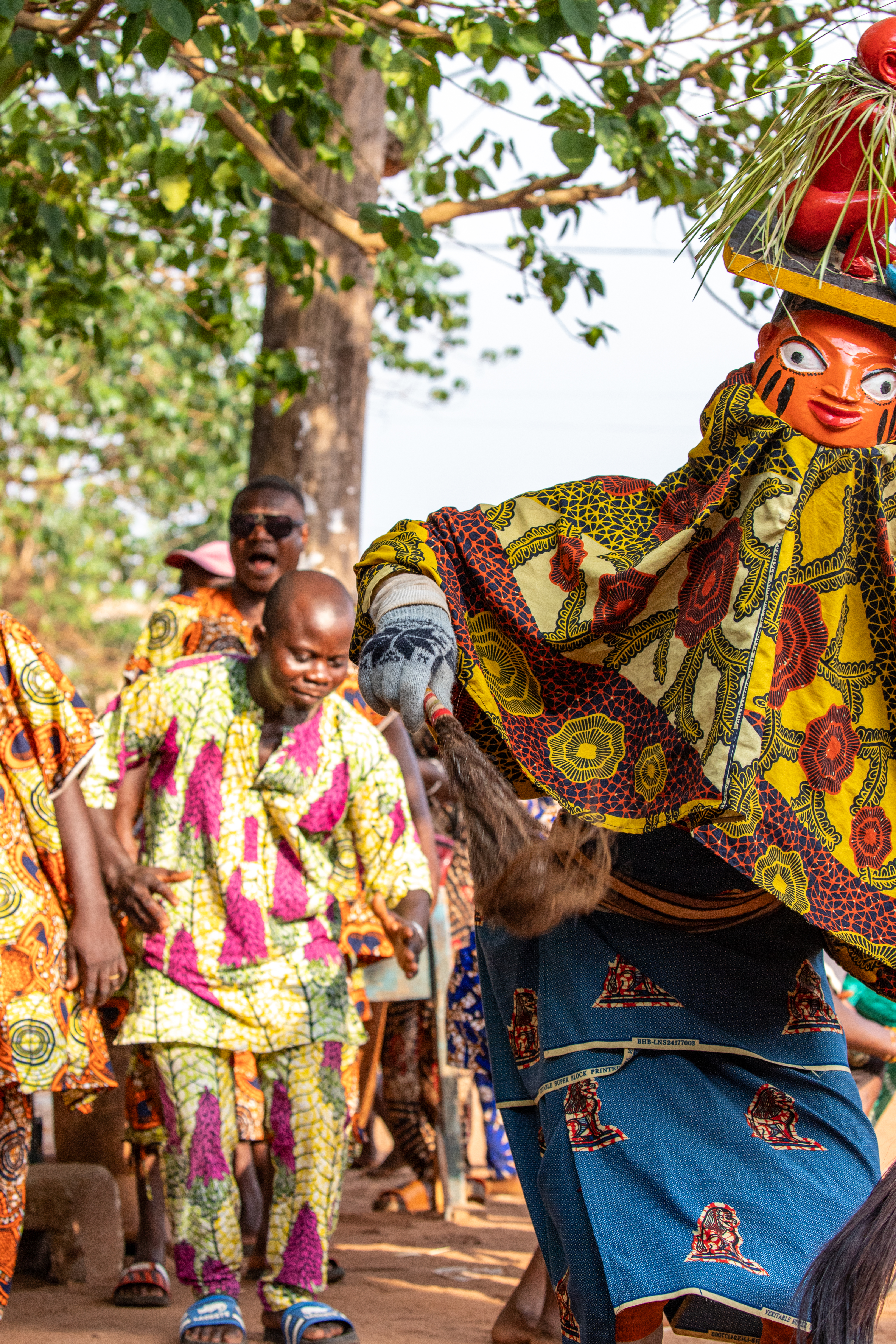
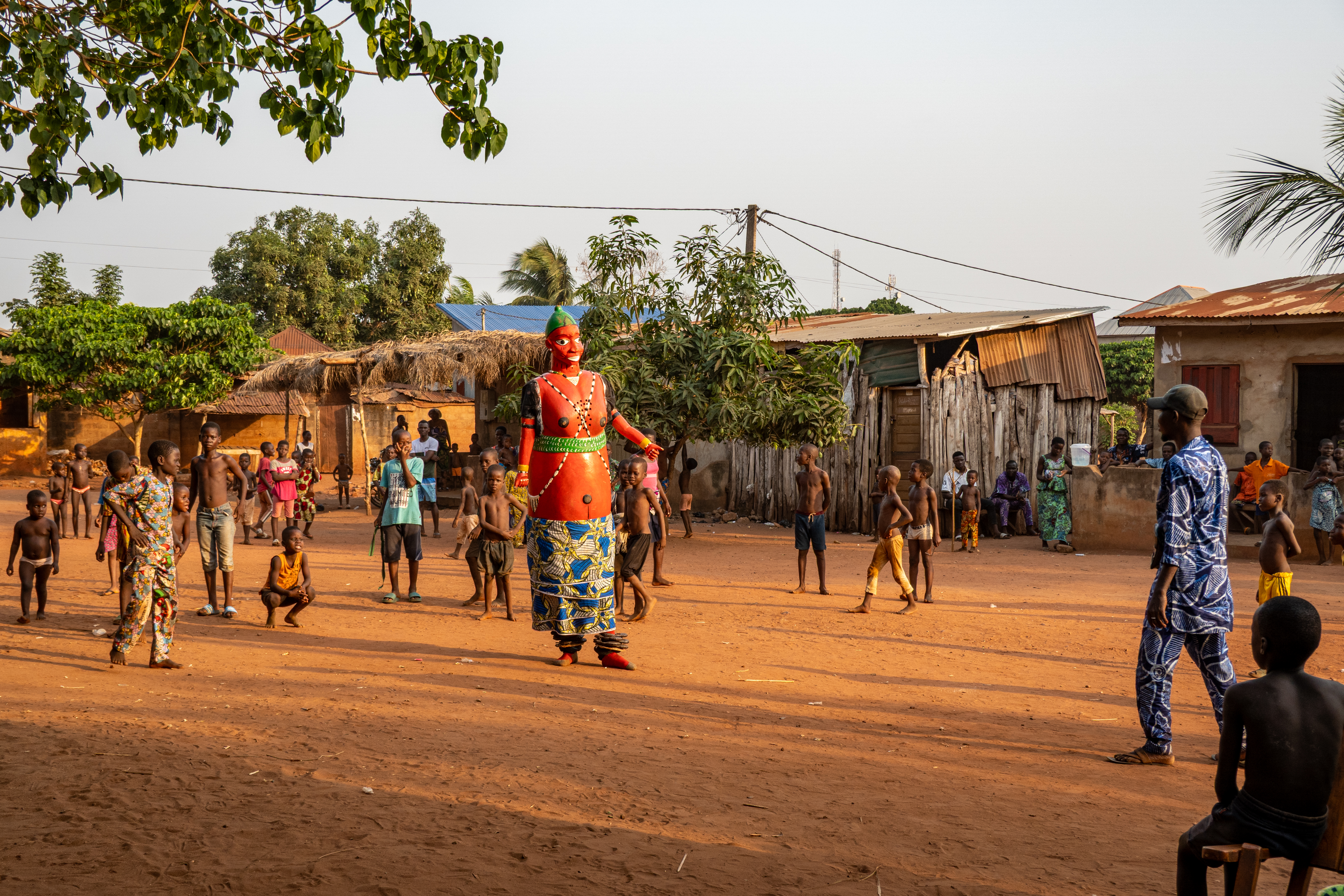
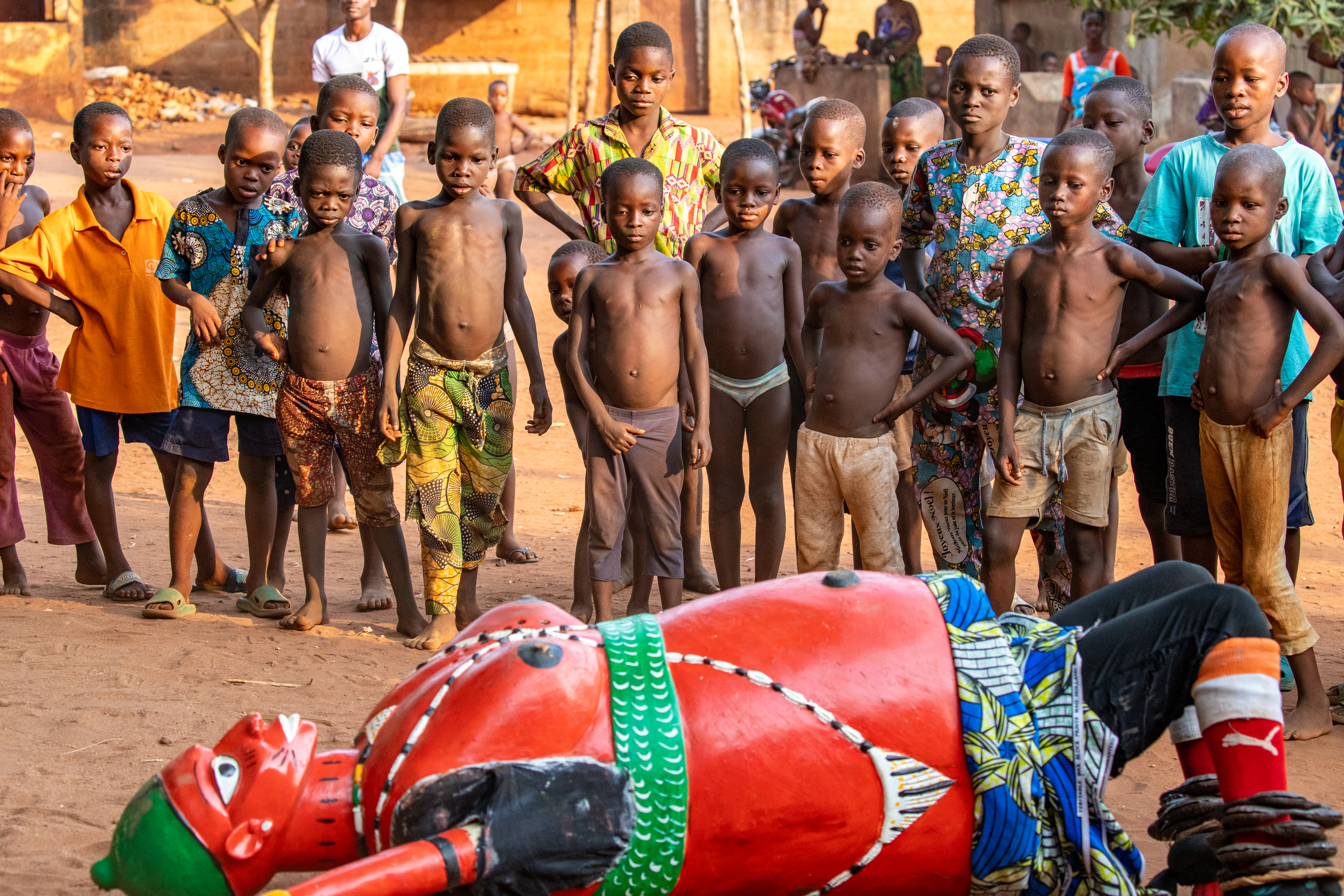
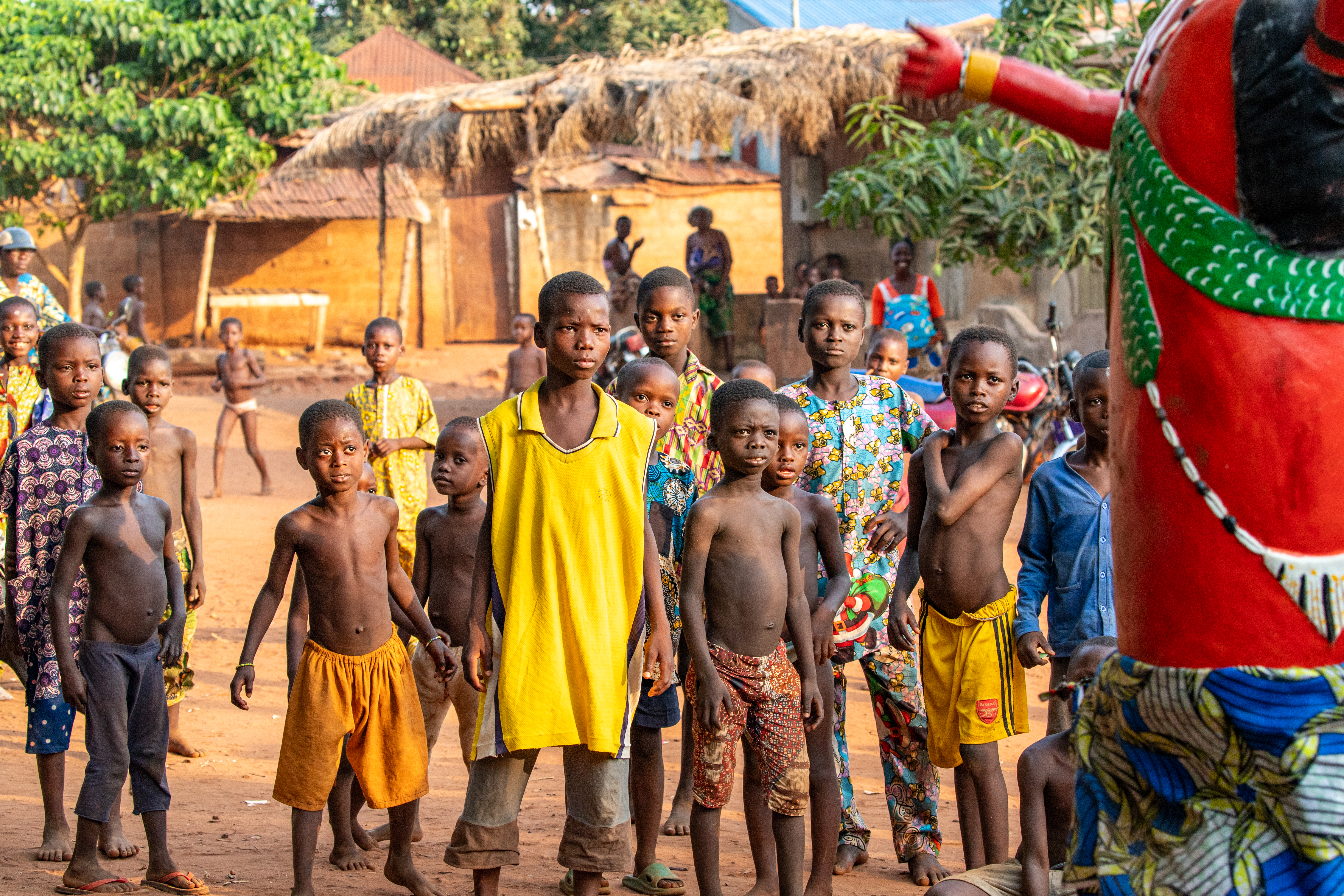
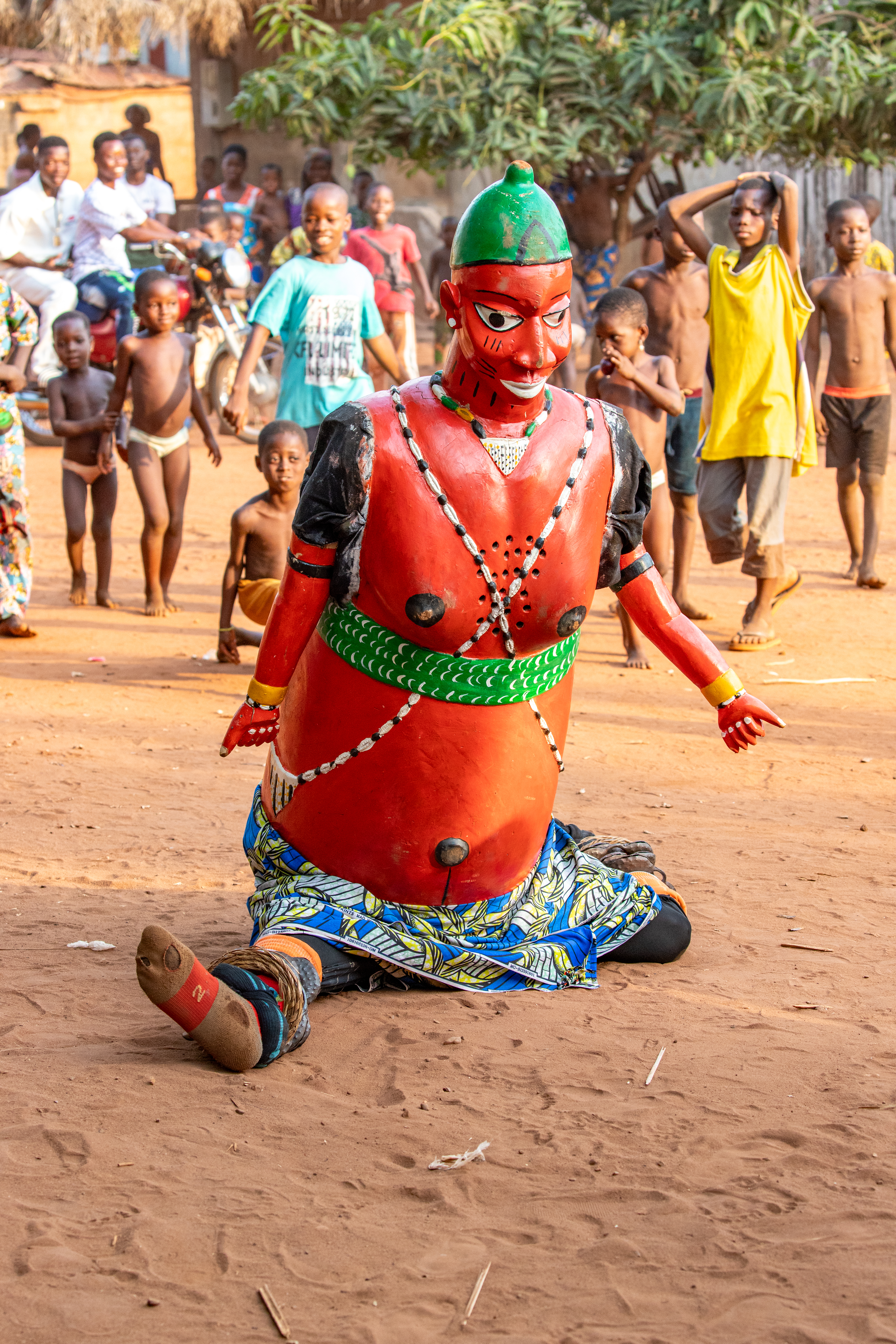
It was a short drive from where the Egun mask dance was to where there was a Gelede mask dance, in the village of Cove. Sena had told us that Gelede mask dances were meant to be informative, sort of the equivalent of public service announcements. Each dance was about 5 minutes, and the costumes had characters on the top that demonstrated some sort of lesson or teaching moment for the audience to take in. There was a group of maybe 15-20 people that were singing and dancing around a tree the whole time, whilst 1-2 masked individuals came out for their turn in costume to do their dancing and try to get along their point.
 |
 |
 |
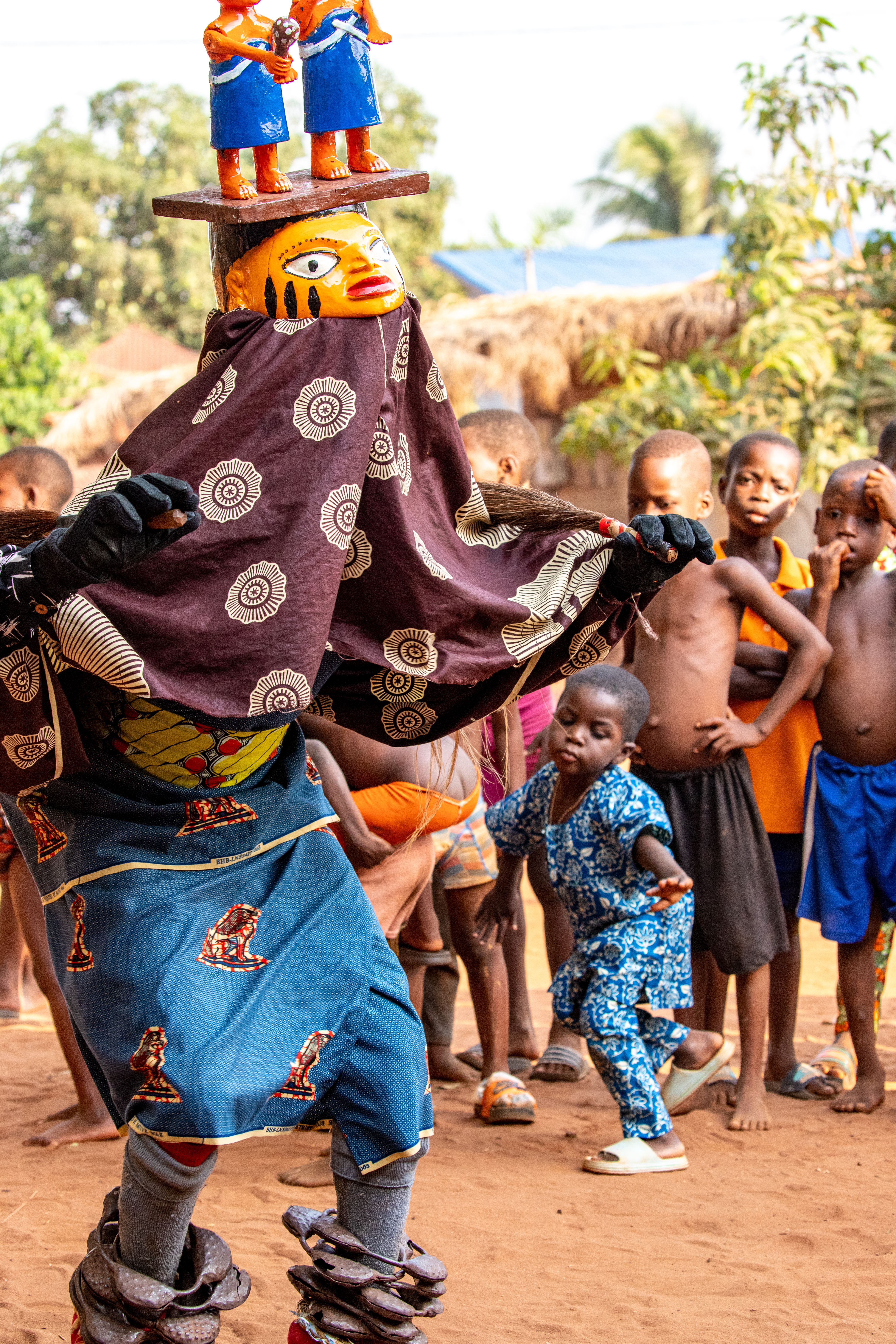 |
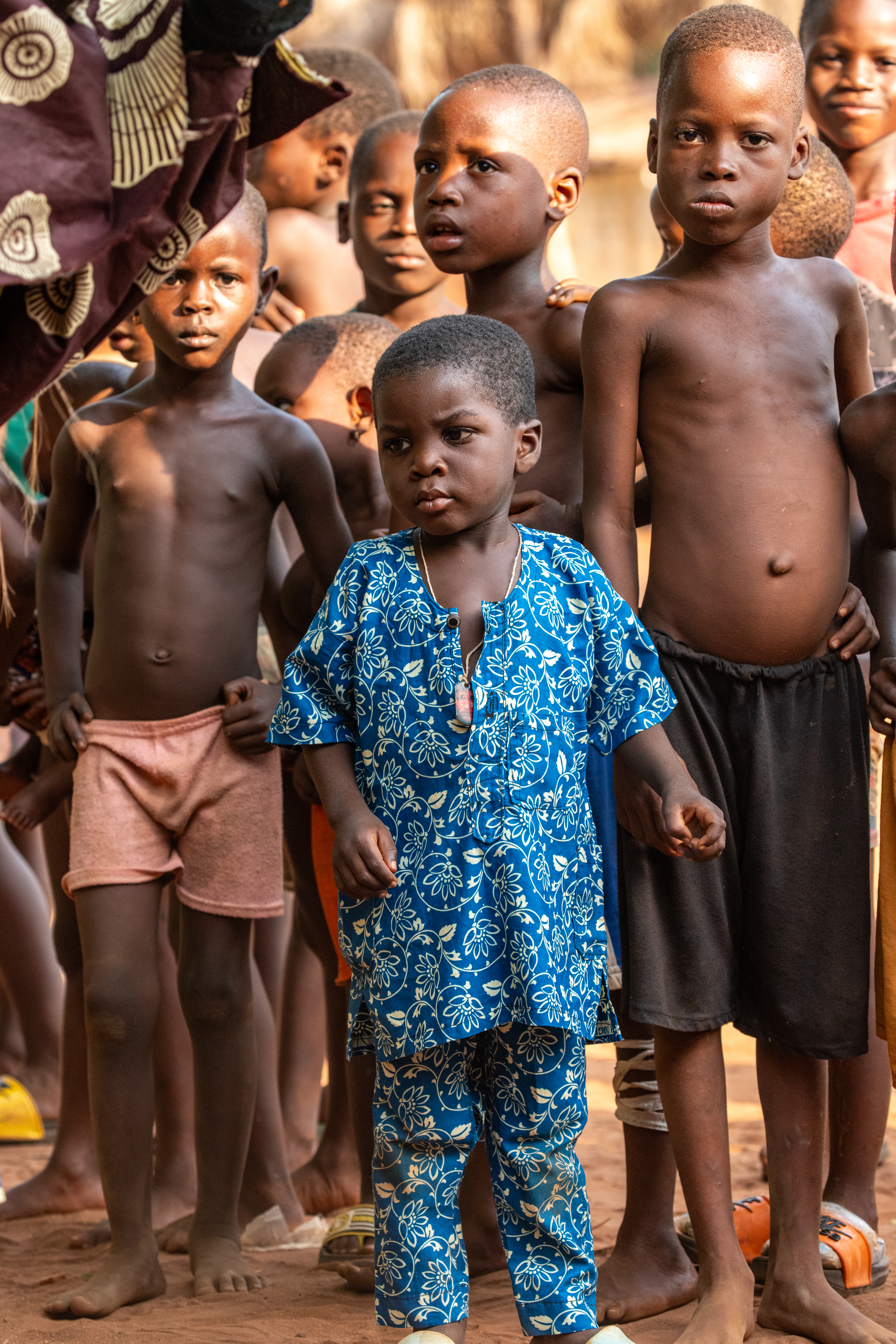
The one that was most memorable was the one about using condoms. Given that there were 10 little kids for each adult, perhaps that one had not been taken to heart as of yet. Compared with all of the other shows and dances we had seen on the trip so far, this one seemed the most chaotic. Some of the dancers seemed irked with whoever was “running” the show (whoever that might have been). Some of the adults were constantly irked with little kids, as they were standing where the adults didn’t want them. One of the adults - we think with some sort of mental disability - was constantly arguing with some of the other adults.
 |
 |
 |
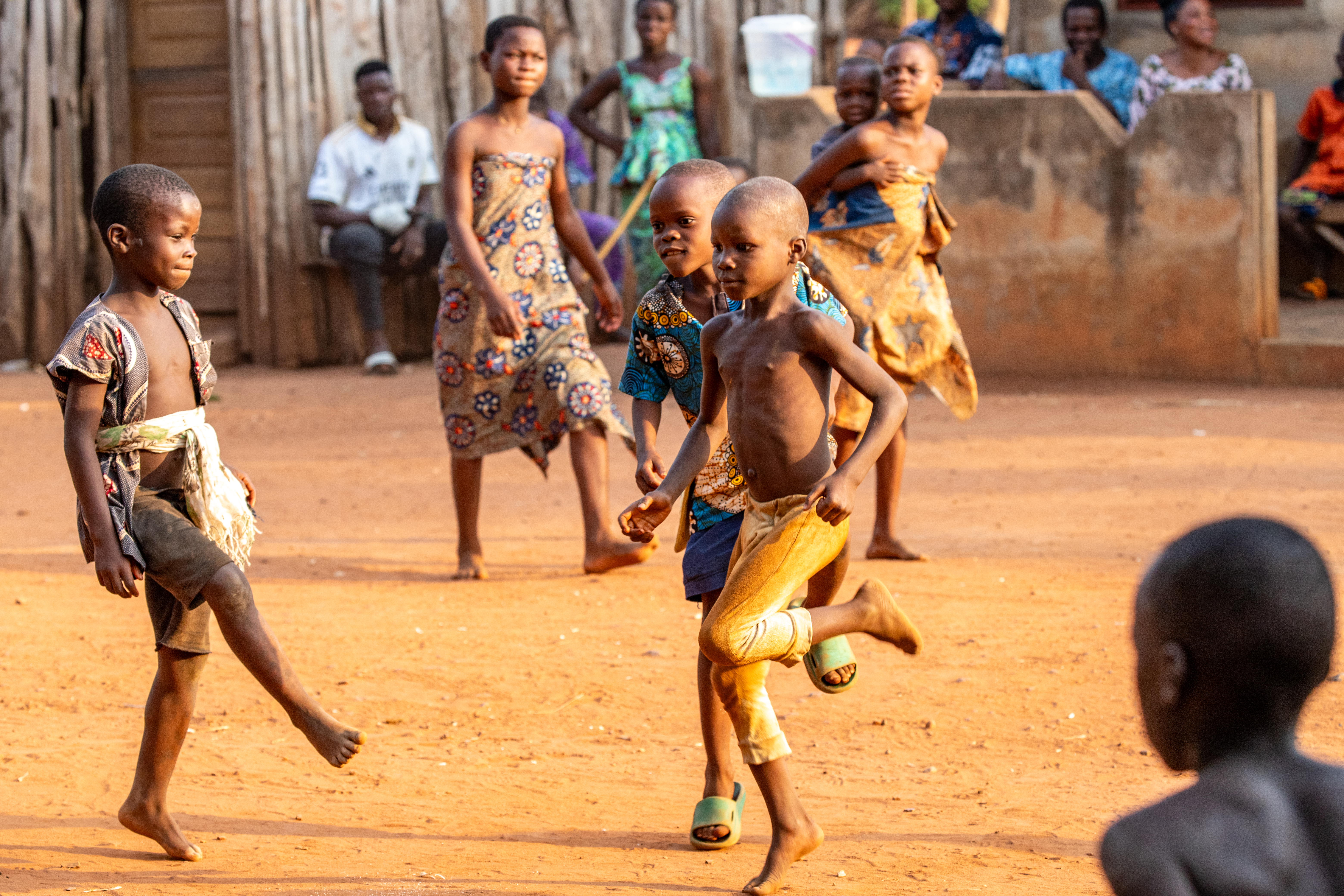 |
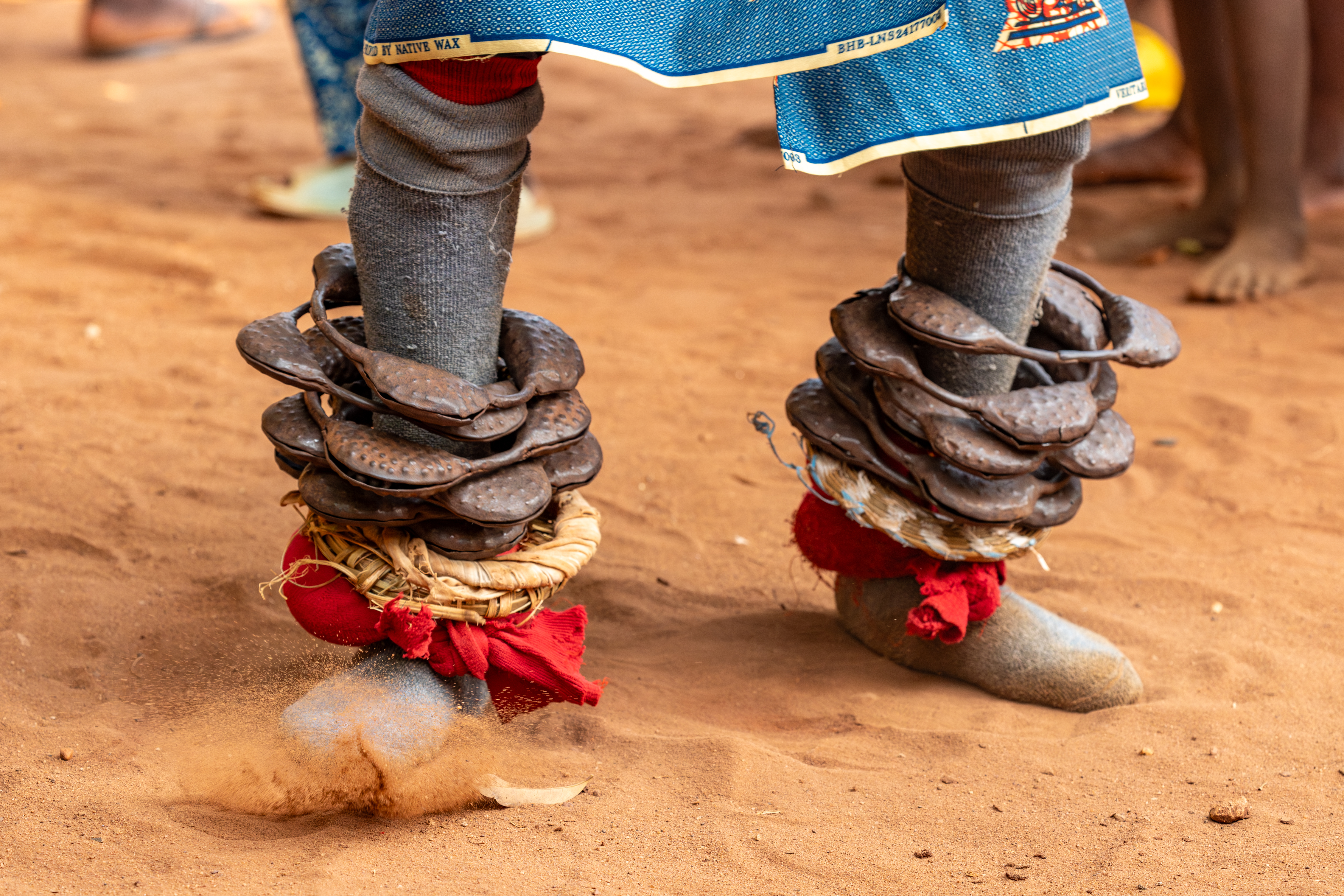
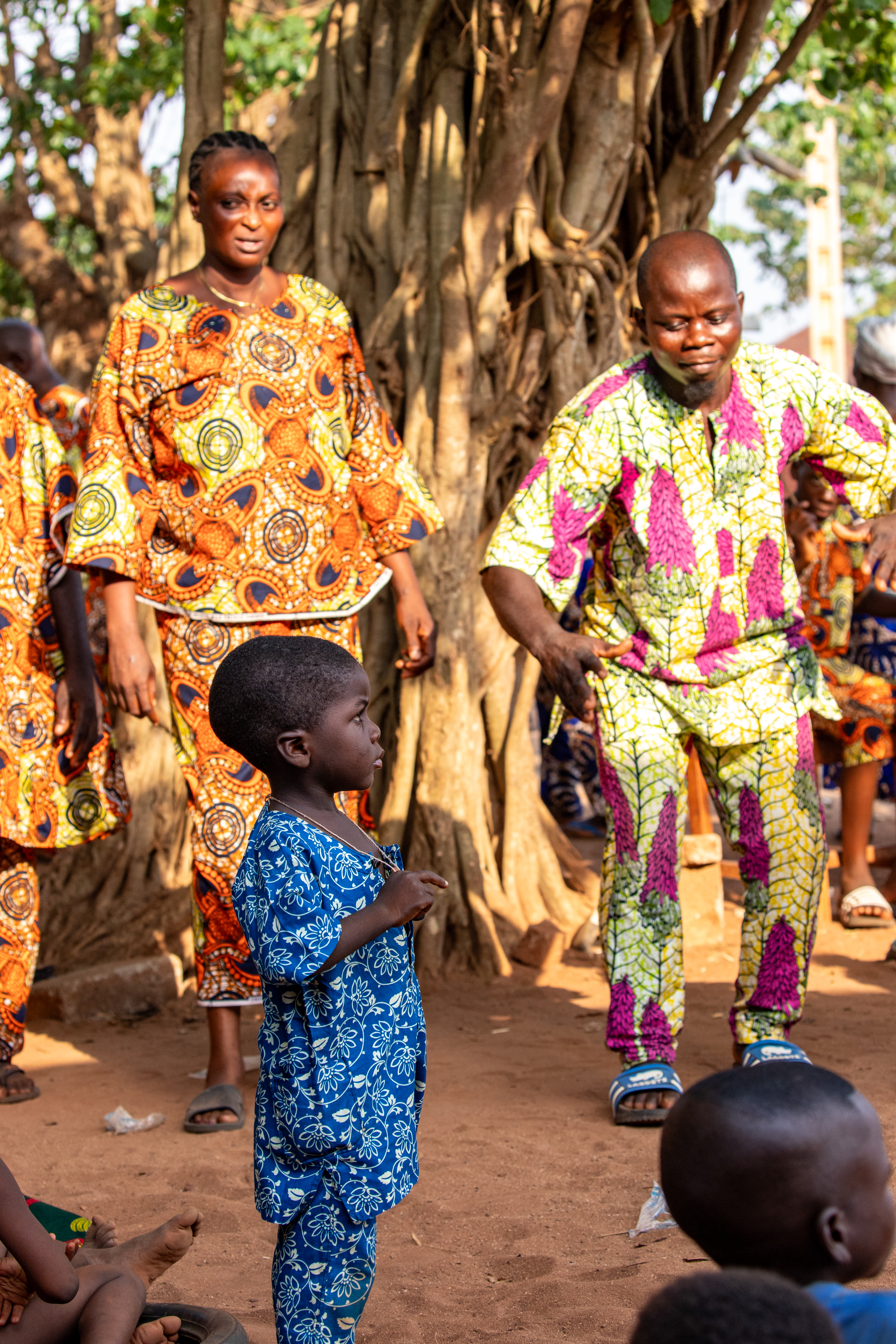
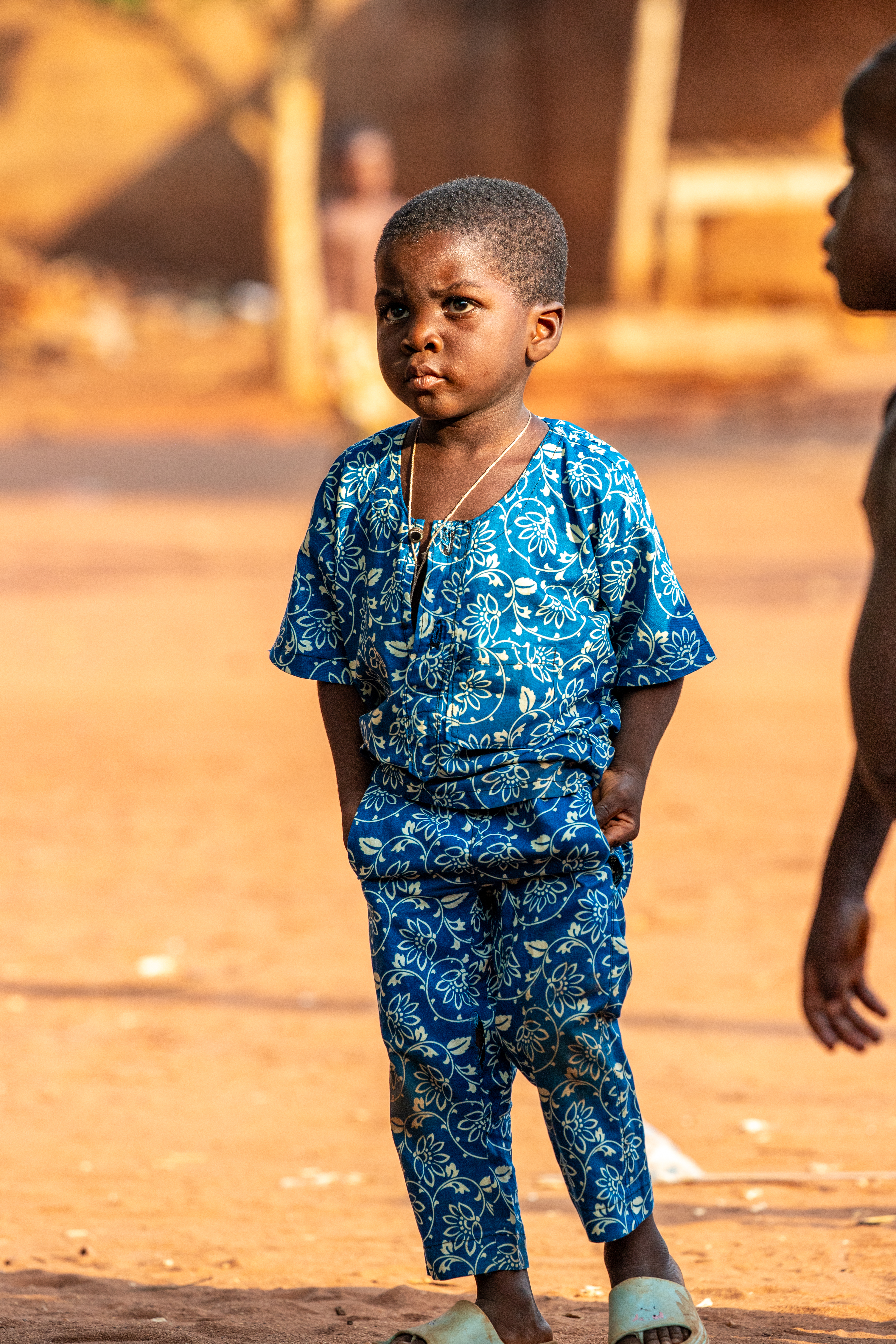
It wasn’t a huge deal, but it was definitely noteworthy compared to the other shows that seemed to come off without a hitch. One little kid, in blue, was locked in on all the dancing, trying to dance along with the masked characters. We fully assume that in 10-15 years, he will be one of the participants as opposed to one of the audience members. The dancers kept trying to get us to dance, and we kept them at bay for a while, but eventually they got Sena and Crystal to dance for a bit, and Crystal was a good sport trying to keep up. The dancers had shakers on their ankles and waist, and it sounded quite a bit like the Krampus in Austria.
Everyone was pretty ready to go by the time we left, mainly because it had been a long day. We got back in the van around 18:00 and headed north towards Dassa, the land of 41 hills. It was odd seeing hills, as it had been so flat the first few days. Sena had warned us that our hotel tonight (Hotel Jeco) wasn’t as nice as our previous hotels, but that it was the nicest Dassa had to offer. When we arrived, the hotel vaguely reminded us of the hotel where we spent one night in Socotra. Our toilet didn’t flush easily, the sink didn’t drain well, the AC barely worked, and the WiFi didn’t.
 |
 |
So we just realized it was going to be one of those places. Hertz, sadly, did not. At dinner he was very frustrated, constantly coming and going, discussing WiFi (we think) with the front desk, or maybe just using the WiFi in the lobby where the signal was best. The rest of us obviously wanted more connectivity too, but we knew we weren’t going to be able to turn a donkey into a unicorn, and just dealt with it. Dinner was taking a while to come out as well, and it was clear staff was understaffed and overwhelmed, with there being a couple other big tables that had arrived before us that didn’t have their food either. Hertz eventually couldn’t wait any longer, and just went to bed without eating.
 |
|
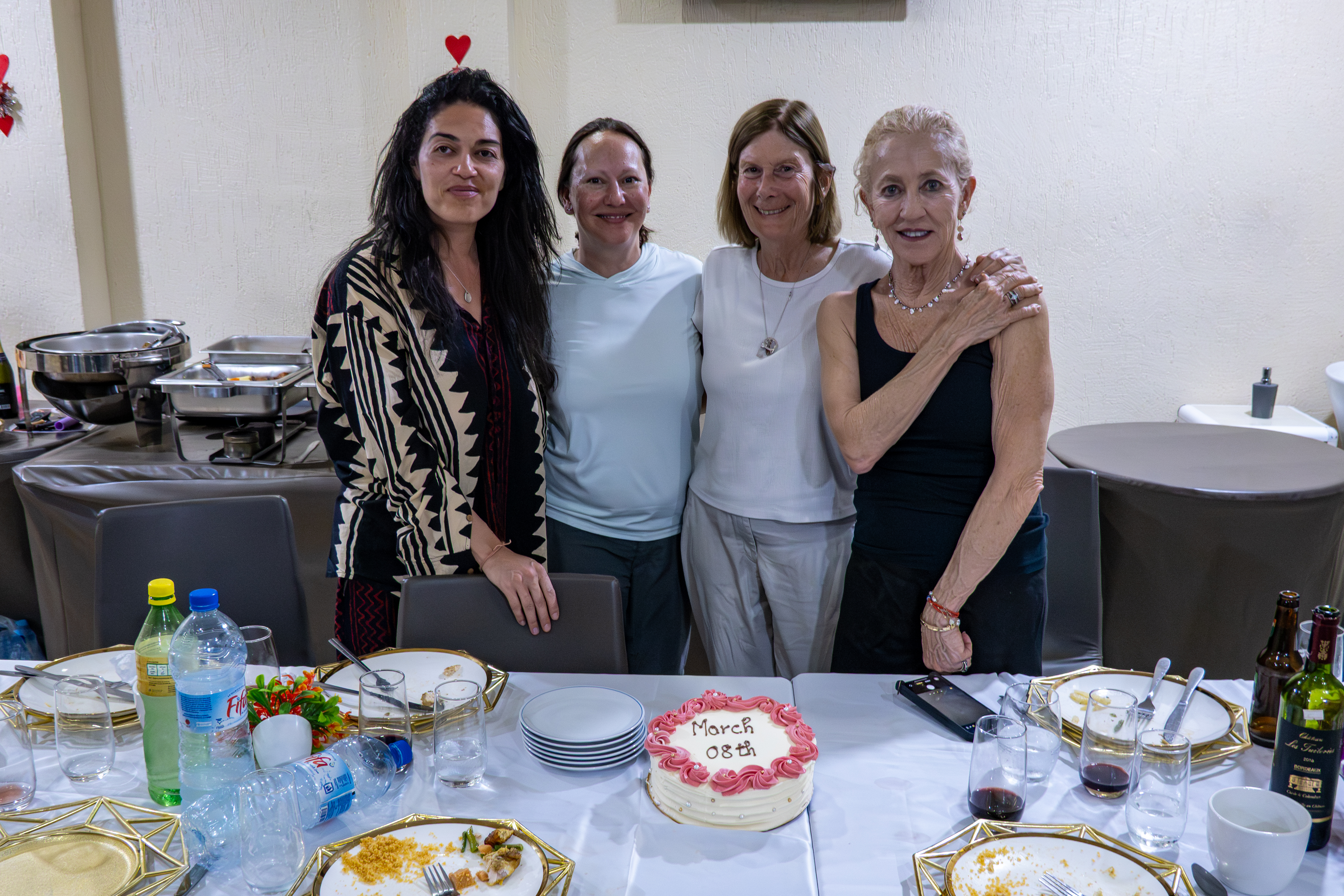
The rest of us waited and watched some dubbed US movie with Chris Evans (we can’t remember which). They brought us some wine as well, and we made our way through the bottles. The glasses they brought out were wet from being washed, and we worried a tiny bit about it [as this was one of the spots we’d been told not to drink any of the water or have any ice], but then realized all of the plates and glasses we’d used all trip had been wet and then dried at some point. We told Sena to thank the staff for working so hard under difficult circumstances. The food that came out, even if in an odd order, was tasty. We all chatted about random stuff, mostly travel or travel adjacent topics, plus autism and the spectrum, and finally some tennis. Sena surprised the women with a cake for International Women’s Day, and we each had a slice. Eventually we called it a night, and even though the AC not working great made sleep uncomfortable, we were so tired that we slept right through.
| Previous Entry |