We were up early again, and got ready fairly quickly. We headed over to breakfast just after 07:00. There were bacon, sausage, and hash browns, like at an American buffetbreakfast. Other members of the group were already there, and we discussed lots of things, including dogs and dog costumes, and also being aunts and uncles. We left at 08:00 for a long drive northwest to Kumasi for a funeral.
When we received our packing list from Wilderness, one thing that caught our eye was black clothing for a funeral. We asked about this, wondering if “funeral attire” was just an easy stand-in that westerners would be familiar with. But no, we were told that we’d be attending an Ashanti funeral in Kumasi. This of course begged the question “how do they know there will be a funeral the day we’re in town?”
Today we got our answer. As we mentioned, we’d seen billboards in every big town indicating that someone had passed, and was going to have a viewing and/or a funeral on such-and-such date. Apparently this was the very end of a long process. The funeral is more of a celebration than a wake. It is designed to help the spirit get to wherever it is trying to go. The amount of celebrating is somewhat of a sliding scale, based on a person’s age and/or status. So a funeral for someone who owned a business and lived to be 100 would be off the chain.
Sena explained that the funeral is “the key” that opens the door for the spirit to leave. If you don’t celebrate the person, their spirit stays around and causes problems for you. After a person passes away, someone in the family is chosen to be the family leader, who informs all the branches of the extended family of the news, including how the person died, and this can take a long time. Then everyone agrees on a time/place for the funeral, which is on the order of many months, sometimes more than a year. The size and location of the funeral depends on the status and wealth of the person.
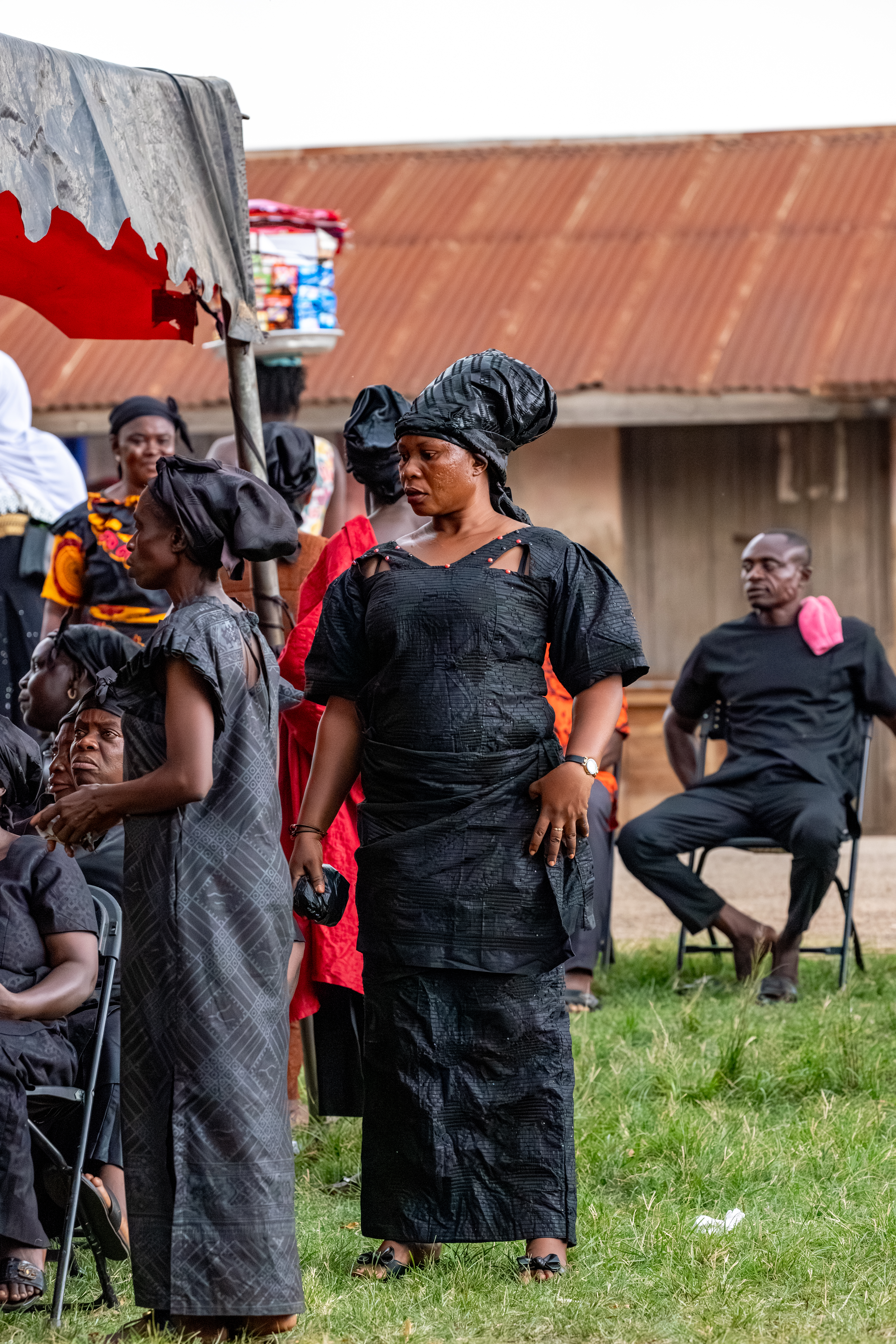
The celebration is usually for one week, so that people coming from far and wide get their money’s worth. On Friday of the week, the body is picked up from the morgue (Ghana must have the largest morgues on the planet), and Saturday is the funeral itself. Today was a Saturday, and Kumasi is the capital city of the Ashanti people, so of course there was going to be an Ashanti funeral - there were probably dozens and dozens to choose from. Some people literally might have had multiple funerals to attend. As Sena was telling us this, we saw people in black walking down the street; black and red are the acceptable colors for a funeral.
|
|
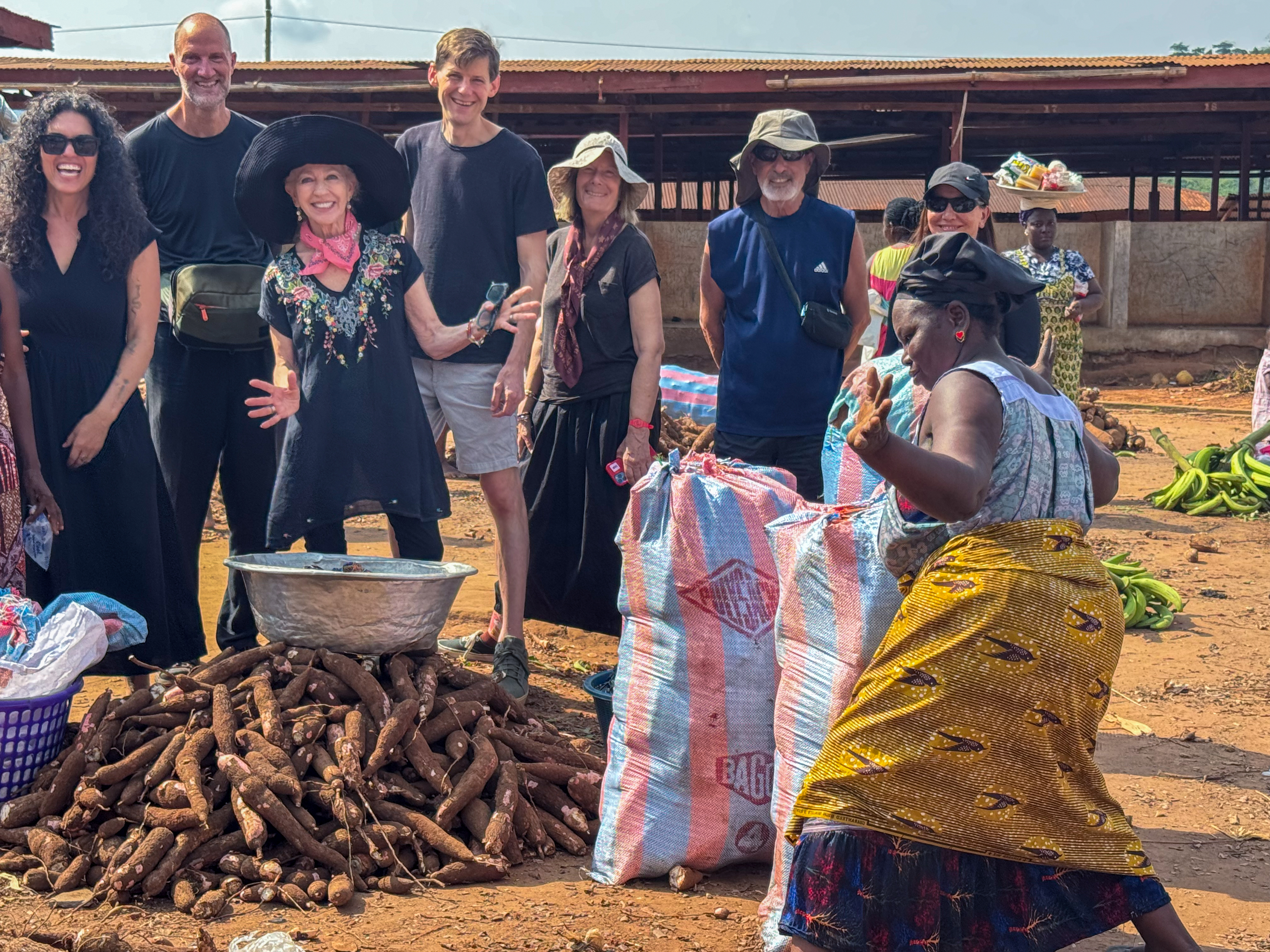
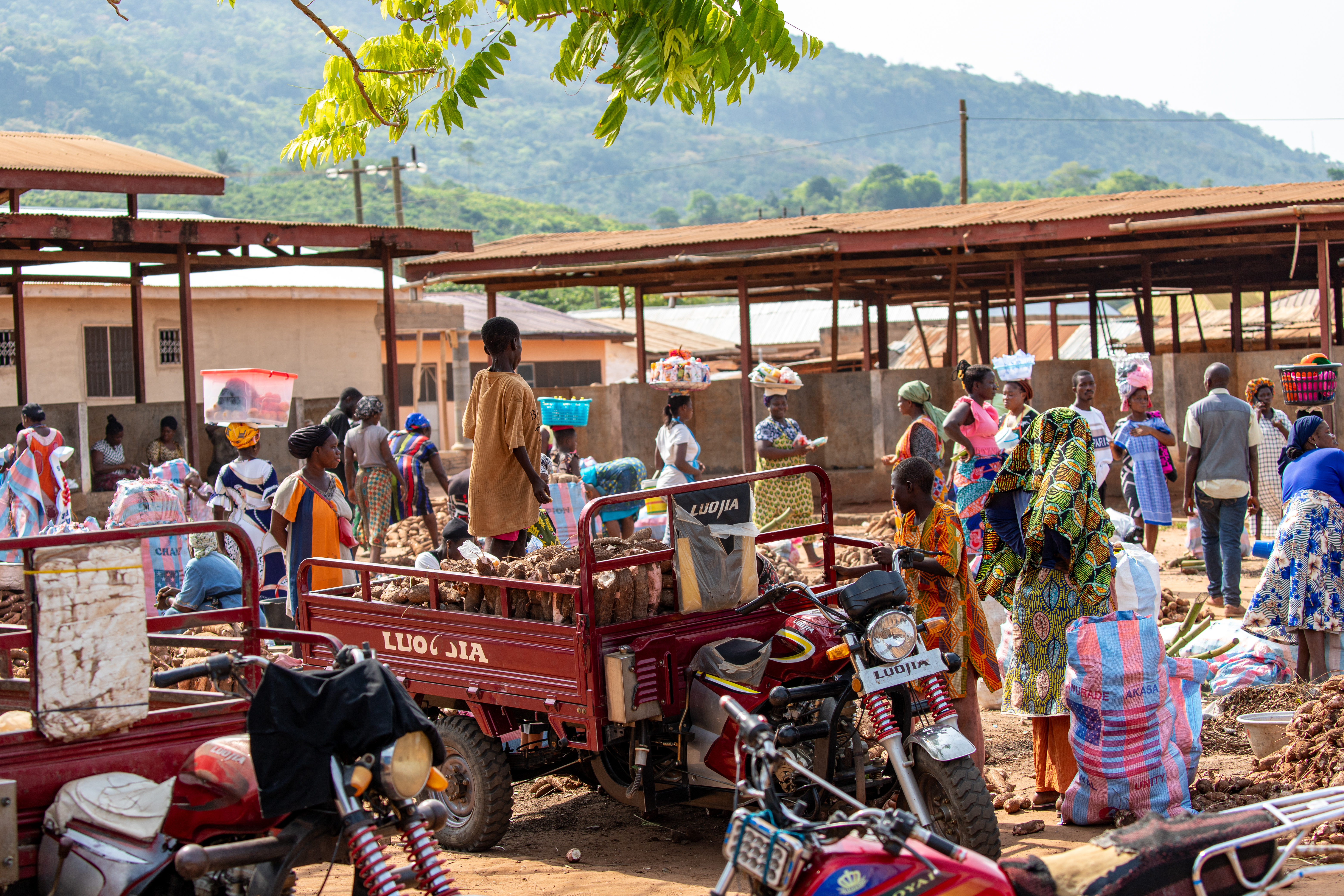
During the discussion of the details of Ashanti funerals, we crossed over the Prime Meridian (from east to west). The scenery was nice, lots of green hills with some ups and downs. We made a brief stop at the Asenema Market Square, more to just get out of the vehicle for a bit. Our group turned some heads, as others were seemingly surprised/impressed/confused seeing us all in black. About 25% of people were wearing black. We wondered how many funerals people attended every year. We got a group photo, and one of the vendors photobombed us, making everyone crack up.
Around 11:00 we made a pit stop in Koforidua, at the intersection with the main highway to Kumasi. We hoped the road quality would be better on a main highway, but sadly no. Around Nkawkaw the road split into a divided highway, with two lanes on each side. We had a much better ride at that point. It was nice to not have to pull into the lane of oncoming traffic to pass. Our nice road didn’t last too long, though. And sadly, we saw the immediate aftermath of an accident in Konongo. The driver and passenger looked worse for wear, and pretty shellshocked, but they didn’t appear to be seriously injured. Over half the vehicles were trucks, and they weren’t going too fast, which really contributed to the problems on the road.
Konongo is apparently famous for gold mining, and many of the richest people in Ghana are from the area because of that. The traffic through Konongo was horrible, and we granted Abass the ability to take us on an even worse, bumpier road, such that we could pass a lot of the stopped cars on the “good” road. We stopped between Konongo and Kumasi for lunch. It wasn’t the greatest, but it was fine. Obviously everything was lukewarm, and the french fries were awful, but it was food. There were flies everywhere, and we seemed the least bothered. Maybe we’d just had the most practice. We were probably there for only 30 minutes, and left at 14:00.
We got to Kumasi soon, and then drove through town for a while. We had to wait for our local guide, which incensed Sena since the meeting place was right by the local guide’s office, and we’d been driving for over 7 hours. When he arrived, we saw Sena giving him a piece of his mind just outside the bus. They got on and everything seemed okay from there. We learned that Kumasi has around 3 million people - apparently 2.5 million were on the roads today, as we slowly made our way west, almost to the western outskirts of town. We finally arrived around 16:30, so 8.5 hours after we left the hotel in the morning.
 |
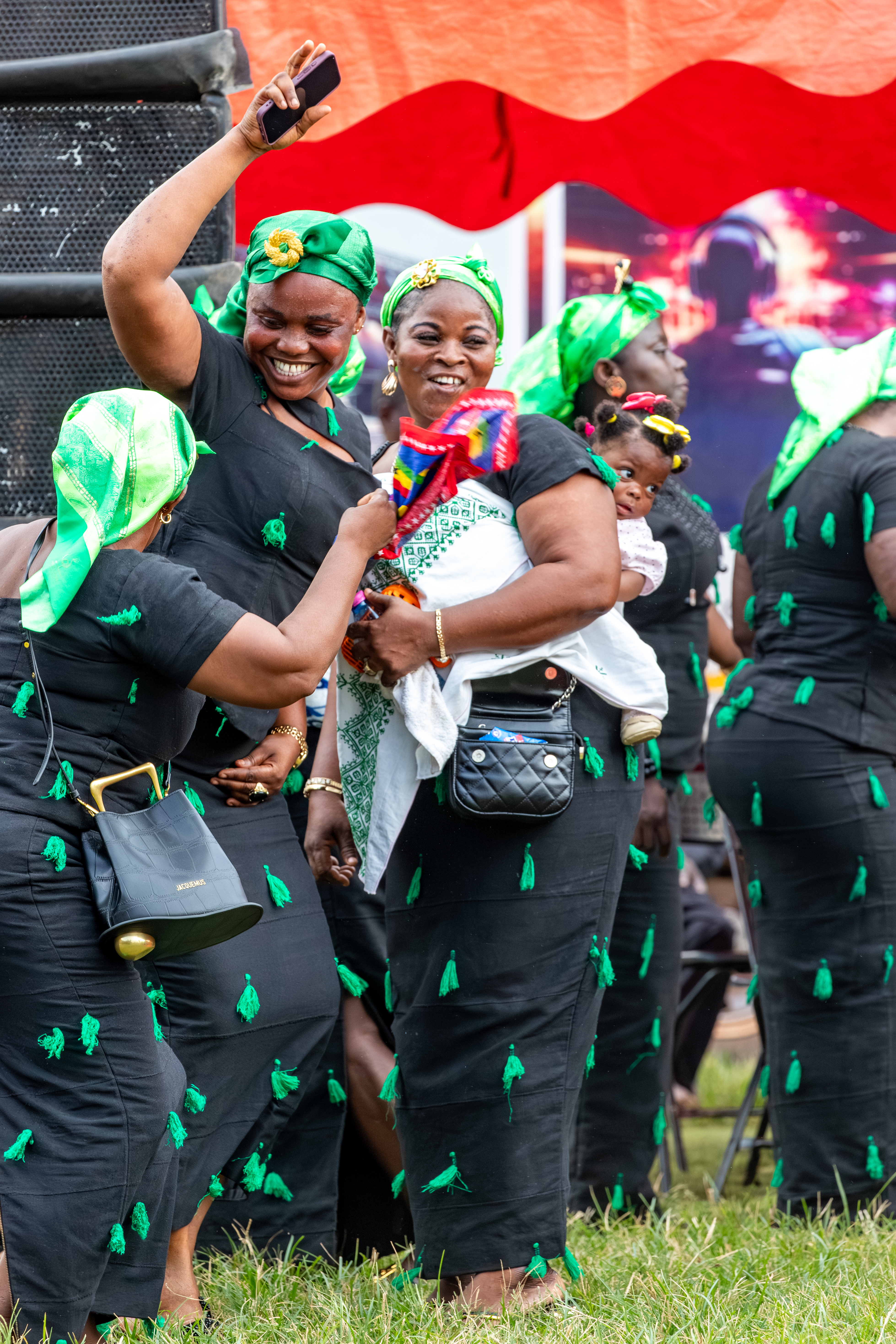 |
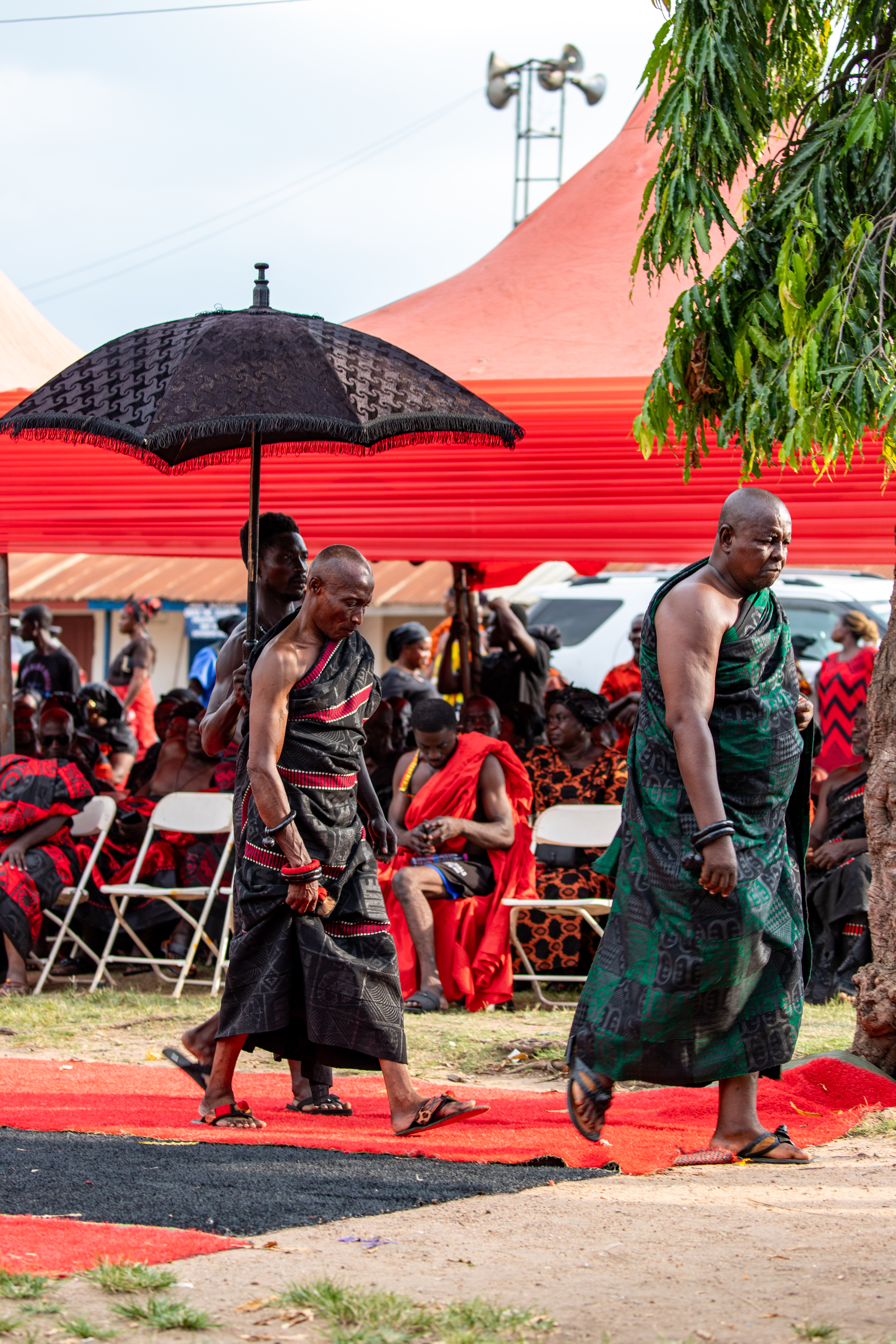
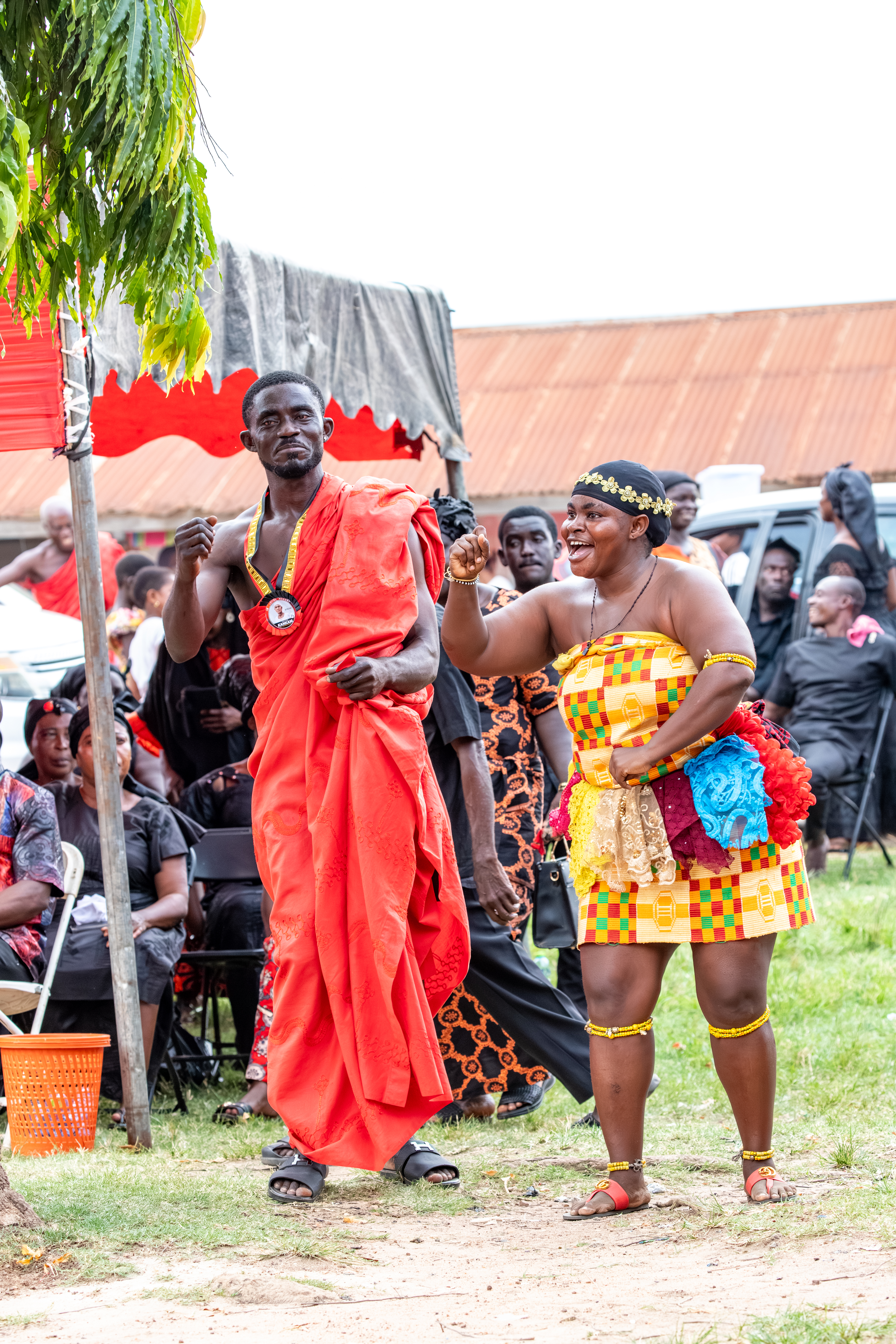
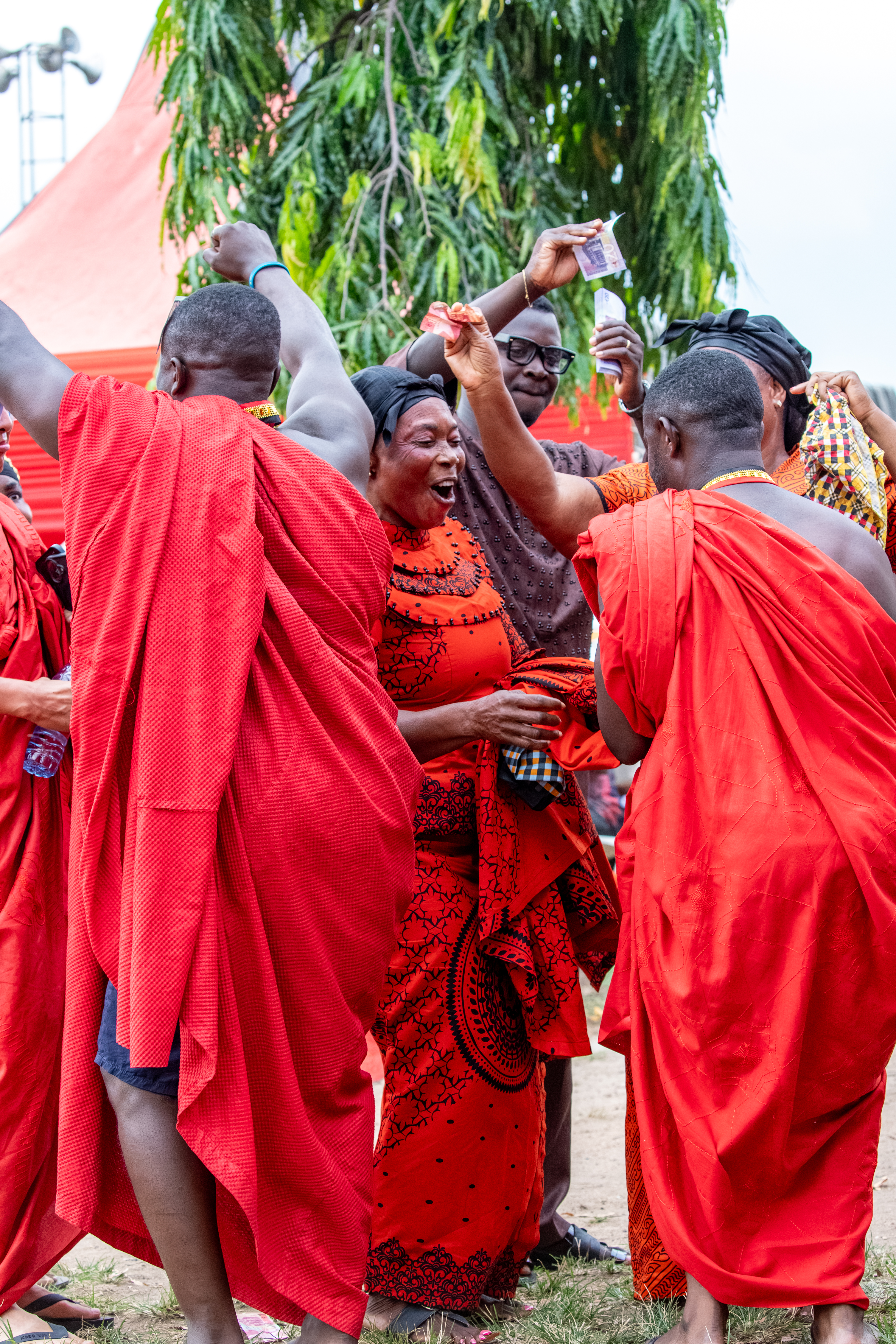
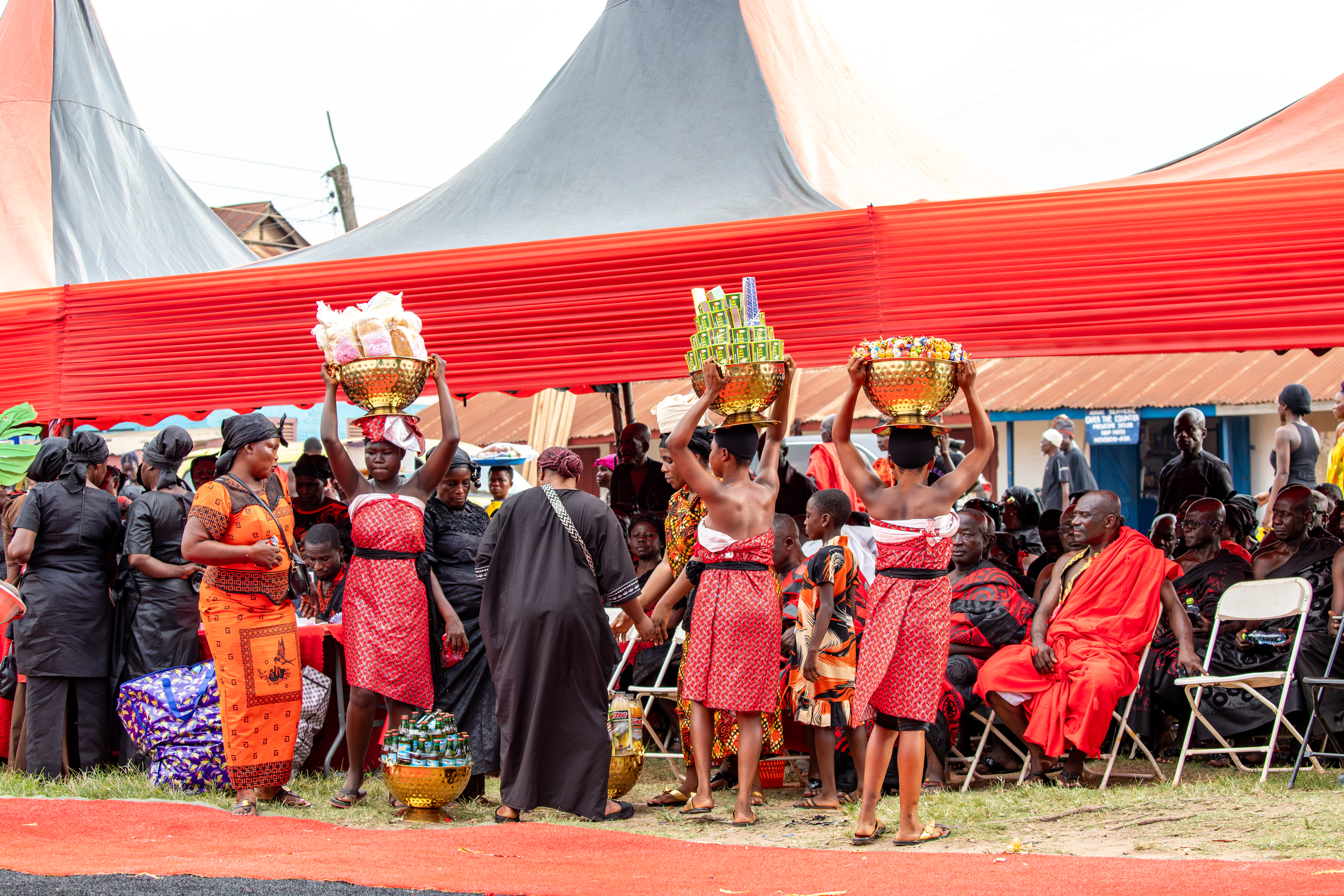
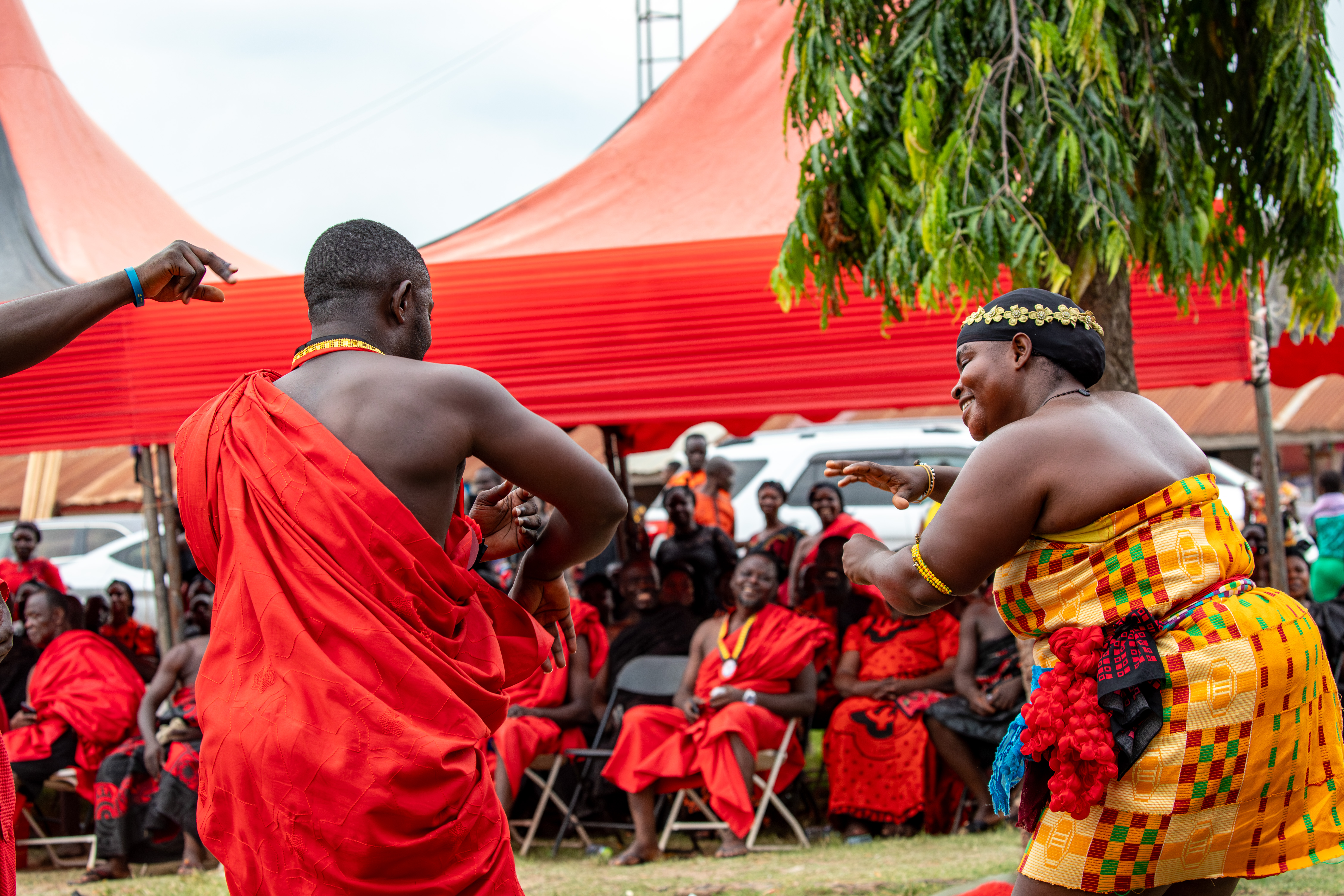
At the funeral, we were told the process, and then we did exactly what we’d just been told. First we walked around in a circle (more of a U-shape) to greet the close family who was already there. Then we sat down and they came to greet us. Then water was given to us, which was the official end of the greeting pleasantries. At that point we were free to do whatever. What we did was watch everything for a bit to get an idea of the vibe. And that vibe was like a wedding reception. There was loud music, people were dancing, people were laughing, people who hadn’t seen each other in years were catching up.
 |
 |
 |
 |
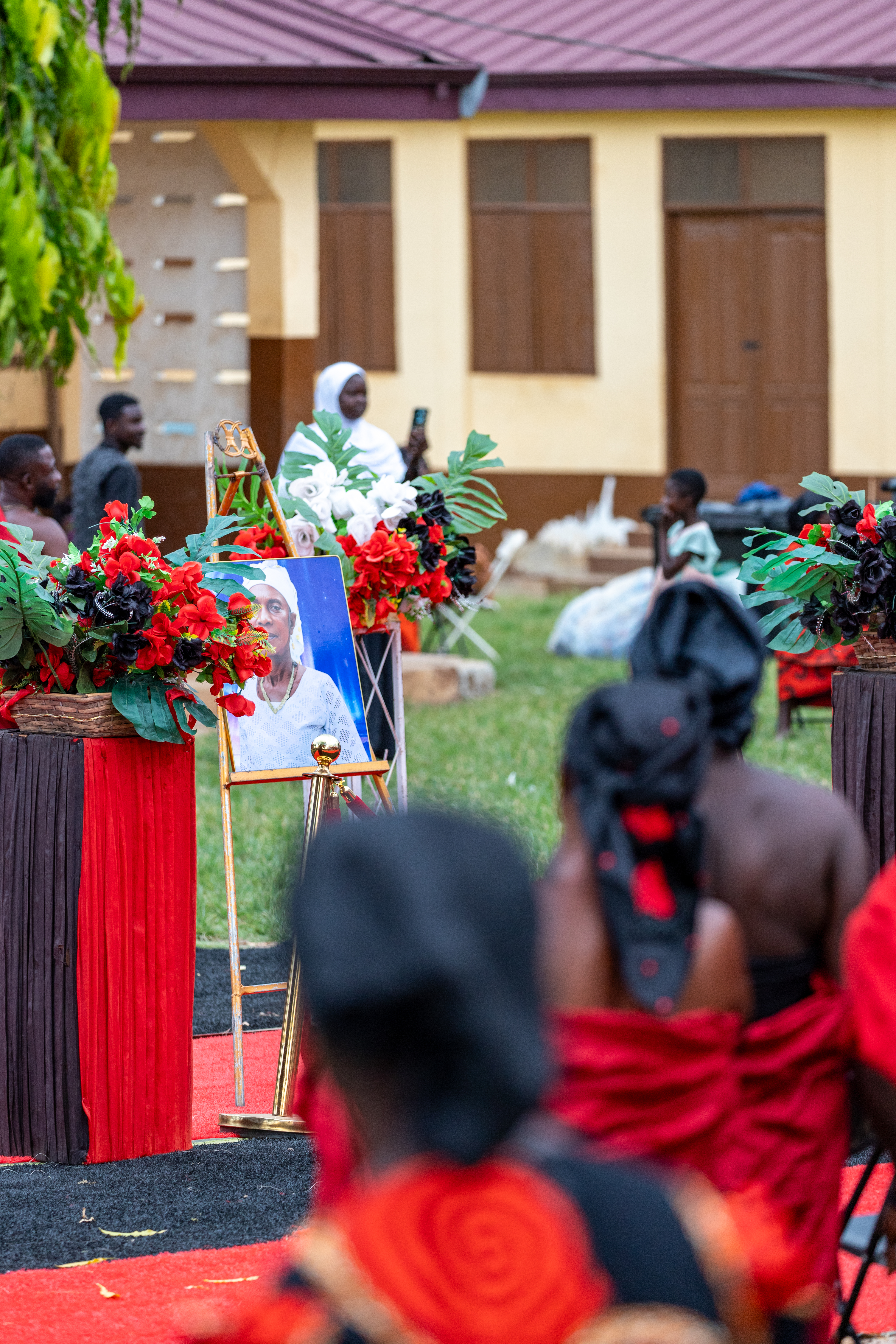
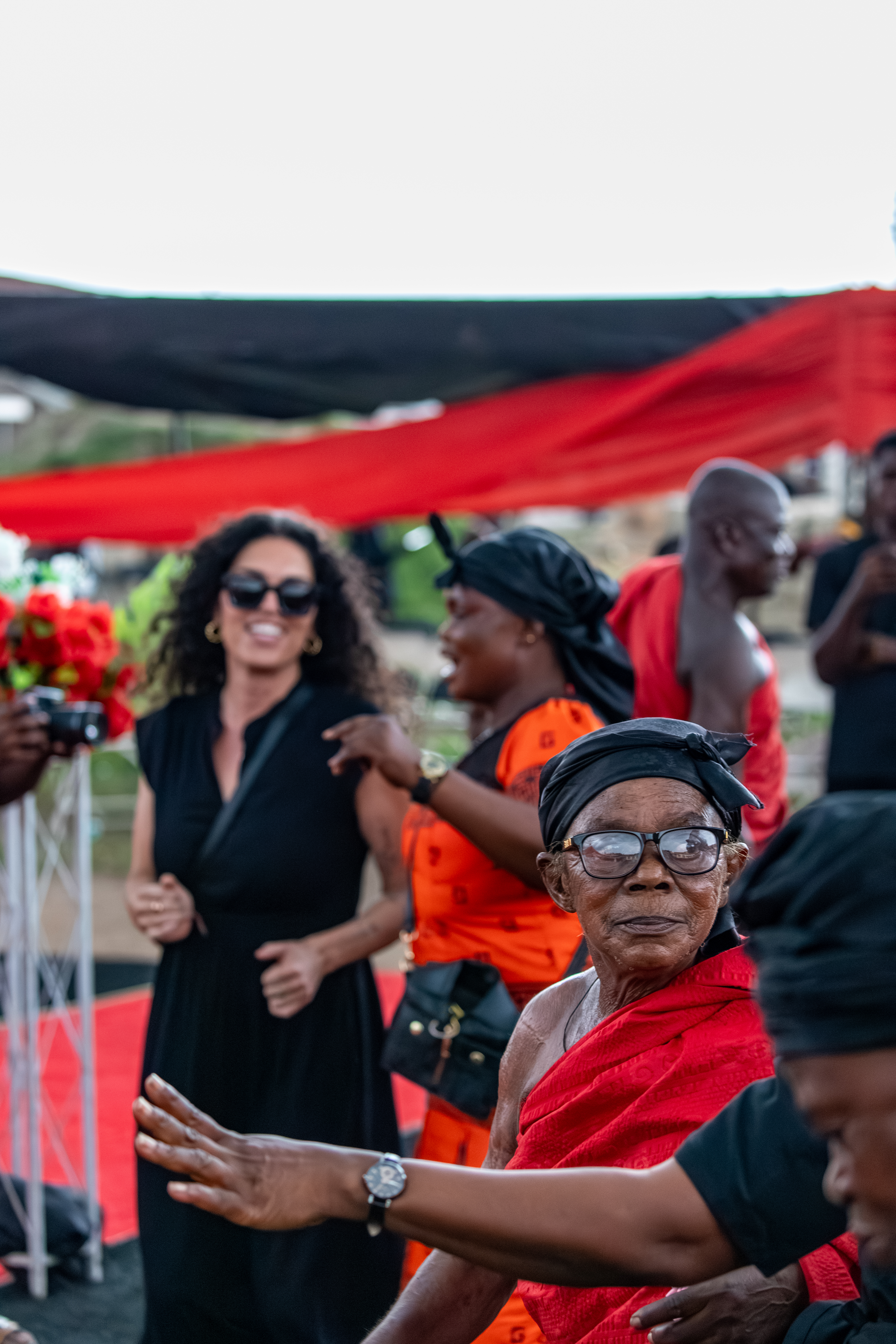
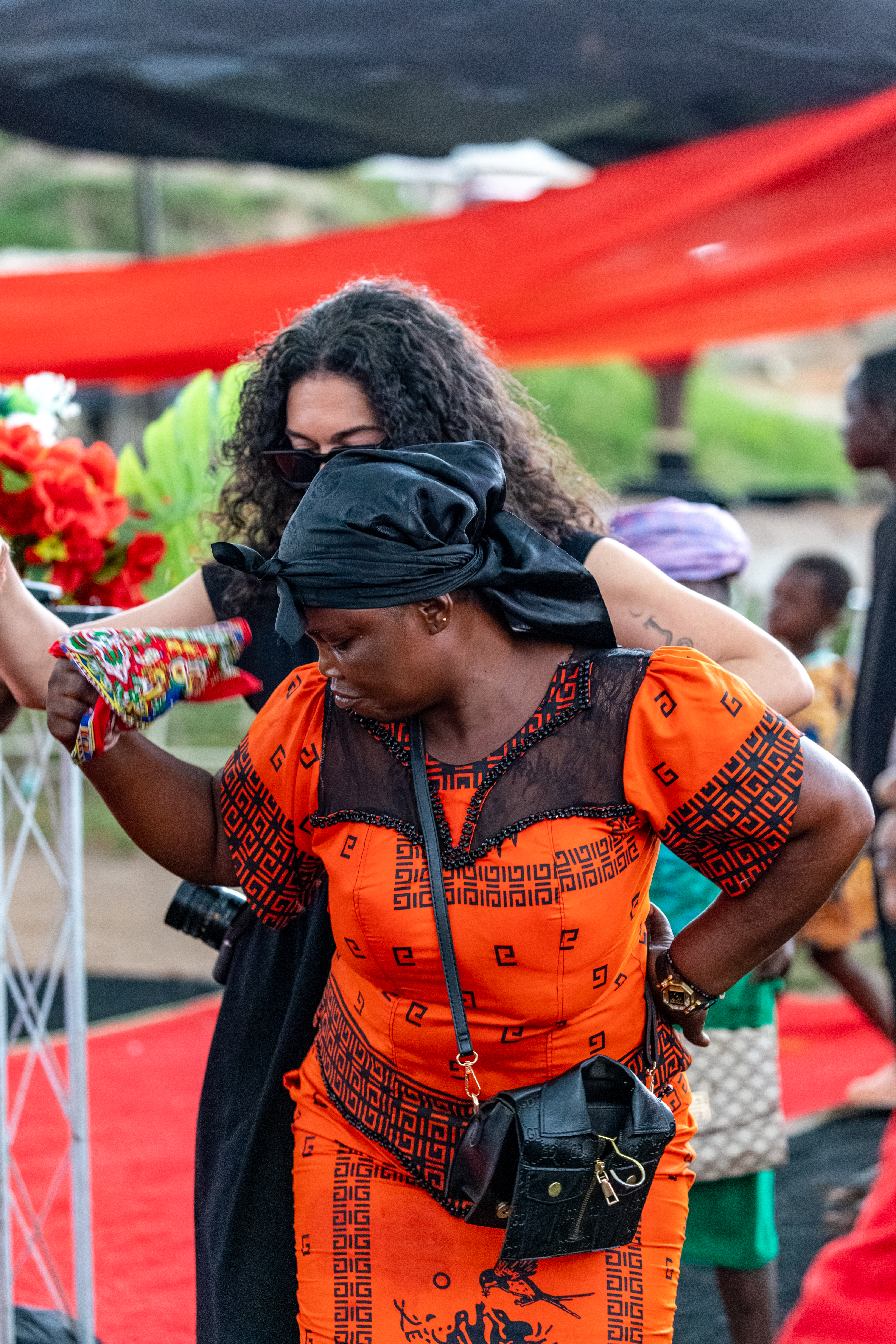
The only difference - and to be fair, a sizable one - was that instead of a cake with a bride and groom, there was a picture of Victoria Kankam, who lived to be 73, and was a vendor in the local market. We were coaxed a couple times to dance, meaning that Auntie Victoria’s funeral was only the third time we’ve ever danced, after our own wedding and at the wedding of our friend Charlie. Near the end of our time there, Victoria’s sister asked us to dance with her as a group. So right as we were about to leave, we finally warmed up to the vibe of the party. It would have been nice to get some more context before we arrived, maybe to set our headspace differently.
It started to rain right after we drove off. Hopefully the party kept going, though. On the drive, a large number of us were helping Brian look for interesting “Religious” signs like “Gods Choice Chophouse and Bar” (yes, we really did see that). We also saw a sign, with a verse from the Quran, stating that Muslims should treat non-Muslims with kindness and respect. We commented how nice it was to see public service announcements like that. Hertz meanwhile muttered, loud enough for us to hear in front and behind him, “yeah, right.” It was shockingly inappropriate, and we had no idea what to say, especially when we were stuck on the bus with him at the moment, and we had been on the bus for about 8 hours already. We silently vowed this would be the last Islamaphobic comment without dire consequences. [Thankfully, there were no further Islamaphobic comments the rest of the trip.]
 |
 |
 |
 |
At the hotel (Lancaster Kumasi City Hotel), the AC wasn’t working, and we were pretty much over it. We know this was West Africa, and we knew standards were different, but it was more about expectation setting. We’ve been in plenty of places where there was no AC at all, but instead at least there was at least a fan or something else to stay cool. At several of the hotels on this trip, we wish they’d just not had an AC unit at all, and that would have been preferable to a supposed AC unit that just didn’t work. The hotel sent someone up to fix the AC, at least theoretically.
Justin stayed in the room to let the repair guy in, and accordingly he was a little late to dinner. What he’d missed in the restaurant was a pretty normal buffet dinner (with seating for at least 100 people, but it wasn’t anywhere close to full) for the first 15 minutes. Then, 15 minutes in, a singer and a band started, and it was insanely loud. So when Justin came down and Crystal wanted to find out about the AC unit, he couldn’t hear Crystal from across the table. We just ate quickly and eventually people migrated outside, just so they could hear.
We chatted a bit with Sena about other TransAfrica trips, and how we’ve now been “tagged” as Wilderness Travels people, so anything we booked with TransAfrica in the future (even if directly), Wilderness would still get the commission. This rubbed us the wrong way - not the general principle (which we understood) - but because we actually knew about TransAfrica well before we booked this trip, and had flagged several TransAfrica trips that looked of interest to us. Separately, we also chatted for a bit with Taryn, Stephenie, and Jane about the trip, and our impressions of the 3 countries relative to each other and relative to our expectations. Both Stephenie and Jane had been to Ghana before, but not Togo or Benin. We all agreed that Ghana - so far - seemed the most developed, but perhaps was a bit less culturally authentic because of that.
We came upstairs a little before 22:00. The room was still scorching, the AC obviously had not been fixed. So we went downstairs and they gave us a new room - the room right next to where we’d just been. The repair guy had been at 1503, then at 1507 (our first room), so we weren’t surprised when we arrived in 1506 and the AC didn’t work there either. So we went back to the front desk again. They gave us a room in a different wing, and the hallway of that wing seemed cold, so we were more hopeful. The AC was slightly better, and we were exhausted, so we just went in and called it a night. It cooled down ever so slowly, and eventually we went to sleep, on top of the sheets, but at least to sleep.
| Previous Entry |