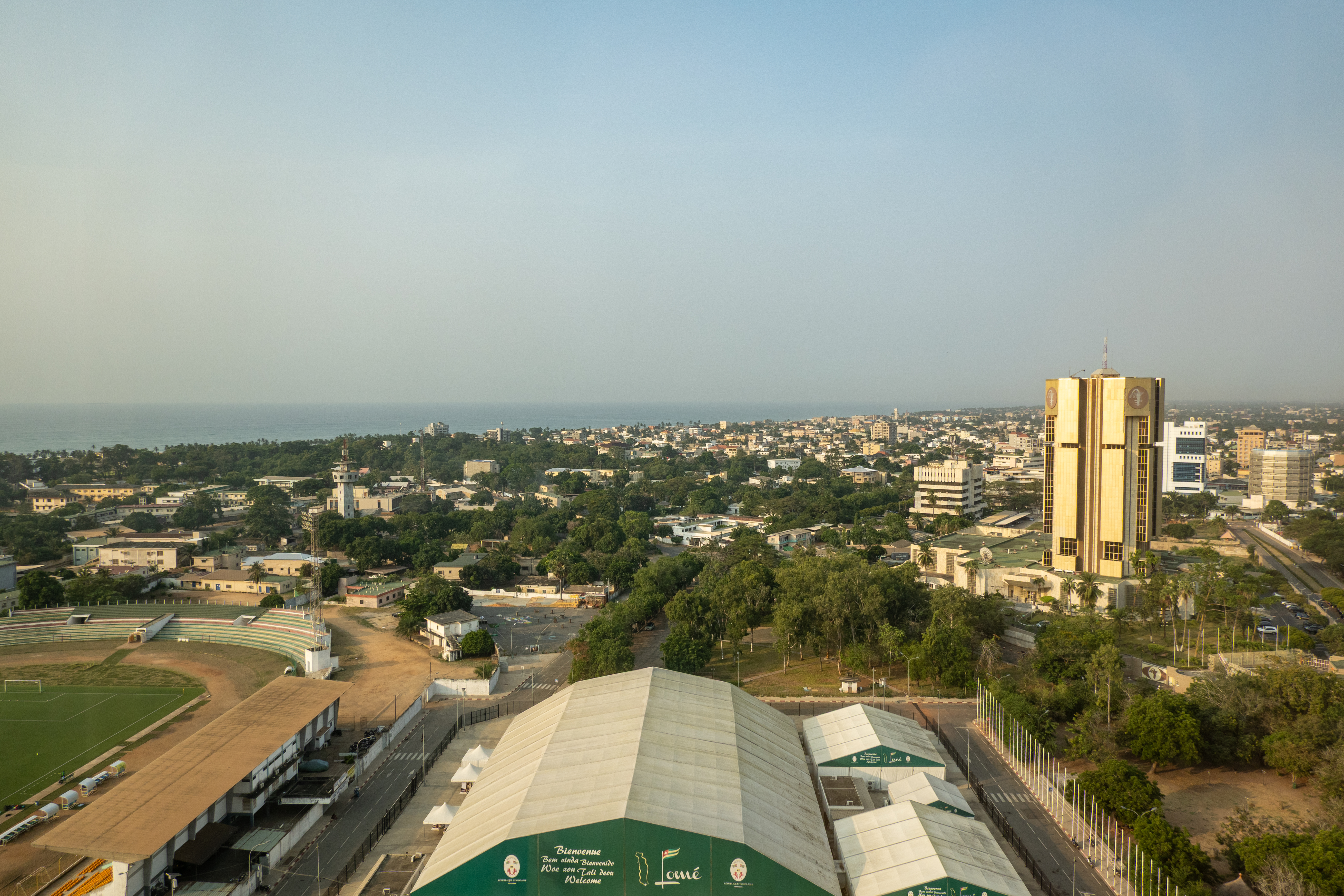
We woke up a little before 07:00, got ready, and met everyone at 08:00 in the lobby. We sat in a corner of the lobby and Sena told us what we’d be doing, both today and during the rest of the trip. It was a little of drinking from a firehose, as we hadn’t done too much digging into the specific things we were set to see and do. Usually Justin plans our trips and he’s very familiar with everything on the itinerary. And he usually asks Crystal her thoughts on various things, and/or shows her some of the things we’re going to see during the planning process, so she’s generally aware of the trip as well. But for this one, we were happy to just show up and be surprised each morning.
|
|
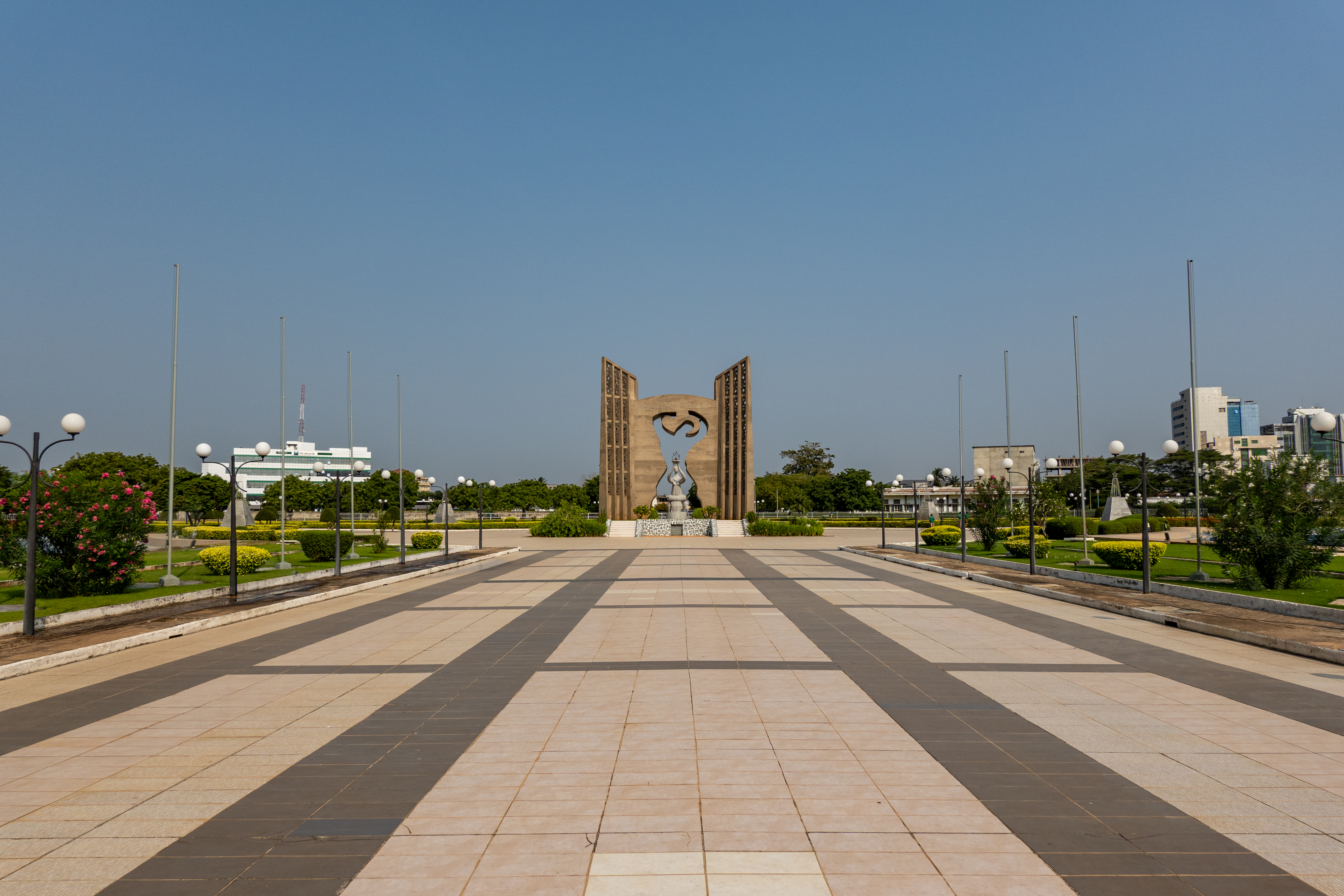
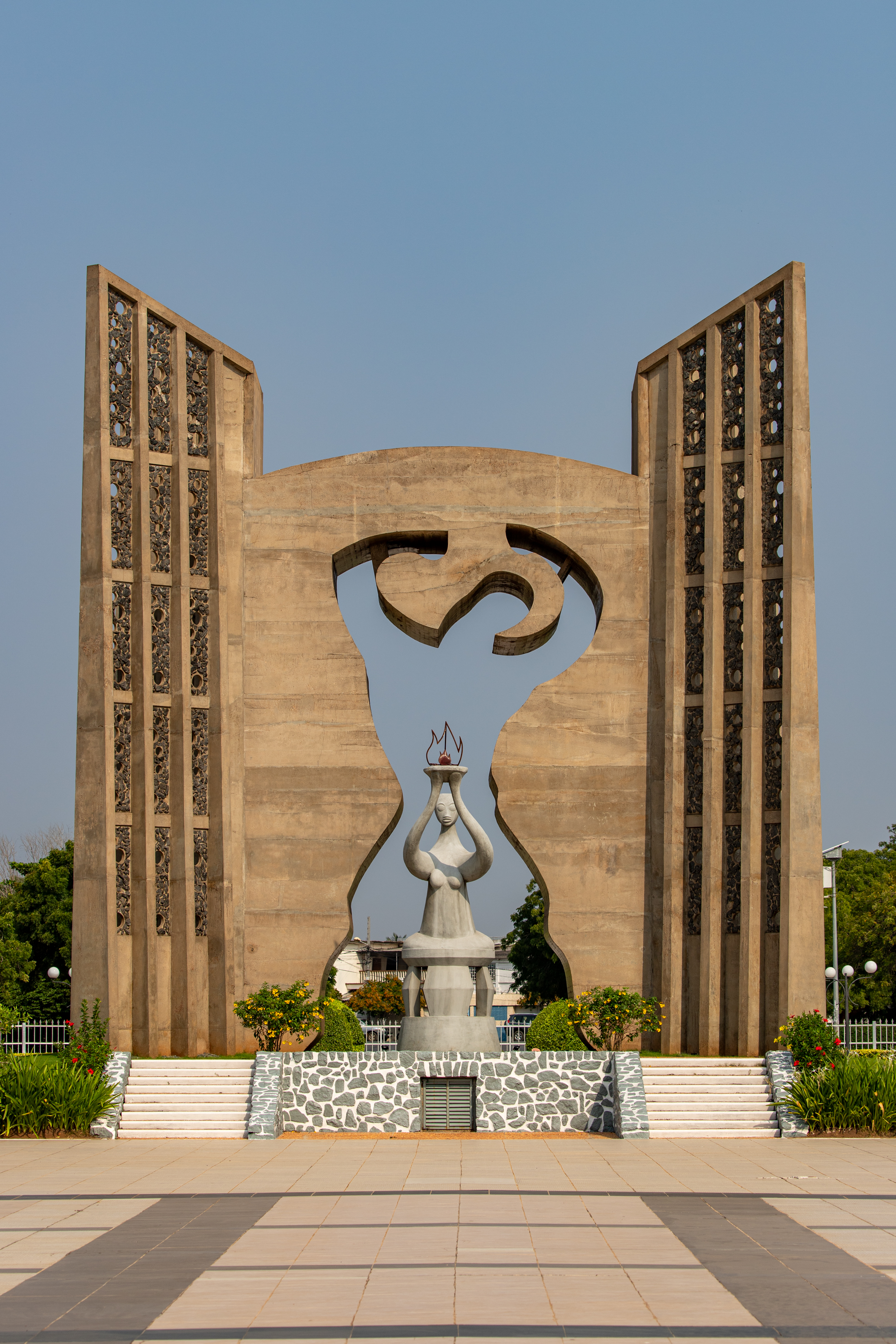
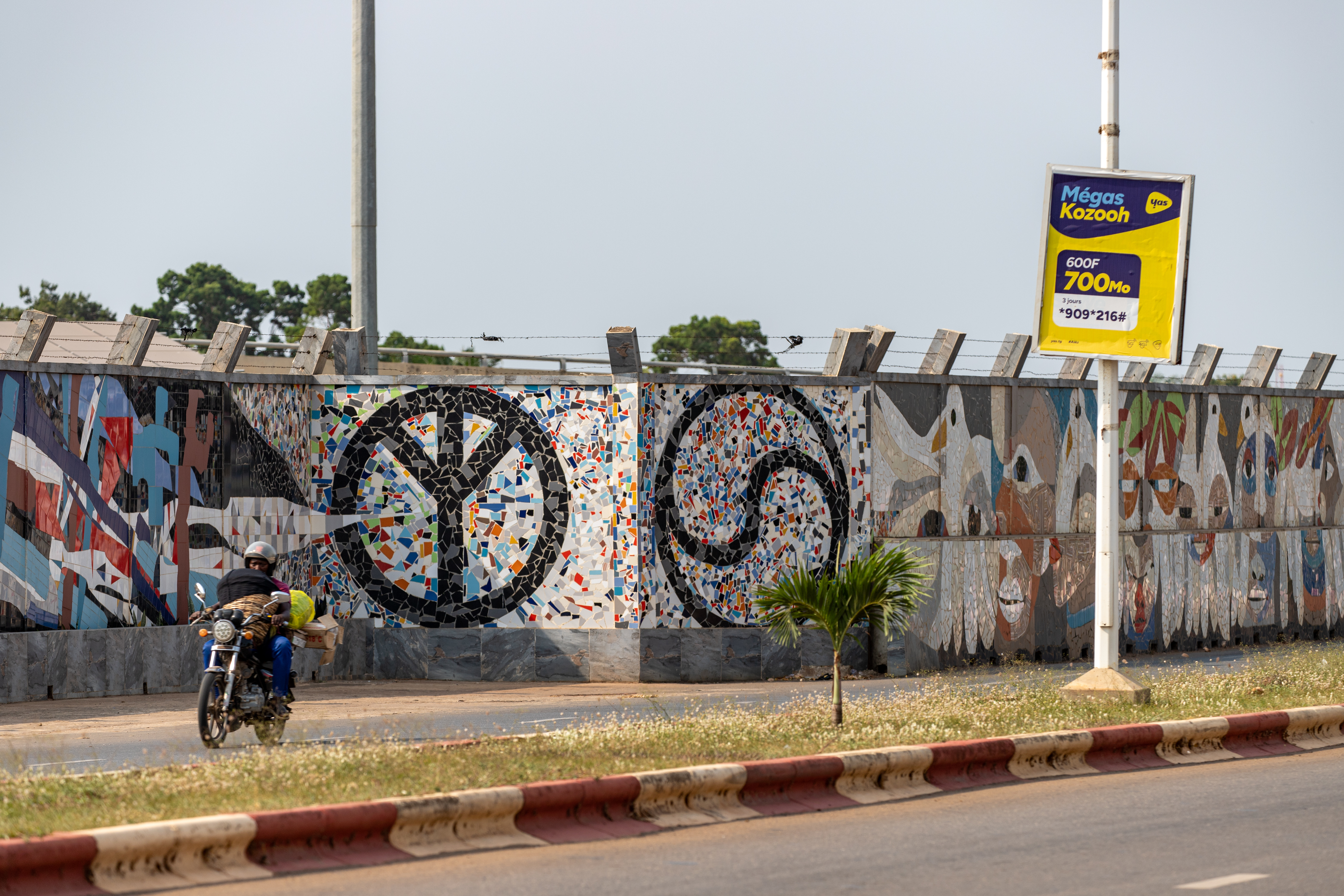
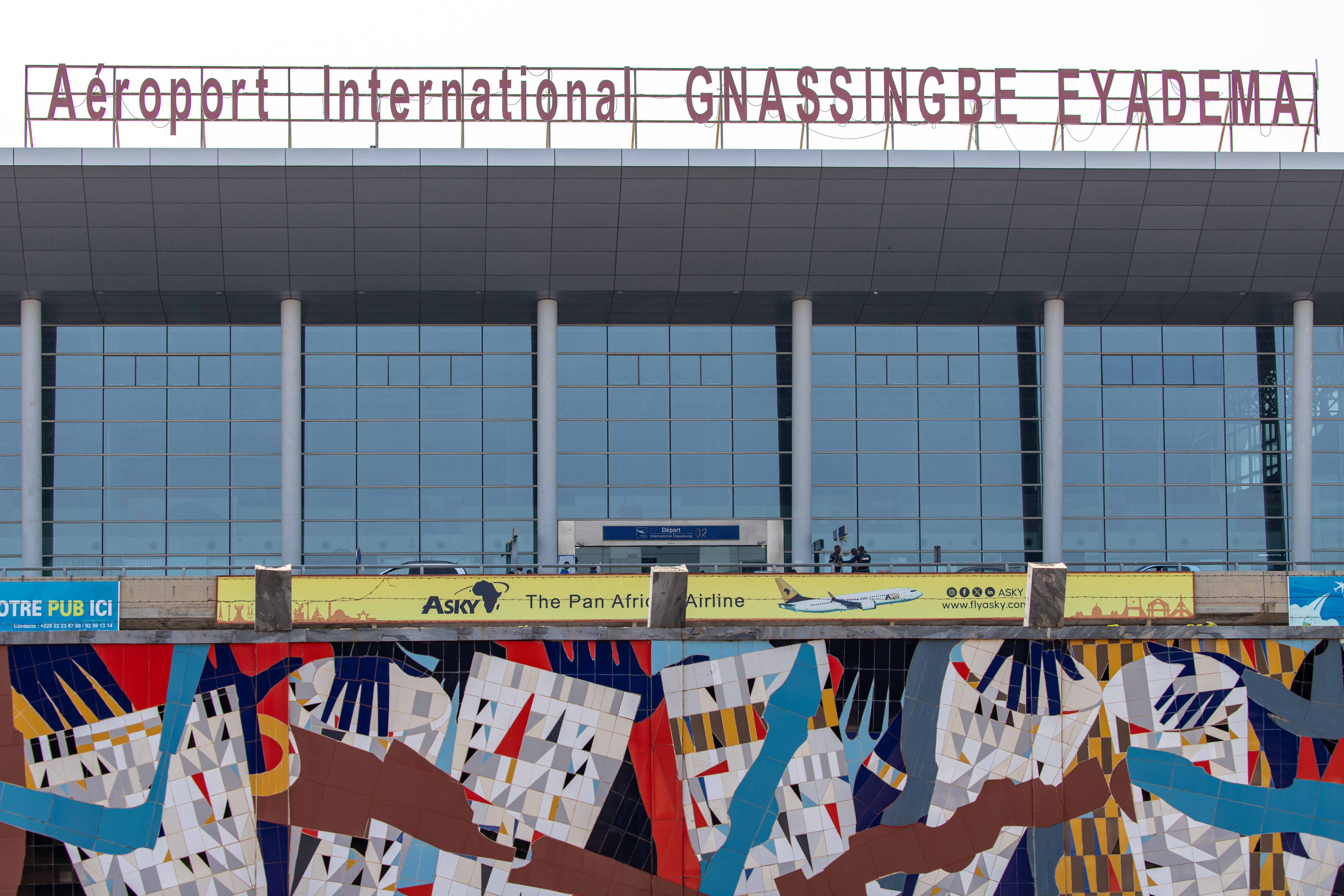
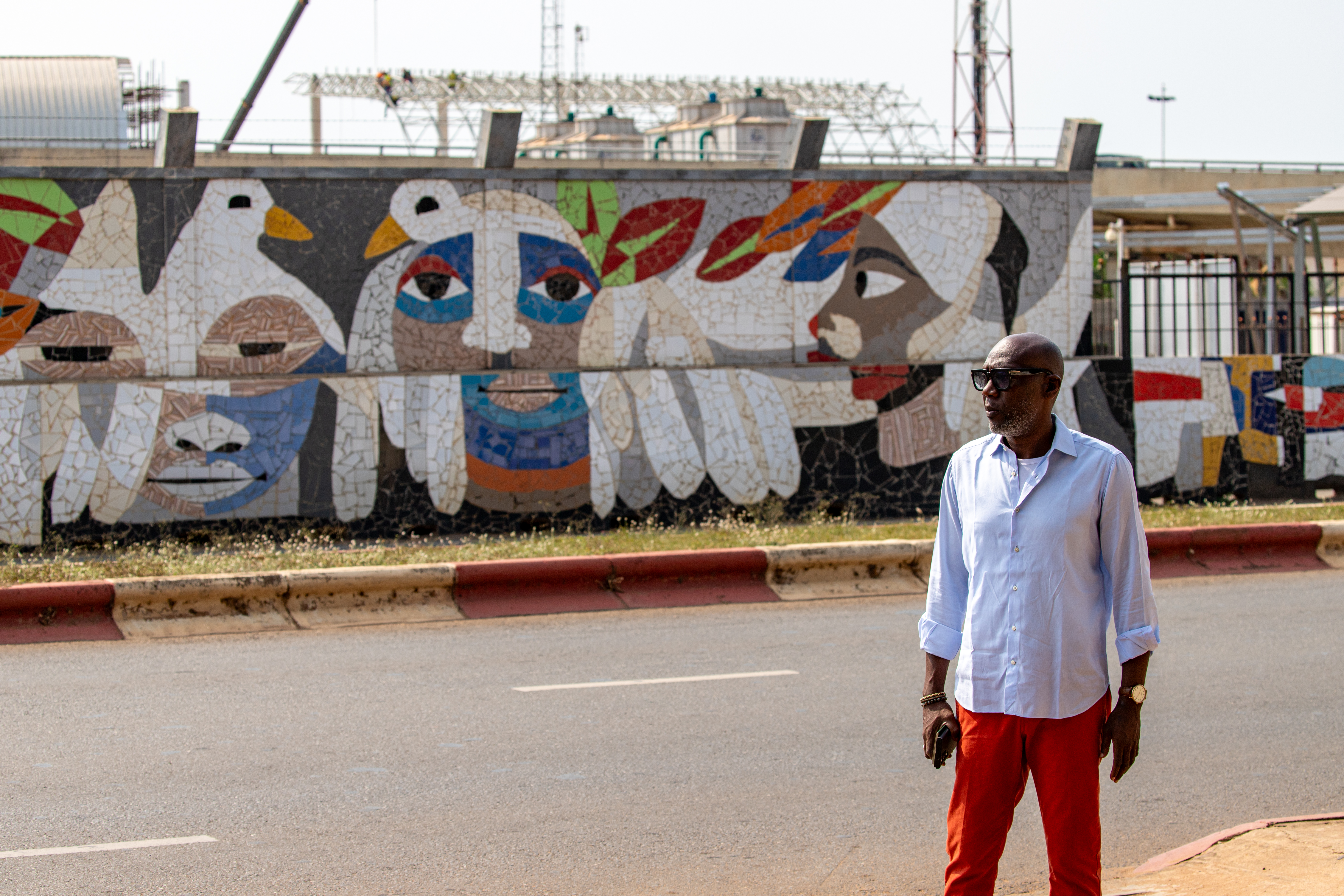
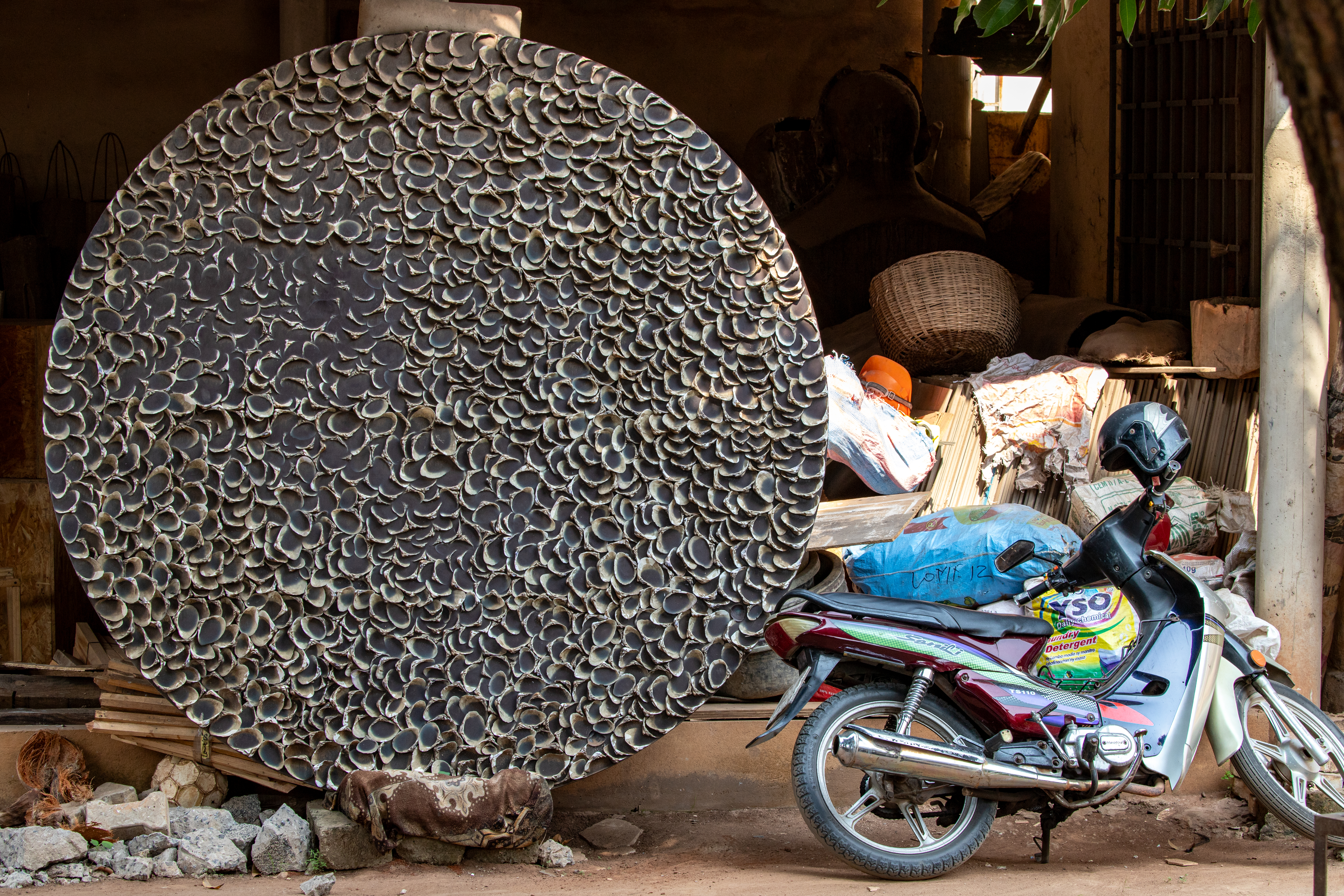
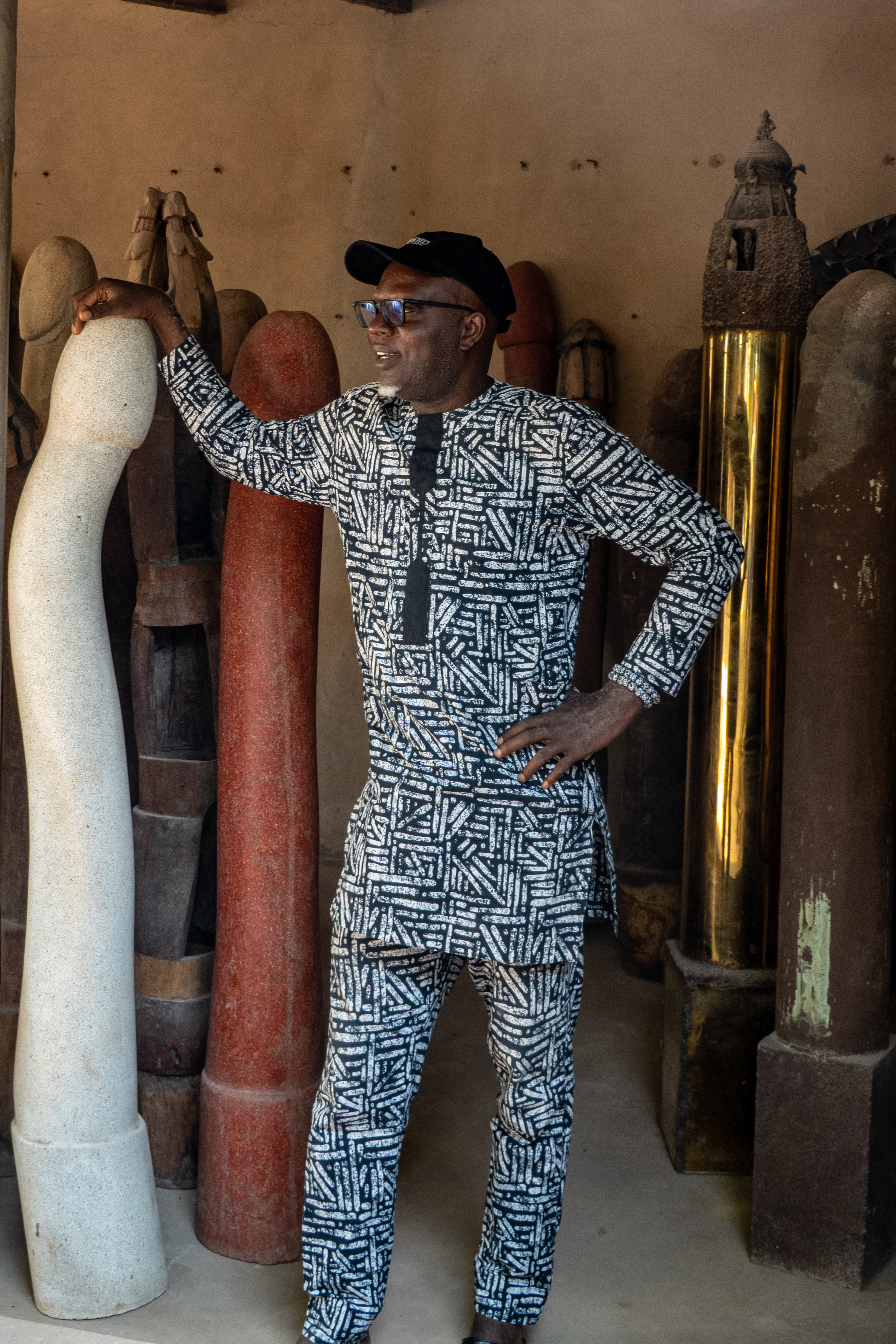
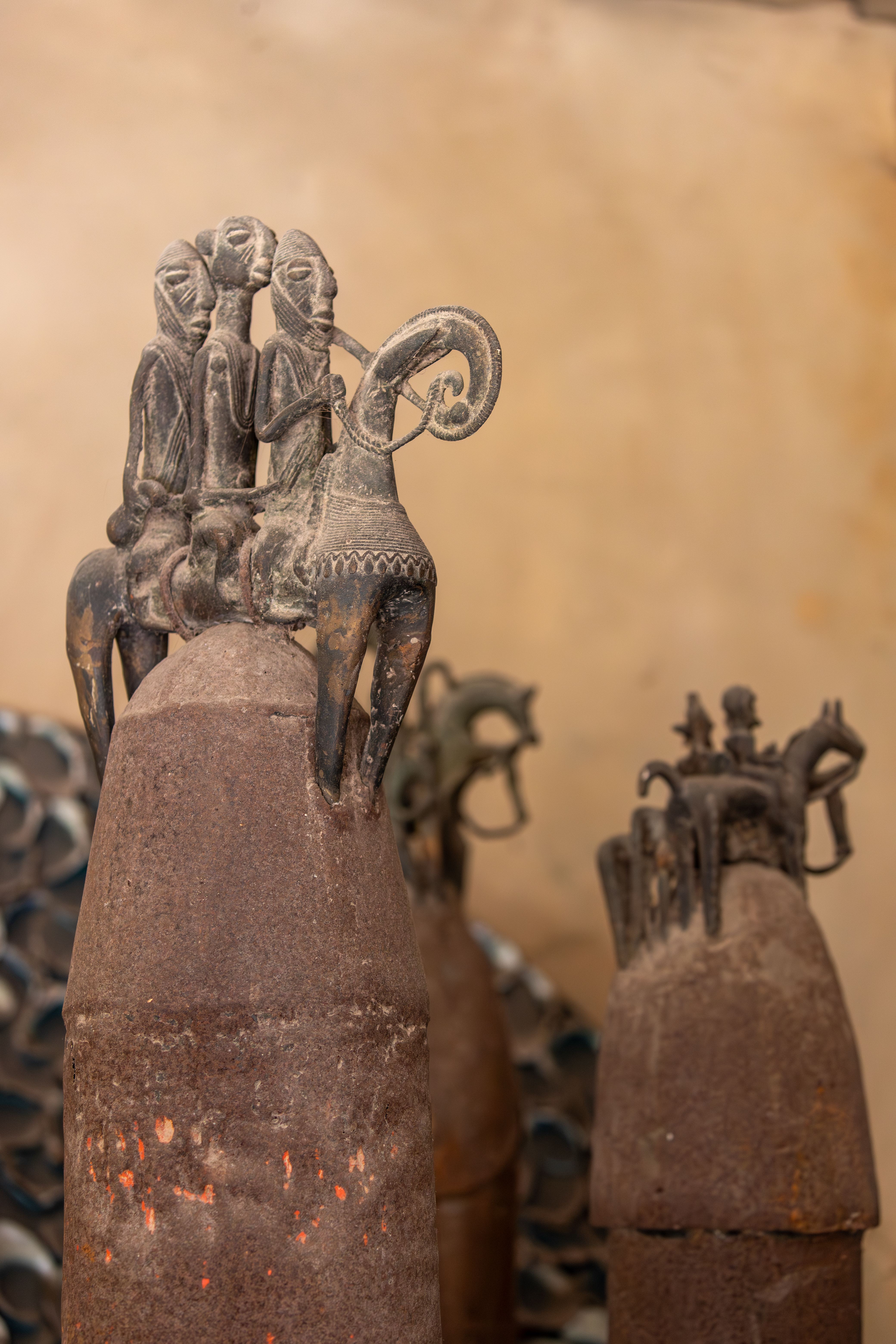
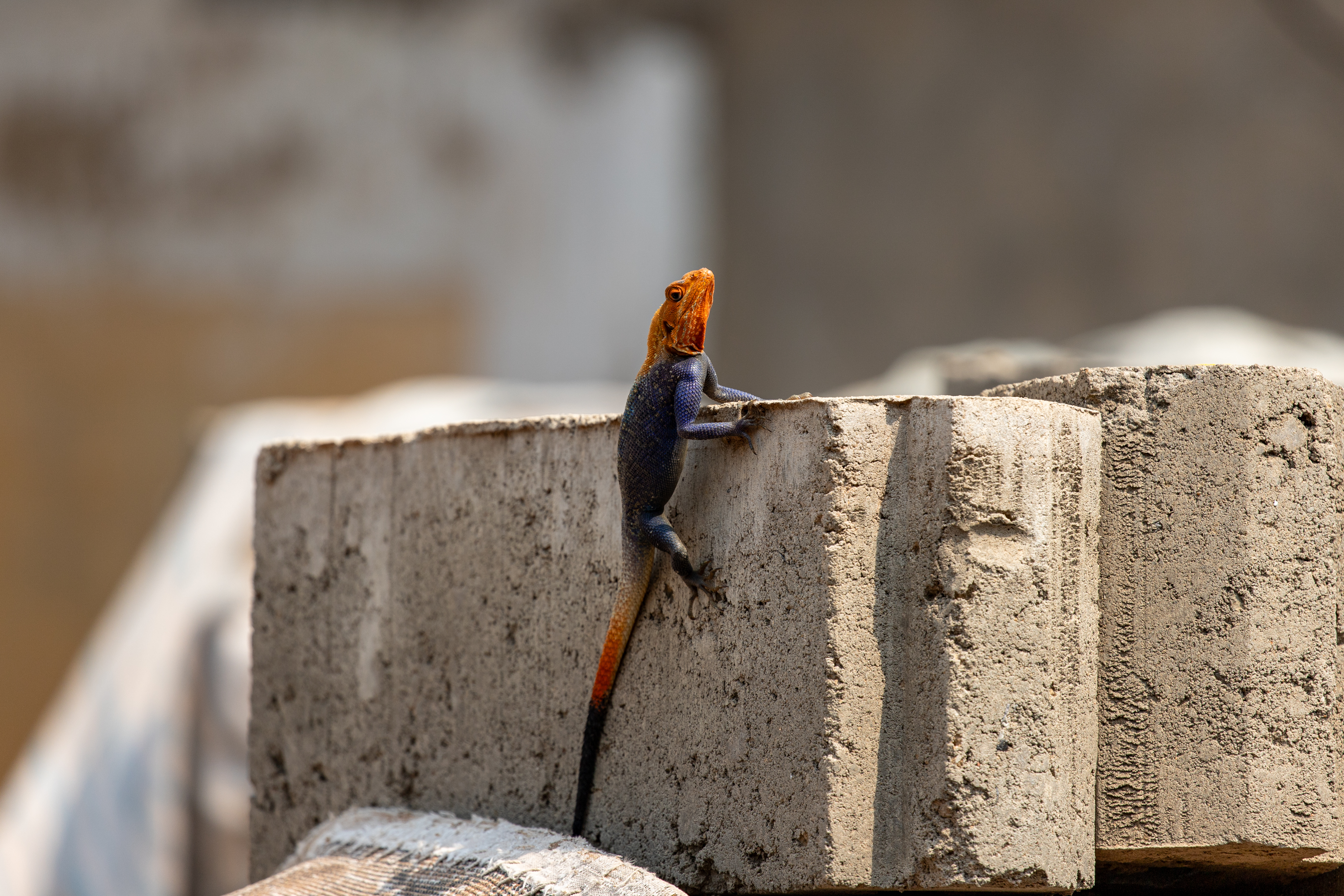
The day started basically right next to the hotel, at the Independence Monument. The area was fenced off, but we could see it just fine through and over the fence. When we got back in the vehicle (which had seating for probably 25 people, even though there were just the 7 of us plus Abass and Sena), we met up with a local artist, Emmanuel Sogbadji, who apparently is a big deal in Togo. We drove over to the airport, where he showed us a huge mural that he and his team put together over the course of two short months in 2017. It was a lot of intricate tile work, almost like mosaics, and seemed vaguely reminiscent of Picasso in certain spots. He described the airport tile work to us, and then we drove over to his studio and then his house. In these areas we saw some current projects, including: jerseys for World Cup teams, made out of resin, 69 phallic statues (with the hope that one day they will be displayed alongside a German art installation that inspired his work), and a really bright lizard walking around the yard.
 |
 |
 |
 |
 |
 |
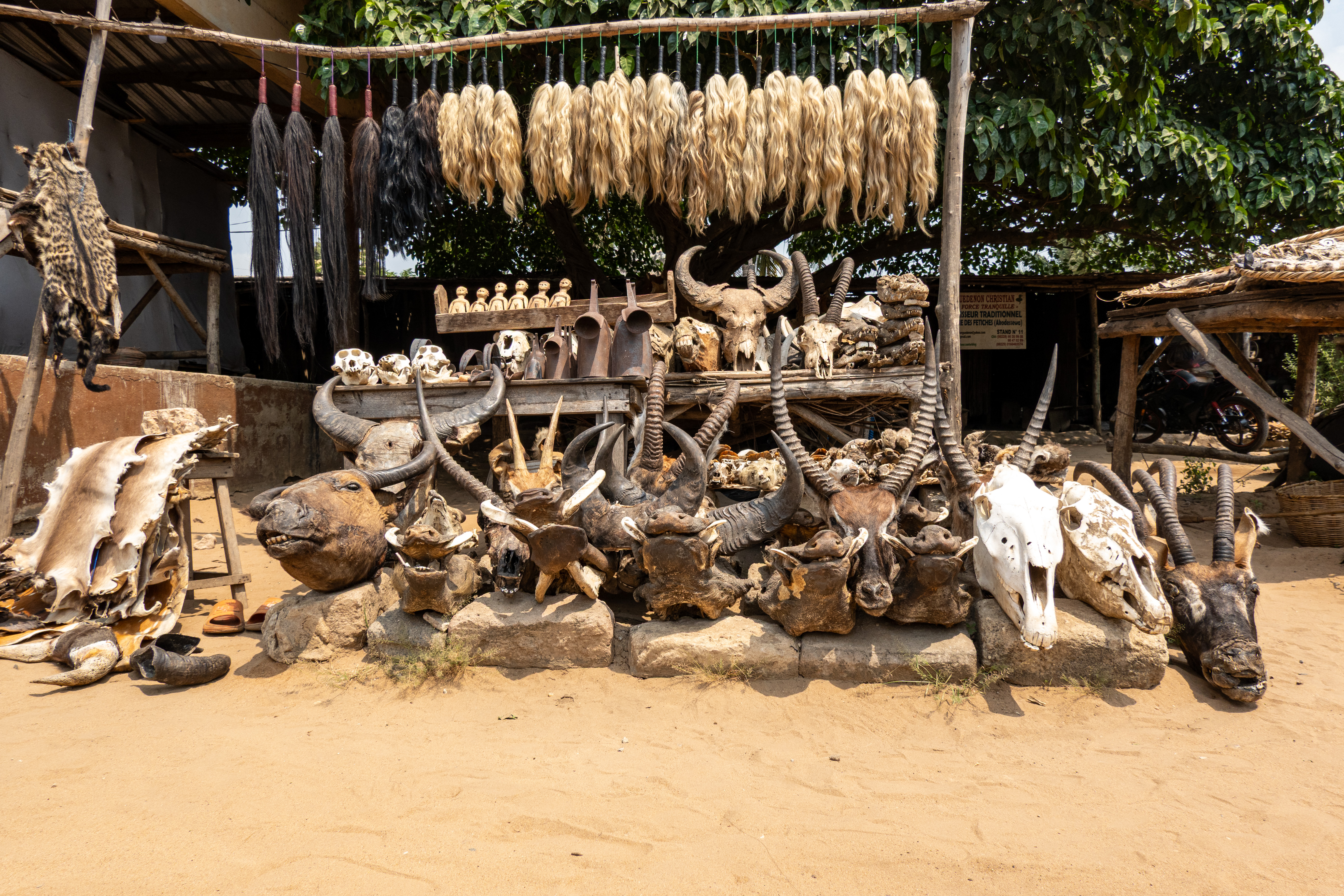
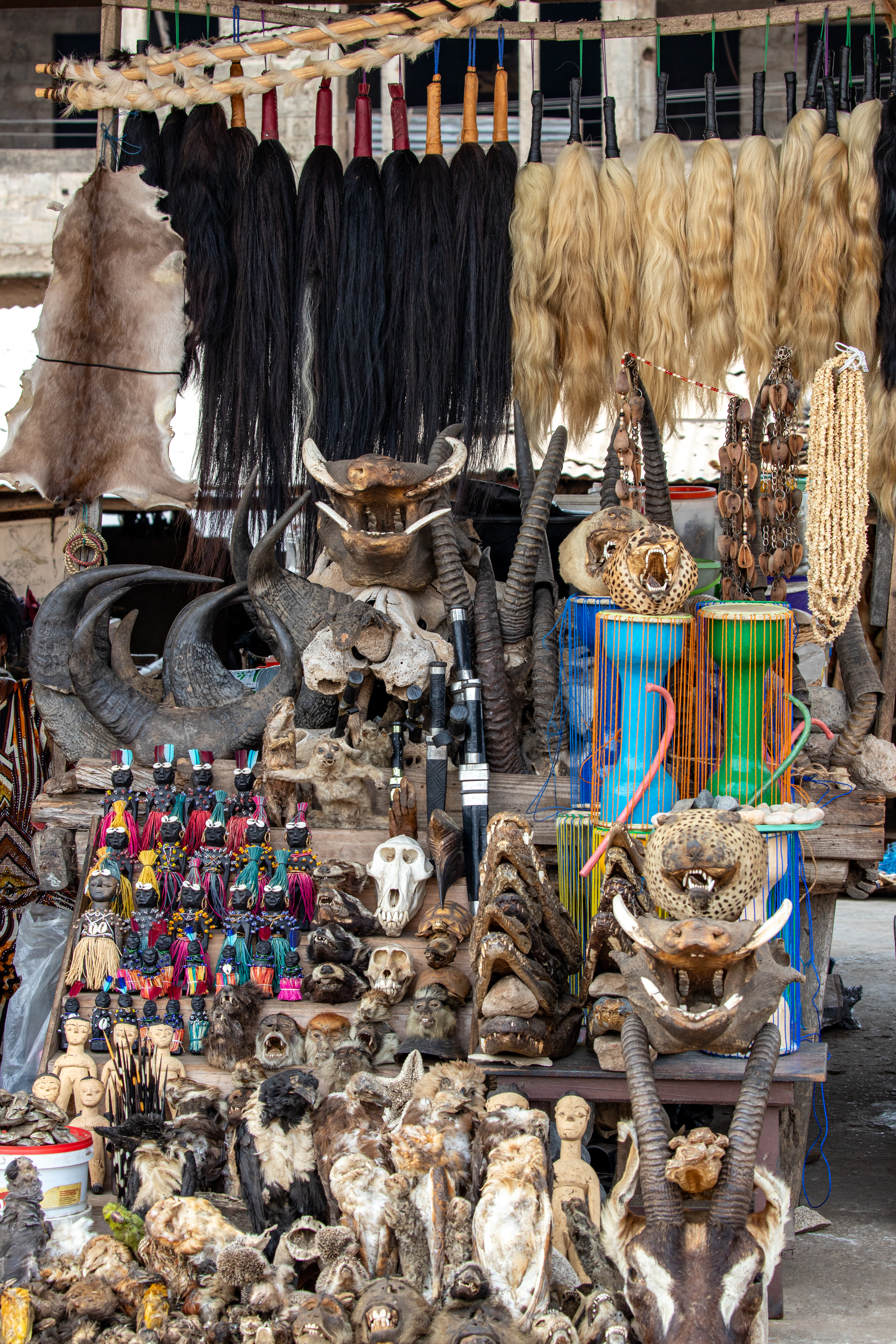
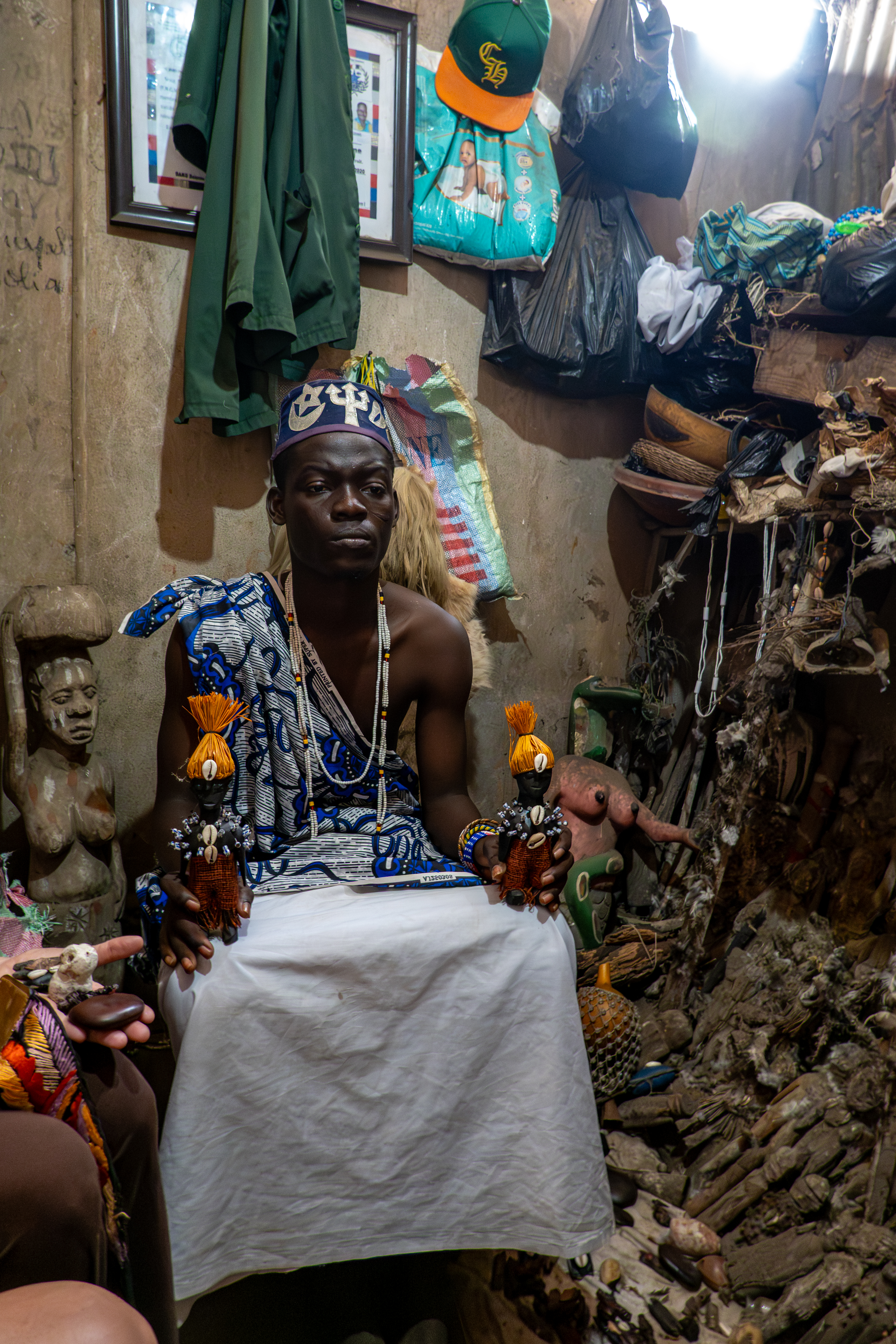
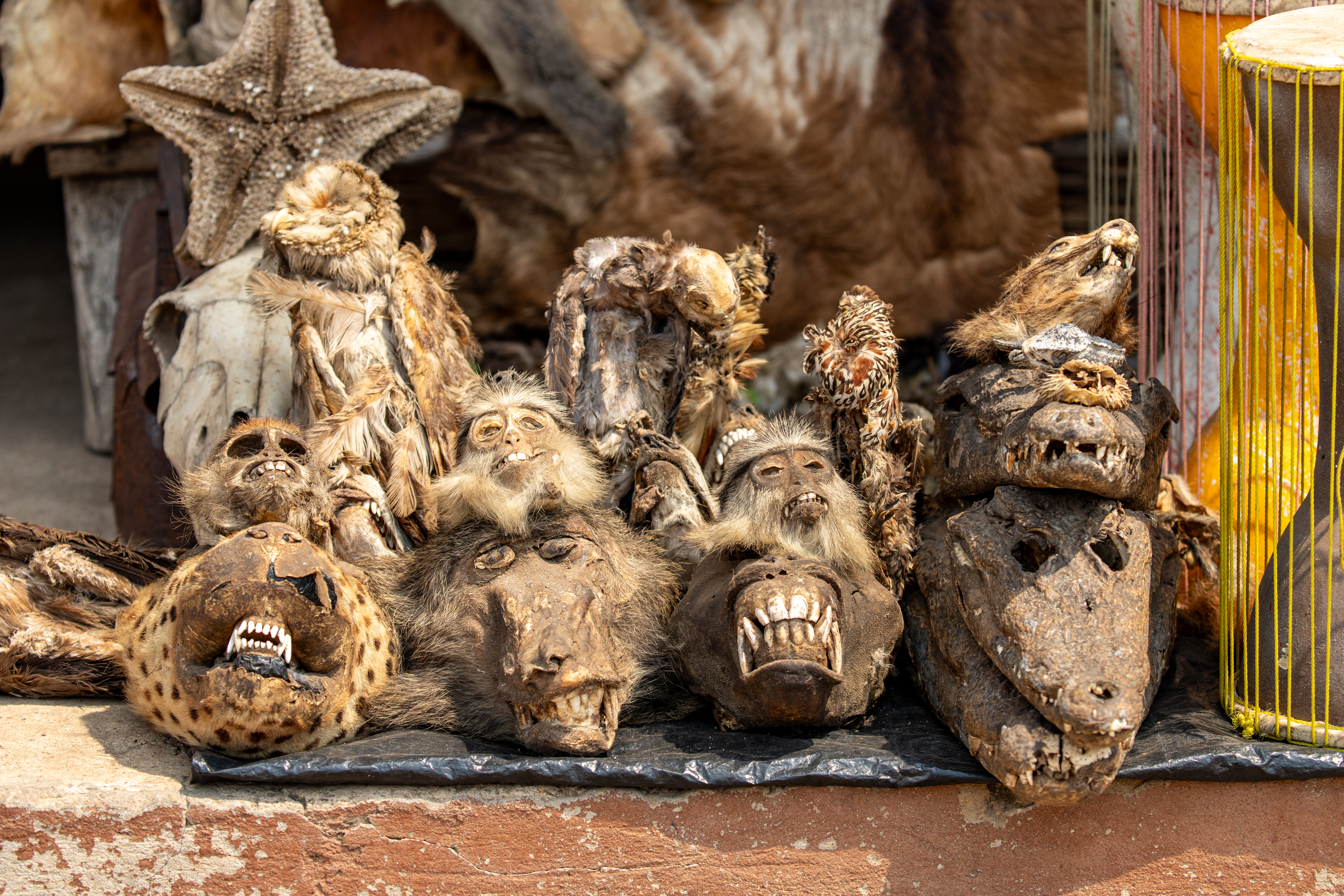
After leaving Emmanuel behind, we drove through town to the Fetish Market. People come to the Fetish Market to purchase things (usually involving dead animals) for practicing voodoo. Both Togo and Benin have a high percentage of the population that practice voodoo, much higher than neighboring countries. [There is also a high Muslim population in the north of Togo, and a high Christian population in the south, but voodoo is practiced by a huge chunk of the population, including those who also practice another religion.] Voodoo isn’t as it is portrayed in movies, with voodoo dolls and whatnot. Instead it is like many other religions, with many animistic gods. This is where the market comes into play - it sells creatures that are used in rituals.
 |
 |
 |
 |
 |
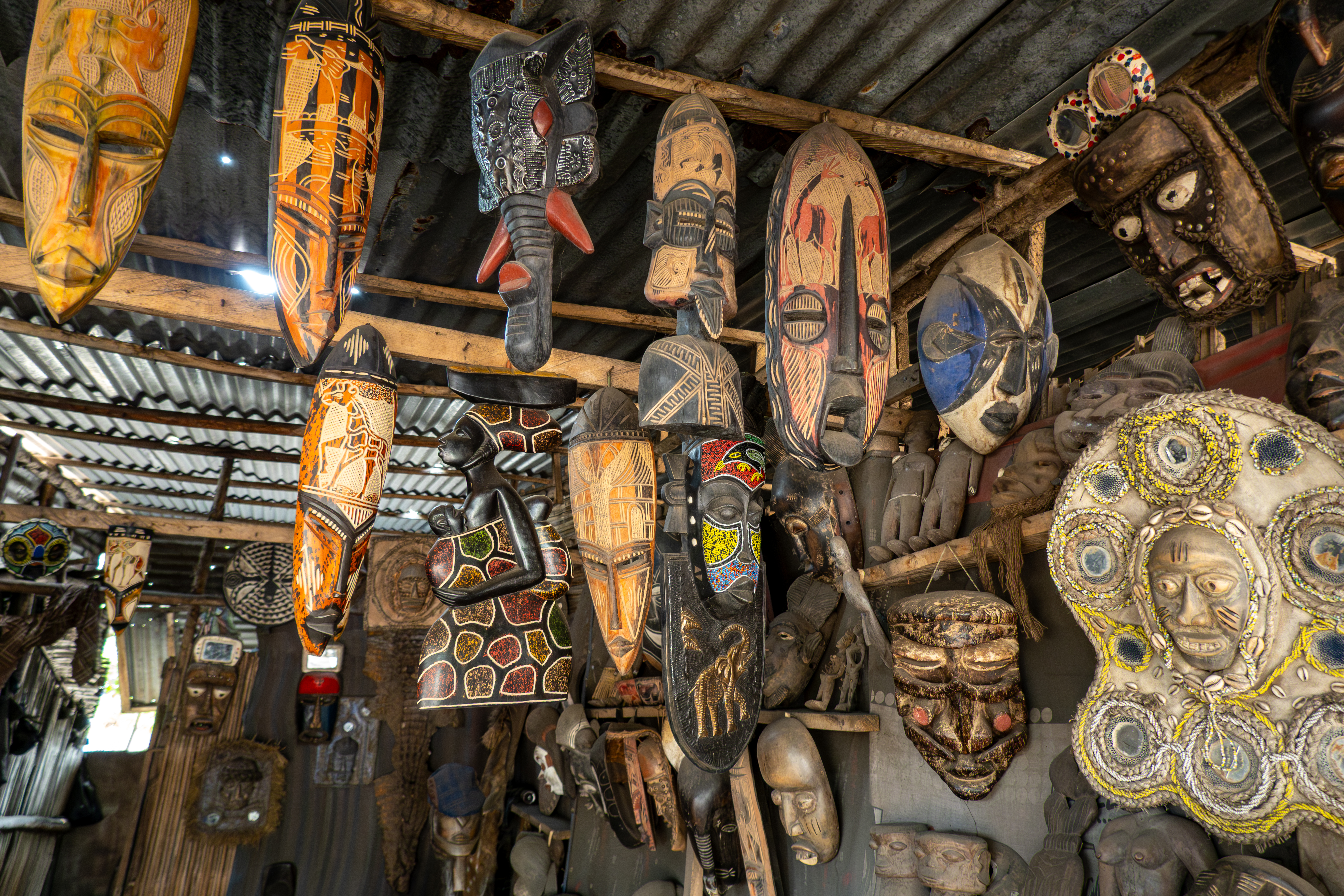 |
The smell was…not great. It was our first experience at visiting a Fetish Market, and it smelled about how you think it might. We had a local guide who was explaining things to us, but we were very distracted by the sights and smells. Eventually we migrated to meet one of the Voodoo priests. Apparently he was 26, but he looked about 16. He showed us some objects that are used for different purposes - safe travel, love, wealth, etc. After we finished meeting with him, we were free to walk around a bit on our own, and we checked out some of the cool masks. We also wandered around some of the shops with dead animals, which included neatly arranged birds, snakes, monkeys, and more. We were repeatedly told that all of these animals died of natural causes, and we hope that is accurate.
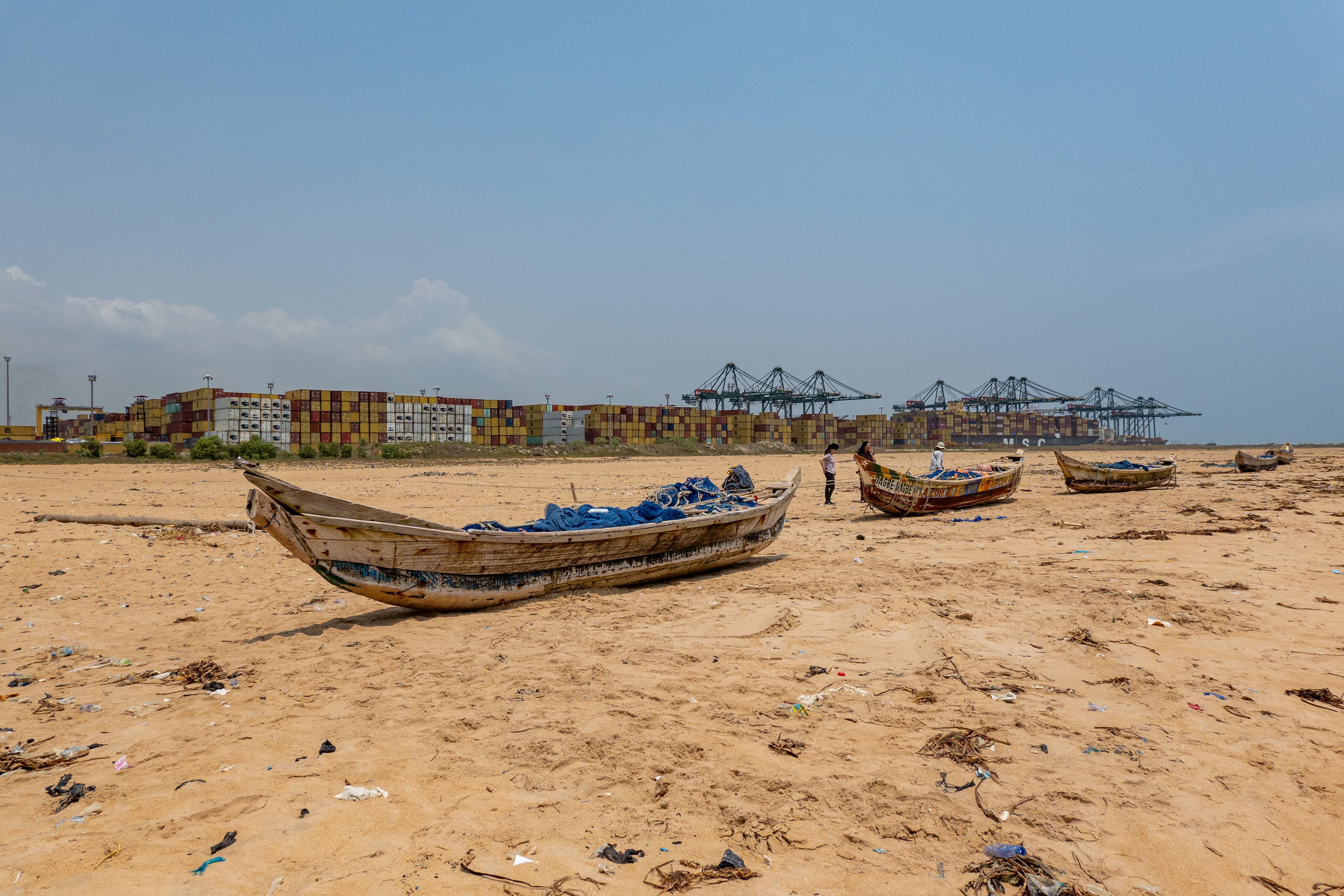
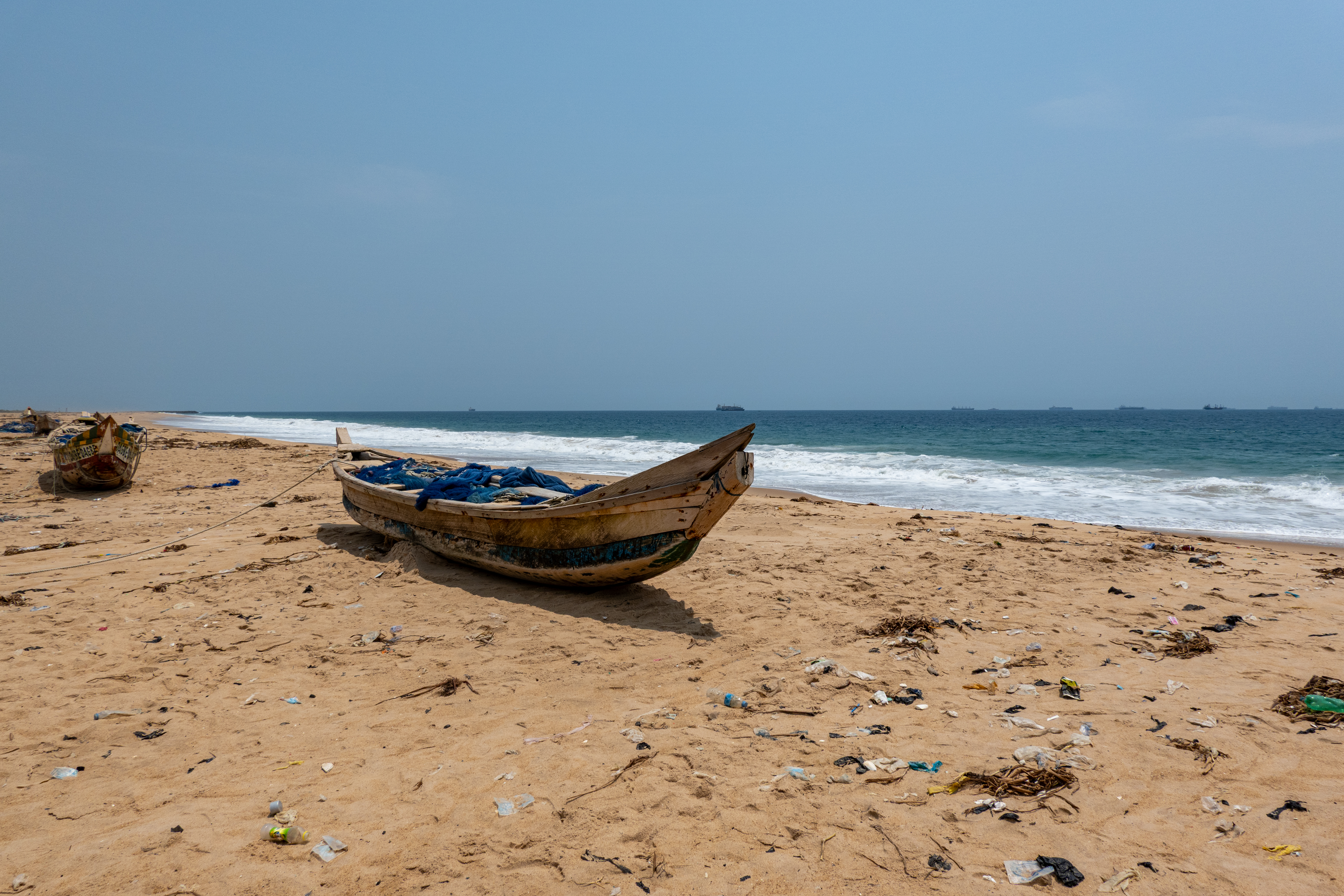
After leaving the market, we drove past the port to go to lunch. We’d watched some of the Geography Now videos about Togo, Benin, and Ghana, and remembered that the Port of Lomé is the busiest in West Africa. It did look quite large, and it was still visible from the beach restaurant where we had lunch, Blue Turtle. Seeing the sandy beach, the calm water, but also the giant stacks of shipping containers and tall cranes was an odd dichotomy. Crystal ordered a whole fish, and Justin had a mixed grill, in which he accidentally ate some grilled fish. There was a nice breeze to moderate the sweltering heat.
 |
 |
While we were eating, Sena told us a bit about his background. His father is Togolese, and his mother Ghanaian. He was born and raised in Ghana, but after a coup when he was a boy, his mom took him to Togo. He knew English, but not French, since Ghana was a British colony and Togo was a French one. Because of his English skills in Togo, however, he got hired as a translator at TransAfrica. Then when the main guide was unavailable on one tour, he led the tour, and was happily surprised at the huge number of envelopes with tips at the end of the trip. And in a nutshell, that was that. Now he is in charge of the Ghana-Togo-Benin area. For futbol, he supports Ghana and hates Togo, which was notable.
 |
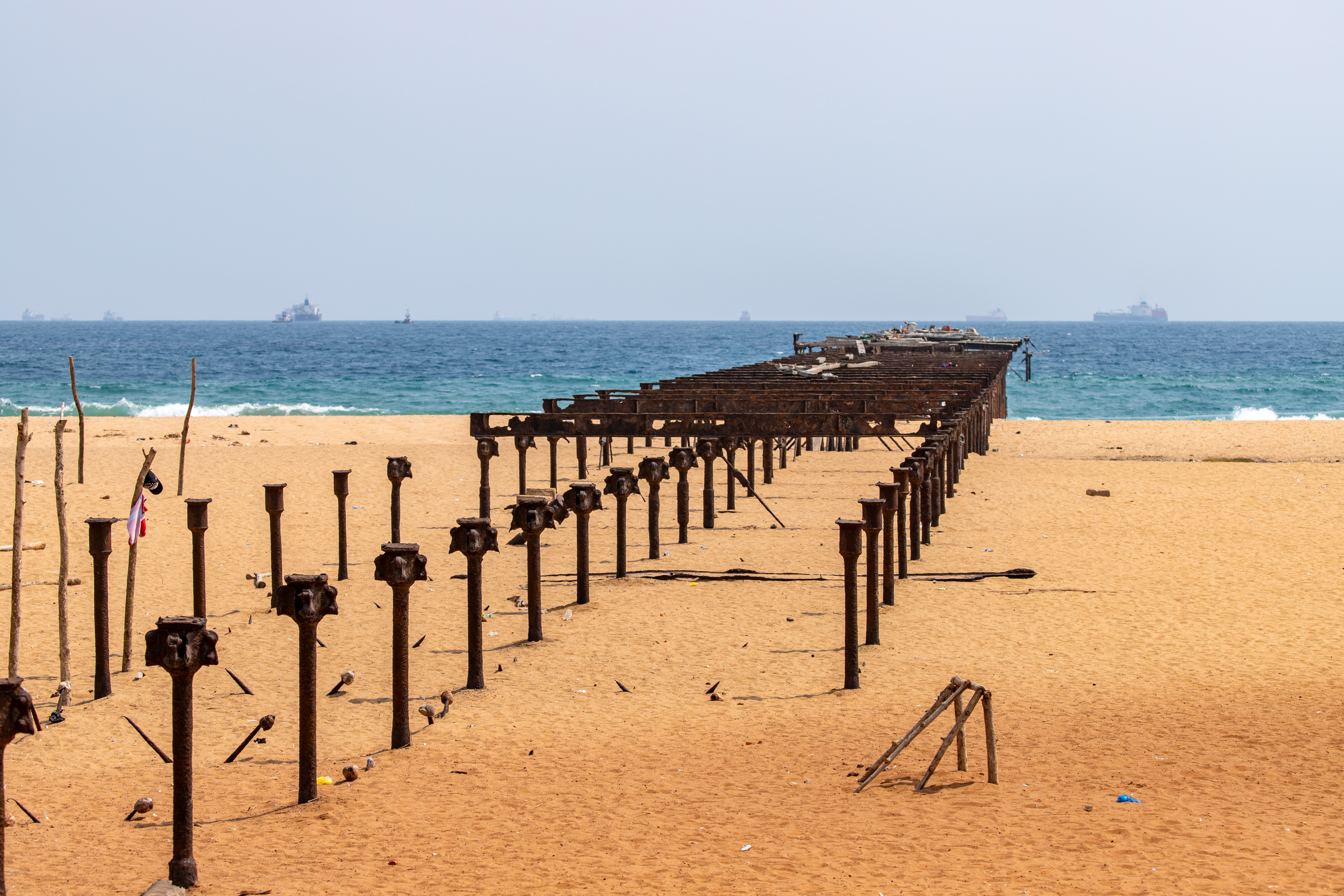 |
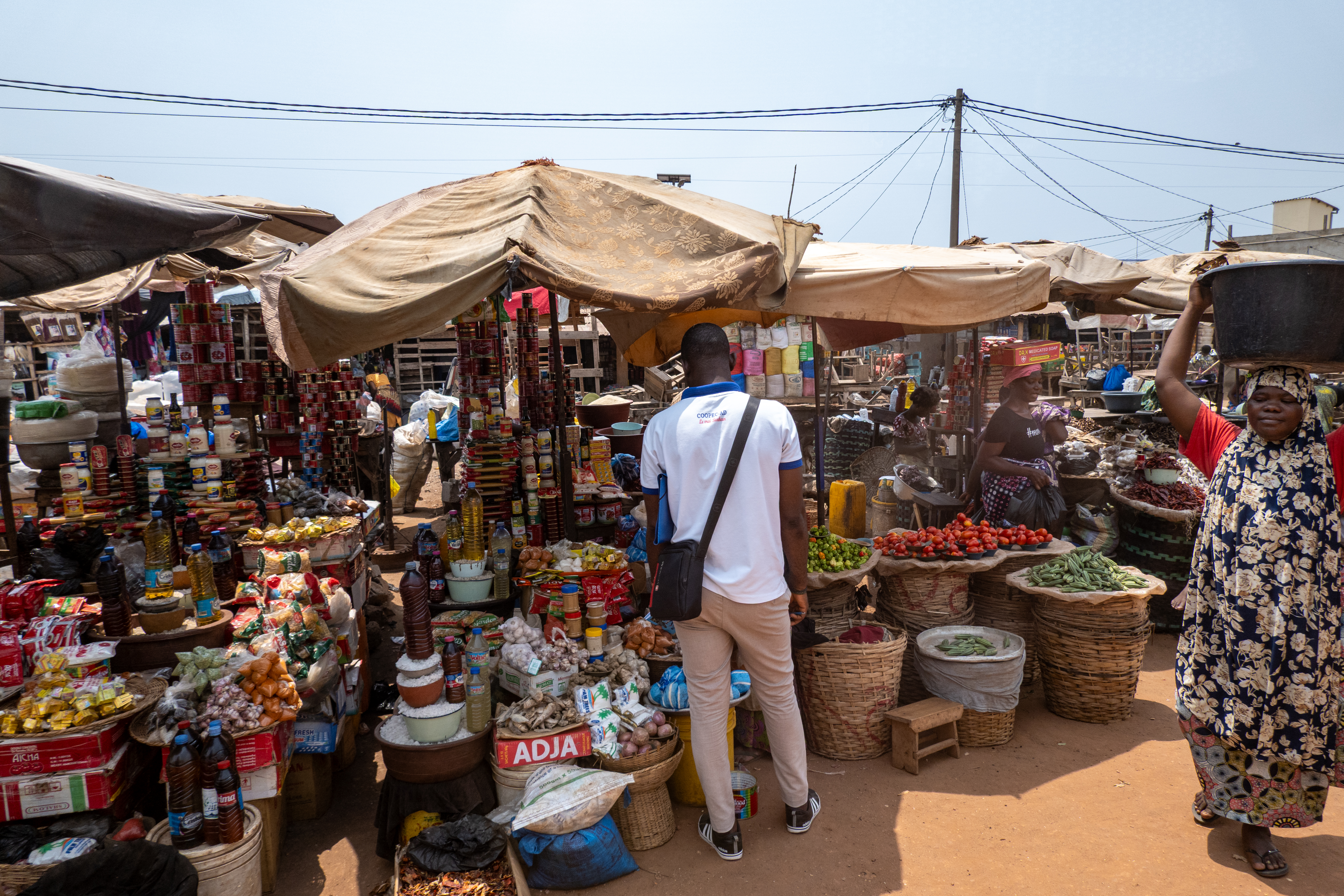
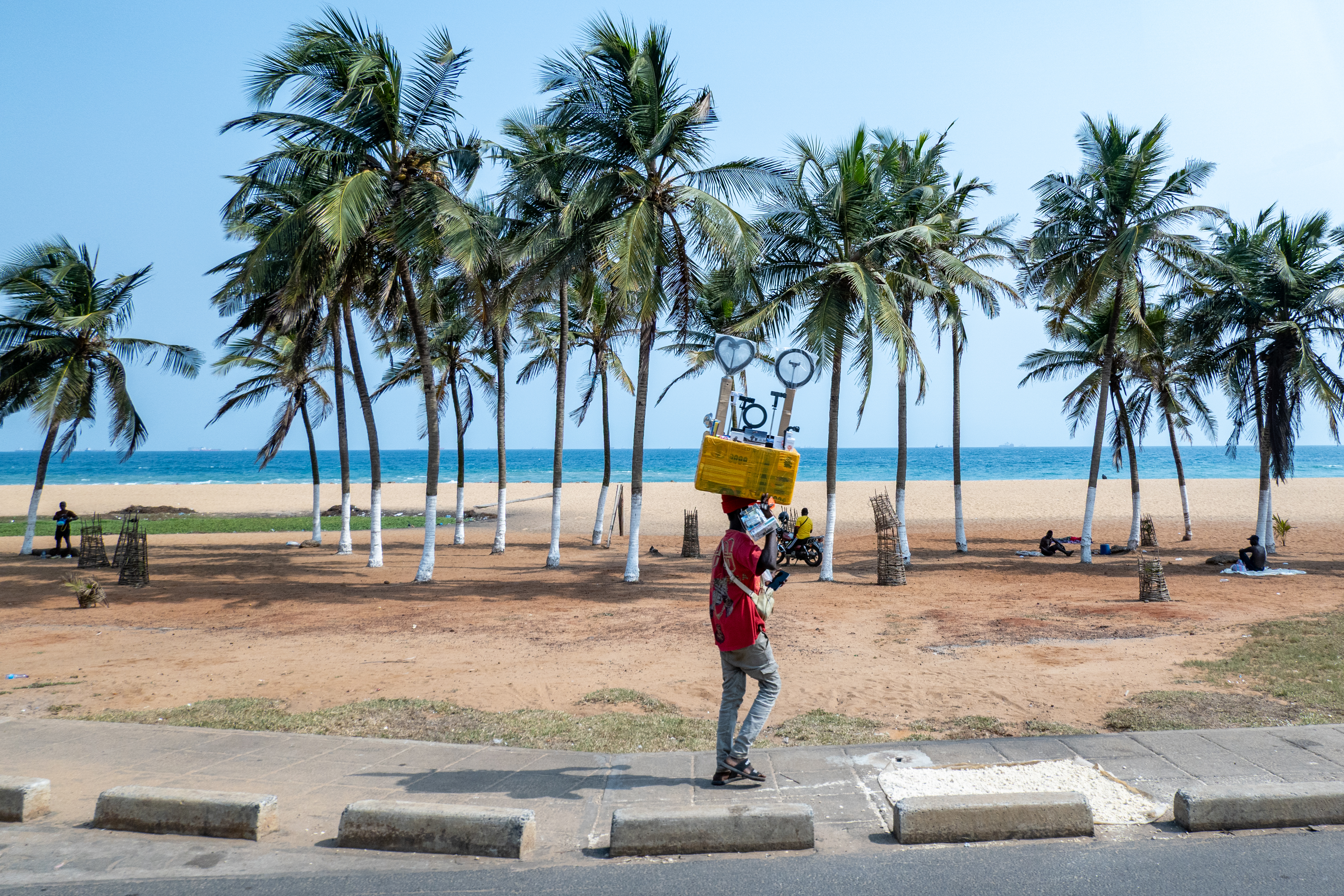
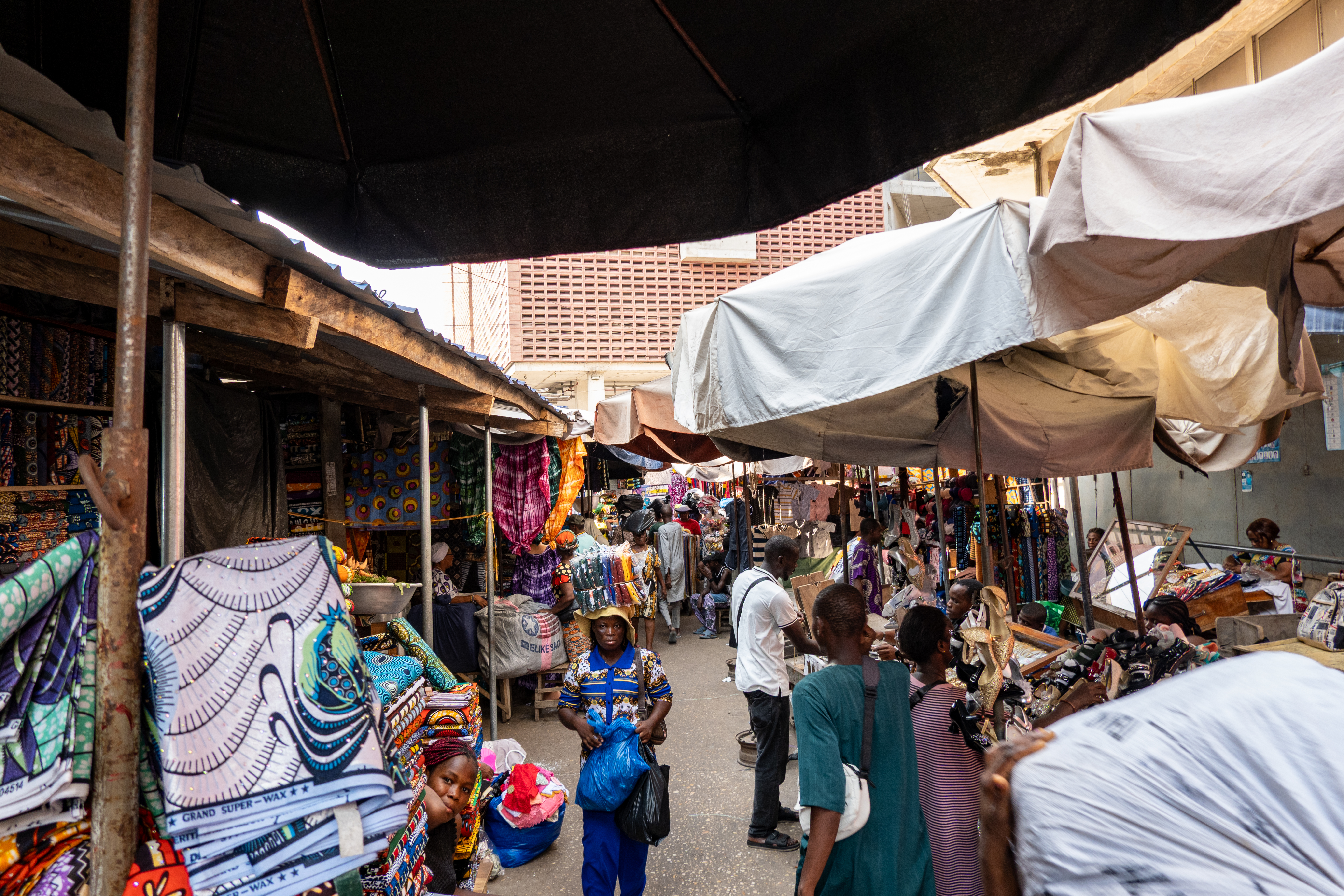
After lunch we drove west past some old Colonial buildings, such as the old German port and the old British colonial government houses. We ended up right by the Ghanaian border; Lomé is unusual in that it is a capital city that lies on a border. We turned around there, and went to the big outdoor market not too far from our hotel. Sena warned us the market was packed, and full of busy people, so he chose Justin to be at the back, and make sure no one got behind him. True to his description, the market was quite busy, very bustling, with lots of colors everywhere. Tons of people were walking around with large objects on their heads.
 |
 |
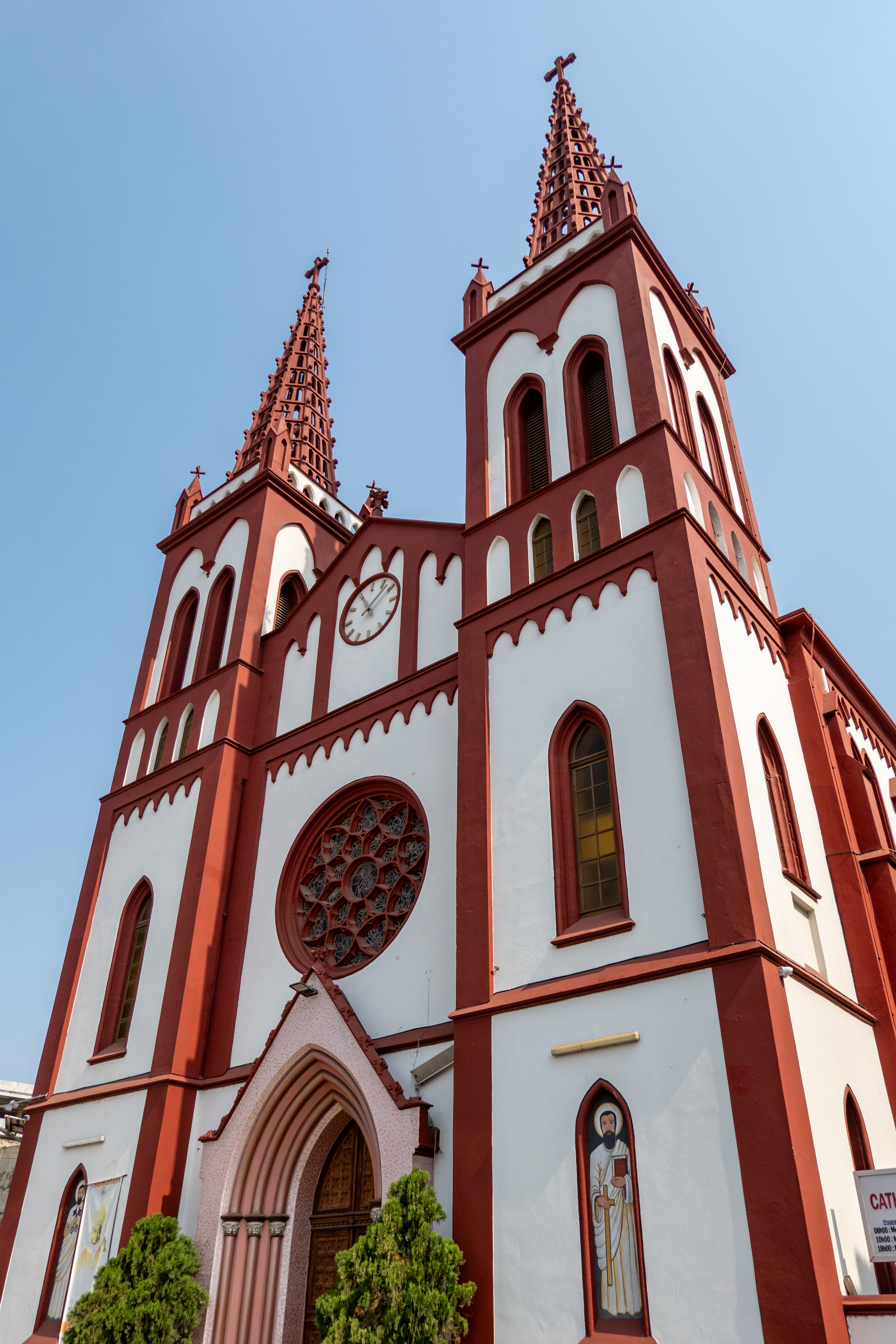
We stopped a couple different times. We briefly went in an old Catholic Church, quite the opposite of the market just outside. We also went into the wholesale “store” of the Nana Benz women. In the mid 1900s, a group of women in Togo controlled the market for Dutch wax print textiles, and were so wealthy that they were the only ones in Togo able to purchase Mercedes. Indeed, they’d occasionally let dignitaries (like the President) borrow their cars. Five generations of women now have run the company, and it is getting harder to avoid the competition. In fact, we couldn’t take pictures inside, because there have been instances where Chinese would take pictures, go back to China, and rip off the designs. Justin worried about a new issue, which is that AI could just browse the website and come up with dozens of other designs in about 5 seconds.
 |
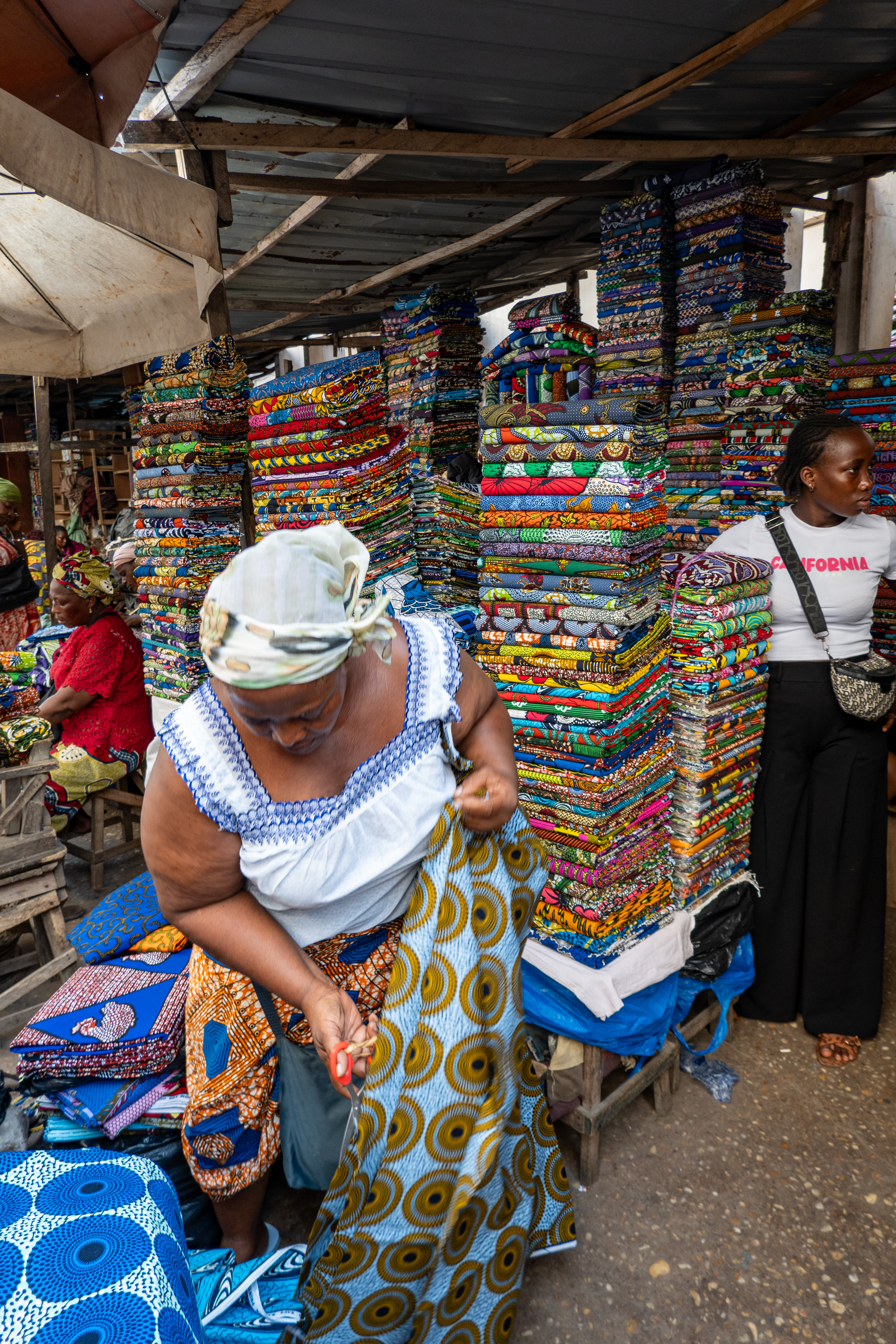 |
Vlisco is the name of one of the famous fabric brands. Taryn, Jane, and Stephenie (and Crystal to a limited extent) looked at designs for quite a while, and they all eventually bought something from one of the vendors outside in the market. We looked but didn’t buy anything; there were plenty of designs that caught our eyes, but we didn’t know if/when we’d ever be in a spot where wearing West African clothing would look appropriate on us. Before going back to the hotel, the group briefly went into a grocery store (kind of like a small Target) to get some stuff for our drive in the days ahead. All the two of us requested was some Pepsi Zero Sugar.
We got back to the hotel a bit before 17:00. Dinner was set to be at 19:00, but outside, so we’d need bug spray - which we didn’t have. Not only are mosquitoes quite rare on Tenerife, we wouldn’t be surprised if Deet wasn’t allowed in Europe anyway. It was fairly windy, however, so thankfully there were no mosquitoes. At dinner, Justin got Azi dessi (a local peanut chicken curry stew), and Crystal got a chicken skewer dish. Both dishes were pretty good. There was a giant TV not too far from the table, and Justin got amped watching Man City drop points to Nottingham Forest and watching Tottenham’s season self-implode. We came back up around 21:00 and called it an early night.
| Previous Entry |